Last updated: October 21, 2026

Best Seller
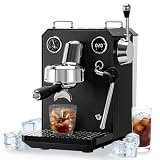
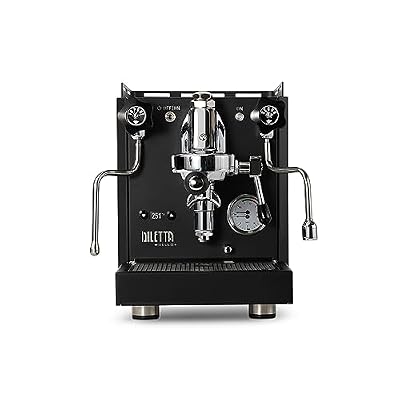
Diletta Alto Espresso Machine | Dual Boiler | PID | Shot Timer | Adjustable OPV | (Black)



Disclosure: As an Amazon Associate we earn from qualifying purchases. This page contains affiliate links and we may earn a commission at no extra cost to you.
As an Amazon Associate we earn from qualifying purchases at no extra cost to you.


“Prosumer” is the espresso world’s word for machines built to commercial principles — heavy brass and steel, standardized 58mm portafilters, temperature systems engineered for stability rather than speed — but sized and priced for a home kitchen. It is the tier where the machine stops being the limiting factor in your coffee, permanently. Once you own a serious dual boiler or E61 machine, every improvement in your cup comes from your beans, your grinder, and your hands.
This guide maps the whole ladder to that destination. At the summit sit two machines from Diletta: the Alto, a full dual-boiler flagship, and the Bello+, the classic E61 heat-exchanger path. The Breville Barista Express represents the proven middle step that teaches the skills prosumer machines reward.
If the vocabulary here is new — E61, dual boiler, PID — our espresso machine buying guide defines the landscape, and our brand comparison explains where names like La Marzocco and Rocket fit above and beside these picks.
Quick Comparison
| Product | Price | Rating |
|---|---|---|
| Diletta Alto Dual Boiler (Black) | Check on Amazon | — |
| AMZCHEF Ultra 58mm with PID | Check on Amazon | — |
| Diletta Bello+ E61 with PID | Check on Amazon | — |
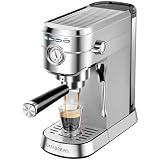
| Compact 20 Bar Stainless Espresso Machine | Check on Amazon | — |
| Breville Barista Express BES870XL | Check on Amazon | — |
| Kismile Espresso Machine with Grinder | Check on Amazon | — |
Why Trust This Guide
See also: How to Descale an Espresso Machine: Citric Acid vs Vinegar • Best Electric Kettles: Ten Glass, Steel and Gooseneck Picks Compared
We approach prosumer gear the way its buyers do: as a long-term system purchase where temperature architecture, workflow, and serviceability matter more than launch-week impressions.
Diletta Alto Dual Boiler (Black)
The Alto is the destination machine of this page. Dual boilers mean brewing and steaming run on separate, independently heated water systems — you pull a temperature-stable shot while the steam boiler stands at full readiness, no compromise, no waiting. Add PID control over brew temperature, a shot timer in your sightline, and an adjustable OPV (the valve that sets maximum brew pressure, which tinkerers use to tune extraction style), and you have a machine that will execute any espresso idea you bring to it.
Who it suits: the committed home barista making multiple milk drinks daily, who wants café workflow — shot and steam simultaneously — and intends to keep the machine for a decade. The trade-offs are honest ones: serious money, serious counter presence, and a machine whose potential is wasted without an equally serious grinder. Budget for the full system or wait until you can; our espresso grinder guide covers worthy partners.
Diletta Bello+ E61 with PID
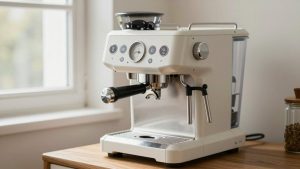
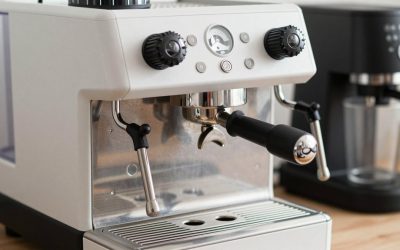
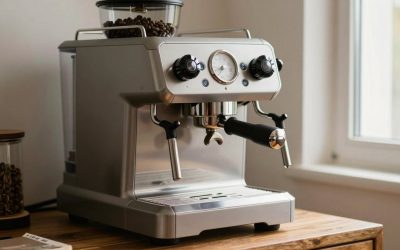
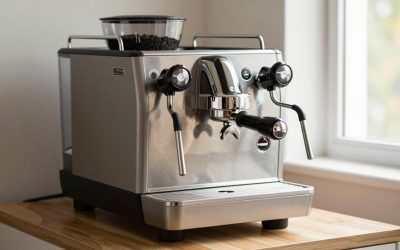
The Bello+ takes the heritage route to the same neighborhood: an E61 group head — the massive, externally visible brass group that has anchored Italian espresso machines for decades — fed by a heat-exchanger boiler, with modern PID control and a shot timer layered on. The E61’s thermal mass gives shots a stability and a gentle natural pre-infusion that devotees argue no compact machine replicates; our pre-infusion guide explains why that ramp-up matters in the cup.
Choose the Bello+ over the Alto if you steam milk occasionally rather than constantly, love the classic workflow and looks, and want to save several hundred dollars. The trade-offs: heat-exchanger machines ask for a brief cooling flush before shots, and the E61 group wants a long warm-up — this is a machine you switch on with a smart plug before you get out of bed. In exchange you get arguably the most timeless object in home espresso.
Breville Barista Express BES870XL
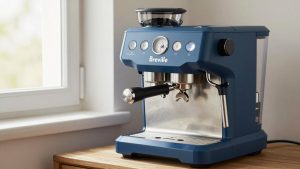
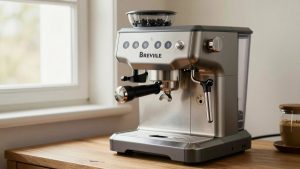
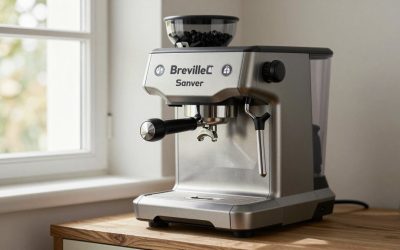
The Barista Express is the bridge. It is not prosumer — the portafilter is 54mm, the thermocoil heats fast but without a dual boiler’s poise — yet it teaches every skill the Diletta tier rewards: dosing, distribution, tamping, dialing grind against shot time, steaming real microfoam. Thousands of home baristas ran this exact route: two or three years on the Breville, then a prosumer upgrade made with educated hands and a clear sense of what they wanted.
Its full strengths and limits are in our Barista Express review.
AMZCHEF Ultra 58mm with PID
The AMZCHEF Ultra is the budget machine wearing prosumer signatures: a true 58mm portafilter and PID temperature control for barely more than some toaster ovens. The practical meaning is that every standard accessory — precision baskets, distribution tools, a bottomless portafilter — fits it, and the brew temperature actually holds where you set it, which makes lighter roasts viable in a way budget machines rarely manage.
Kismile Espresso Machine with Grinder
The Kismile answers a different question: what if you want beans-to-shot in one box while you decide how deep this hobby goes? The integrated grinder removes the separate-grinder hurdle, the 20 bar pump and frother handle the fundamentals, and the whole setup occupies one rectangle of counter. As a household’s first step beyond pods it is genuinely convenient.
On a prosumer-track page, its role is the cautionary contrast: integrated budget grinders cap your ceiling and tie the machine’s fate to its weakest part. If you already suspect espresso will become your craft, separate components — even cheap ones — leave you a cleaner upgrade path.
Compact 20 Bar Stainless Espresso Machine
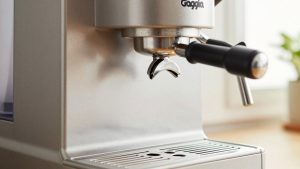
A real pump, a real portafilter, steam that can be coaxed into respectable milk — enough to learn the grammar of espresso before investing in its literature. Its limits (light build, approximate temperature, basic frother) are precisely the things each rung of this ladder fixes, which makes it a surprisingly good teacher: after six months with it, you will understand viscerally what PID, 58mm, and dual boilers are for.
Buy it to discover your level of obsession safely. Some owners stop here, perfectly content; others are reading Diletta specifications within the year. Both outcomes are wins for under a hundred dollars.
What to Look For in a Prosumer Espresso Machine for Home
When you are ready for the serious tier, these are the dividing lines that matter:
- Temperature architecture — Dual boiler for simultaneous shot-and-steam and maximum stability; heat exchanger for classic workflow at lower cost; single thermoblock means you are not in prosumer territory yet.
- PID control — Set-and-hold brew temperature is non-negotiable at this level; it is the difference between dialing in a roast and gambling on one.
- 58mm group and standard parts — The commercial standard means baskets, gaskets, and tools are universal and cheap forever. Proprietary sizes age badly.
- Steam power and recovery — If milk drinks are daily, judge a machine by how it steams for the third guest, not the first.
- Serviceability — Prosumer machines are meant to be repaired, not replaced. Favor designs with accessible internals and a parts ecosystem.
- Warm-up time and workflow fit — E61 groups want long preheats; busy mornings want smart-plug scheduling or faster architectures. Match the machine to your actual schedule.
Tips for Getting the Most Out of a Prosumer Espresso Machine
Solve the grinder before the machine, or at worst alongside it. The community’s rule of thumb holds: the grinder deserves a third to a half of the machine’s budget, and skimping there silently wastes the rest.
Automate the warm-up. Heavy machines need real time for groups and boilers to saturate, and the single biggest daily-life upgrade is a smart plug on a schedule so the machine is ready when you are. While you are at it, start a simple log — dose, grind setting, shot time, impression — because at this level your palate develops faster than your memory, and the log is how dial-ins stop being guesswork.
And learn basic maintenance as part of the hobby, not a chore outside it. Backflush on schedule, replace group gaskets yearly, watch your water chemistry — scale is the only enemy that can actually kill these machines. Owners who internalize this routinely pass prosumer machines to their children. For a sense of how deep the craft can go beyond pump machines entirely, our manual lever machine review is a glimpse of the far shore.
Frequently Asked Questions
What does “prosumer” actually mean for espresso machines?
Commercial construction principles — heavy boilers, 58mm groups, serviceable internals, stable temperature systems — packaged at household scale. The practical promise is that the machine stops limiting your espresso and durability moves from years to decades.
Is a dual boiler worth it over a heat exchanger at home?
If you make milk drinks daily and often for more than one person, yes — independent brew and steam systems remove every compromise. If you mostly drink straight espresso with occasional milk, a heat exchanger like the Bello+ delivers the same shot quality for meaningfully less money.
Can I skip the middle step and go straight from a pod machine to a Diletta?
You can, but expect a humbling first month — prosumer machines execute your technique faithfully, including the flaws. Budget for a quality grinder, a scale, and patience. Many buyers find a year on something like a Barista Express makes the prosumer purchase far more rewarding.
Why do prosumer machines take so long to warm up?
Thermal mass is the feature, not the bug: heavy brass groups and large boilers hold temperature rock-steady precisely because they take time to saturate. A smart plug that switches the machine on twenty to thirty minutes before your alarm dissolves the issue entirely.