As an Amazon Associate we earn from qualifying purchases at no extra cost to you. Product prices and availability are accurate as of the date shown and are subject to change.

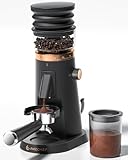


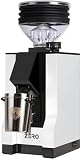
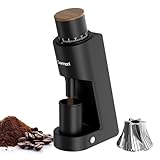

TL;DR: A single dose grinder lets you grind exactly what you need per shot — no retention, no stale grounds, full control over dose weight. It’s the grinder workflow serious home espresso baristas adopt when they want to dial in multiple beans without waste or flavor cross-contamination.
Single Dose Grinder for Espresso: Why It Changes Everything About Your Home Setup
The single dose grinder espresso workflow has taken over the specialty coffee world for one simple reason: it puts you in complete control. Grind exactly what you need, when you need it, from whatever bean you choose. No hopper sitting full of slowly oxidizing coffee. No 3–5g of yesterday’s grind contaminating today’s shot. Just fresh grounds, dialed to your exact spec.
- Quick Comparison
- What “Single Dosing” Actually Means
- Flat Burr vs. Conical Burr: Which Is Better for Single Dosing?
- Top Single Dose Grinders for Espresso
- Key Specs to Look for in a Single Dose Espresso Grinder
- The RDT Technique: Solving Static in Single Dosing
- Single Dosing vs. Hopper: The Workflow Comparison
- FAQ: Single Dose Grinder Espresso
- About the Author
- Frequently Asked Questions
Quick Comparison
| Product | Brand | Price | Rating |
|---|---|---|---|
| OXO Brew Conical Burr Coffee Grinder – Silver | — | $98.99 | 4.3/5 |
| Breville BCG820BSS Smart Grinder Pro for Coffee and Esp… | — | $199.95 | 4.5/5 |
| Portable Electric Coffee Grinder | Xiozugibi | $85.49 | — |
| Baratza Encore ESP Coffee Grinder ZCG495BLK | — | $199.95 | 4.2/5 |
| AMZCHEF Coffee Grinder | AMZCHEF | $99.99 | 4.5/5 |
What “Single Dosing” Actually Means
See also: How to Clean an Espresso Grinder Burrs (2026): Step-by-Step • Espresso Grinder Hopper Capacity How Much Size Guide With Measurements (2026)
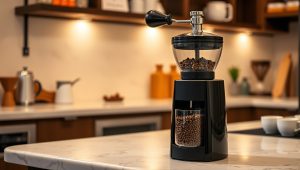
Single dosing means loading only the amount of coffee you need for one dose — typically 15–20g for a double espresso — directly into the grinder’s burr chamber rather than running a continuous hopper. The goal is zero retention: every gram you put in comes out into the portafilter.
Traditional grinders are designed around hopper use, where beans cascade through the burrs continuously. They retain 3–10g in the grinding chamber at all times. For home baristas who switch beans frequently or only brew one or two shots per session, that retention is pure waste and a source of stale-flavor contamination.
Flat Burr vs. Conical Burr: Which Is Better for Single Dosing?
Both burr geometries can be adapted for single dosing, but they behave differently:
- Flat burrs: More consistent particle size distribution (PSD). Produce a bimodal grind (two distinct particle sizes) that espresso machines extract well. However, flat burrs tend to have higher retention in the grinding chamber due to their horizontal orientation — single-dose flat burr grinders use RDT (Ross Droplet Technique) and shaking to minimize this.
- Conical burrs: Lower static, lower retention naturally. The vertical orientation and gravity assist grounds exit the chamber more cleanly. Slightly wider PSD, but modern conical designs have improved significantly. Better all-around for single dosing beginners.
For espresso specifically, understand how grind size interacts with extraction — our espresso grind size guide breaks down the relationship between particle size, shot time, and flavor.
Top Single Dose Grinders for Espresso
Key Specs to Look for in a Single Dose Espresso Grinder
| Spec | Why It Matters | What to Look For |
|---|---|---|
| Retention | Leftover grounds go stale and contaminate next dose | <0.5g retention (top single-dose models hit 0.1–0.2g) |
| Burr Diameter | Larger burrs = more consistent grind, less heat | 48mm+ flat, 40mm+ conical for espresso |
| RPM | Lower RPM = less heat = better flavor preservation | Under 1,000 RPM preferred; 400–600 RPM is ideal |
| Stepless Adjustment | Fine-tune grind without fixed steps | Stepless or micro-stepped (30+ positions) |
| Static Charge | Grounds clumping/flying out reduce dose accuracy | RDT compatible; anti-static designs preferred |
| Build Material | Affects longevity and cleaning ease | All-metal body; removable burr carrier |
The RDT Technique: Solving Static in Single Dosing
Static electricity causes ground coffee to clump and fly out of the chute, reducing dose accuracy and making a mess. The Ross Droplet Technique (RDT) involves adding 1–2 drops of water to your beans before grinding. This dramatically reduces static charge without affecting flavor or extraction. It’s free, takes two seconds, and works on virtually every grinder.
Some newer grinders incorporate anti-static technology (ionizers, grounded burr chambers) that eliminates the need for RDT entirely. If static is a concern, look for this in the spec sheet before buying.
Single Dosing vs. Hopper: The Workflow Comparison
Choosing a workflow depends on how you use your grinder day to day:
- Single bean, same dose daily: Hopper is fine. Retention matters less when you’re using the same coffee continuously.
- Multiple beans / experimental: Single dosing is essential. Switching beans in a hopper-based grinder means purging 10–15g of old coffee before you get a clean shot — wasteful and imprecise.
- Low volume (1–2 shots/day): Single dosing preserves freshness. A full hopper going stale over days costs you cup quality.
- High volume (cafe-style home use): Hopper may be more convenient; retention becomes a smaller percentage of total output.
Pair your grinder choice with the right espresso machine for the full picture — our best espresso machines under $500 and full home espresso machine guide cover machines that work particularly well with single-dose setups. For distribution technique after grinding, the coffee distribution tool guide is essential reading.
FAQ: Single Dose Grinder Espresso
What is a single dose grinder for espresso?
A single dose grinder is used by loading only the amount of coffee needed for one brewing session (typically one dose = 15–20g) into the grinding chamber, rather than filling a hopper for continuous use. The goal is minimal retention and maximum freshness per shot.
Is a single dose grinder better than a hopper grinder for home espresso?
For home baristas who experiment with different beans or brew infrequently, yes. Single dosing eliminates stale retention grounds and lets you switch beans without waste. If you drink the same coffee daily and make 4+ shots, a hopper grinder is equally viable and more convenient.
Can I use any burr grinder for single dosing?
You can single-dose in any grinder, but results vary. Grinders designed for hopper use have high retention chambers that don’t work well with small doses — you’ll lose 2–4g in the burrs. Purpose-built single-dose grinders (like the DF64, Niche Zero, or Fellow Ode Gen 2) have near-zero retention by design.
How do I reduce static when single dosing?
Use the Ross Droplet Technique (RDT): add 1–2 drops of water to your dose before grinding. This neutralizes static charge and prevents grounds from clumping or flying. Alternatively, look for grinders with built-in anti-static features or use a grounded metal catch cup.
What grind setting should I use for single dose espresso?
Start with a fine grind and aim for a 25–30 second shot time with a 1:2 ratio (e.g., 18g in → 36g out). Adjust finer if under-extracting (sour, thin), coarser if over-extracting (bitter, harsh). See our espresso shot recipe ratio guide for full dialing-in methodology. Also see our burr grinder buying guide for model comparisons across price ranges.
Frequently Asked Questions
What makes a grinder a single dose grinder?
Very low retention, usually under half a gram, plus a bellows or blower to push residual grounds out and a small hopper intended for one dose. You weigh in exactly what you want and get essentially the same weight out, so the coffee is always freshly ground.
Why not just use a hopper grinder?
A full hopper keeps a week of beans exposed to air, and the weight of beans above the burrs subtly changes grind consistency as it empties. Single dosing also lets you switch beans between shots without purging 20 grams, which matters when you keep several bags open.
Flat or conical burrs?
Flat burrs generally produce a tighter particle distribution, giving more clarity and separation of flavors, which suits light roasts. Conical burrs are more forgiving, produce more body and usually cost less while running cooler. Neither is wrong, but flats dominate the espresso-focused single dose market.
What are popcorning and RDT?
With few beans in the chamber the last ones bounce on the burrs instead of feeding, which is popcorning, and a weighted bean puck or dosing cup lid solves it. The Ross Droplet Technique, a spritz of water on the beans before grinding, dramatically reduces static and clumping.
Is it worth upgrading from an entry-level grinder?
If you pull espresso daily and care about repeatability, yes, because the drop in retention alone means your dialed setting behaves the same tomorrow. If you drink milk drinks from medium roast and grind once a day, the improvement is real but considerably smaller.
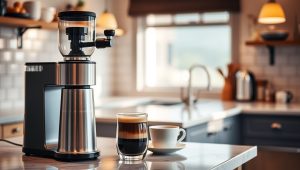
Ready to decide? Our #1 pick for 2026 is the OXO Brew Conical Burr Coffee Grinder – Silver.
Live price & availability on Amazon.