Last updated: October 20, 2026
As an Amazon Associate we earn from qualifying purchases at no extra cost to you.




Quick Comparison
| Product | Brand | Price | Rating |
|---|---|---|---|
| COLETTI Butte Coffee Percolator Camping — Percolator Co… | COLETTI | $47.29 | 4.6/5 |
| Toughty Enamel Coffee Percolator – Stovetop Coffee Make… | Toughty | $49.99 | 4.6/5 |
| Cididu Camping Coffee Pot Stainless Steel | Cididu | $28.99 | 4.6/5 |
| 300 Count Percolator Coffee Filters | Prudiut | $8.49 | 4.6/5 |
| Farberware Classic Stainless Steel Yosemite 12-Cup Coff… | Farberware | $34.99 | 4.5/5 |
Introduction
See also: How to Descale an Espresso Machine: Citric Acid vs Vinegar • Best Electric Kettles: Ten Glass, Steel and Gooseneck Picks Compared
Percolator coffee makers cycle boiling water through coffee grounds repeatedly, producing a bold, robust brew that has fueled generations of coffee drinkers. While drip machines dominate modern kitchens, percolators are enjoying a comeback thanks to their durability, simplicity, and the distinctively strong cup they produce. Whether you are camping or simply nostalgic, a good percolator deserves a place in your coffee repertoire.
What to Look for in a Percolator Coffee Maker
- Electric vs. Stovetop: Electric percolators have built-in heating elements and keep-warm functions; stovetop models work over any heat source, making them ideal for camping or emergencies.
- Capacity: Percolators range from 4-cup personal models to 12-cup family-size units. Choose based on how much coffee you typically brew in one session.
- Material: Stainless steel resists rust, retains heat, and is easier to clean than aluminum. Avoid plastic internal components that may impart off-flavors.
- Basket Design: Permanent stainless steel baskets are reusable and easier to clean than disposable paper-filter options. Look for fine-mesh baskets to minimize grounds in the cup.
- Temperature Control: Electric models with adjustable temperature or keep-warm modes prevent over-extraction and scorching after brewing.
Top Percolator Coffee Maker Picks
Farberware 12-Cup Stainless Steel Yosemite Coffee Percolator
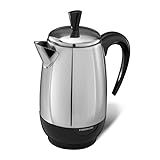
The Farberware Yosemite is a classic stovetop percolator with a timeless stainless steel design. Its cool-touch handle and locking lid make it safe to use over gas, electric, or ceramic stovetops. The 12-cup capacity is generous enough for entertaining, while the tight-fitting basket minimizes grounds in the cup. It is affordable, durable, and dishwasher safe — everything a practical percolator should be.
Presto 02811 12-Cup Stainless Steel Coffee Percolator
The Presto 02811 is one of the best-selling electric percolators on the market. It brews up to 12 cups in about a minute per cup, then automatically switches to a keep-warm mode that maintains temperature without over-brewing. The removable cord, detachable pump tube, and basket are all dishwasher safe, making cleanup straightforward. It produces consistently bold, hot coffee and is virtually indestructible with basic care.
GSI Outdoors 6-Cup Enamelware Percolator
For camping and outdoor use, the GSI Outdoors Enamelware Percolator is the classic choice. The porcelain-on-steel construction is lightweight, durable, and works over campfires, gas stoves, and grills. The bright red enamel finish is cheerful and easy to spot in a packed camp kitchen. It holds 6 cups, brews efficiently over open flame, and cleans easily. A beloved companion for backpackers and car campers alike.
How Percolators Brew and Why Technique Matters
A percolator brews by continuously cycling boiling water up through a tube and over a basket of coffee grounds, then letting it drain back down to be reheated and cycled again. You can see this action in the little glass knob on the lid, where the coffee “perks” in a rhythmic bubbling. This repeated recirculation is what gives percolator coffee its famously bold, robust character—the water passes through the grounds many times, extracting a strong, full-flavored brew that many people associate with camping trips and old-fashioned kitchens.
That same recirculation is also the percolator’s main pitfall, because it can easily over-extract. Since the water keeps cycling through the grounds and is held near boiling, leaving the pot percolating too long pulls out bitter compounds and can scorch the coffee. The key to good percolator coffee is timing: most coffee is ready after just a few minutes of active perking, and pulling it off the heat promptly prevents bitterness. Using a coarse grind also helps, since coarse grounds resist over-extraction and are less likely to slip through the basket holes into your cup.
Choosing the Right Percolator for Your Needs
Percolators come in stovetop and electric versions, each with its strengths. Stovetop models—often stainless steel or enamelware—are simple, durable, and ideal for camping and off-grid use since they work over any heat source, including a campfire, with no electricity required. The tradeoff is that you must watch them closely and judge timing by sound and sight. Electric percolators plug in, heat themselves, and many shut off or switch to a keep-warm mode automatically once brewing finishes, offering hands-off convenience for kitchen counters.
Material and capacity guide the rest of the choice. Stainless steel is the most popular for durability and even heating; enamelware carries classic camp-style charm but can chip; and a glass perk knob lets you monitor the brew’s color and pace. Match the cup capacity to your needs—percolators brew best when reasonably full, so an oversized pot used for a single cup may under-perform. For grind, choose a coarse, even grind to limit sediment and over-extraction. With the right grind and attentive timing, a percolator delivers the strong, nostalgic cup it is known for without the bitterness that gives it an undeserved bad reputation.
Frequently Asked Questions
What grind should I use in a percolator?
Use a coarse grind. Coarse grounds resist the over-extraction that the percolator’s recirculating water tends to cause, and they are less likely to fall through the basket holes into your cup, reducing sediment.
Why does percolator coffee sometimes taste bitter?
Bitterness comes from over-extraction—the water cycles through the grounds repeatedly near boiling, so percolating too long pulls out harsh compounds. Brewing for just a few minutes and removing the pot from heat promptly keeps the coffee from turning bitter.
How long should I percolate coffee?
Most percolator coffee is ready after a few minutes of active perking, often around 5 to 10 minutes depending on the pot and heat. Watch the color in the glass knob and pull it off the heat once it reaches your preferred strength.
Are stovetop or electric percolators better?
It depends on your use. Stovetop percolators are durable and great for camping since they need no electricity, but require attention. Electric models are more convenient for the kitchen, often shutting off or keeping warm automatically when brewing finishes.
Is percolator coffee stronger than drip?
Percolator coffee is typically bolder because the water passes through the grounds multiple times, extracting a robust brew. Whether it is stronger depends on your coffee-to-water ratio and timing, but it generally tastes fuller and more intense than standard drip.
Final Thoughts
For everyday home use, the Presto 02811 electric percolator is the most convenient and consistent choice. The Farberware Yosemite is ideal if you prefer a stovetop model with simple, no-fuss operation. And for coffee on the trail or at the campsite, the GSI Enamelware Percolator is a rugged classic that never disappoints. All three prove that sometimes the old ways are still the best ways.