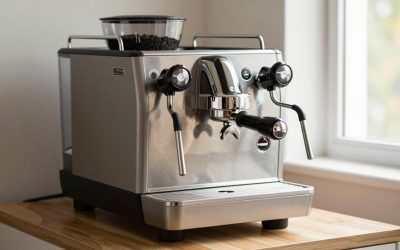
- Top Pick: Flair UPDATED 49 PRO (Black) – All manual 49mm lever espresso maker with handled portafilter, pressure gauge and no plastics in brew path
- Best Value: SUPERKOP – Piston Seal
- Premium Choice: La Pavoni EPC-8 Europiccola Lever Style Espresso Machine – Chrome & Silver – Manual Espresso Maker – 0.8 L Water Capacity, Authentic Italian Craftsmanship for Home Use
Last updated: October 20, 2026
A manual espresso machine strips espresso back to its essentials: you supply the pressure, you control the flow, and the machine simply holds the puck and water in place. There is no pump, no microprocessor, and often no electricity at all. For coffee lovers who want to feel every variable in the shot, a lever or piston espresso maker delivers a level of control that pump machines automate away. This guide walks through the standout manual espresso machines worth owning, how lever and piston designs differ, and the technique that turns a hand-pressed shot into something genuinely cafe quality.
As an Amazon Associate we earn from qualifying purchases at no extra cost to you.


Quick Comparison
| Product | Brand | Price | Rating |
|---|---|---|---|
| Flair The NEO Espresso – An all manual lever espresso m… | Flair | — | 4.4/5 |
| Flair UPDATED Espresso Maker – Classic: All manual leve… | Flair | $159 | 4.2/5 |
| Cafelat Robot Espresso Maker (with pressure gauge) | Cafelat | — | — |
| La Pavoni EPC-8 Europiccola Lever Style Espresso Machin… | — | $1181.21 | 3.6/5 |
| ROK EspressoGC Manual Espresso Maker – Portable Hand Po… | ROK | — | 4/5 |
Top Picks for Manual Espresso
See also: How to Descale an Espresso Machine: Citric Acid vs Vinegar • Best Electric Kettles: Ten Glass, Steel and Gooseneck Picks Compared
Flair NEO
The Flair NEO is the friendliest entry point into manual espresso. It uses a bottomless portafilter and a removable brew head, so beginners can see exactly how their puck extracts. Because it brews into a pre-pressurized chamber, the NEO forgives uneven grinding better than most levers, which makes it ideal for someone moving on from a moka pot or capsule machine.
Flair Classic (with Pressure Kit)
The Flair Classic adds a pressure gauge and a more robust stainless brew cylinder. That gauge is the real upgrade: it lets you watch your shot climb toward the 9-bar target and dial in your grind accordingly. It disassembles for cleaning and packs into a carrying case, so it doubles as a serious travel setup for people who refuse to compromise on shot quality.
Cafelat Robot
The Cafelat Robot is the cult favorite of the manual world. Its twin-arm lever design gives you enormous leverage with very little effort, and the optional pressure gauge turns it into a precise, repeatable tool. With no plastic in the brew path and a body built almost entirely from die-cast aluminum and steel, the Robot is close to indestructible and routinely beats machines costing several times as much in blind shot comparisons.
La Pavoni Europiccola
The La Pavoni Europiccola is the romantic choice: a chrome, boiler-equipped lever machine that has barely changed in decades. Unlike the cold-brew levers above, it heats its own water and produces steam for milk, so it is a complete espresso-and-cappuccino station. It demands practice, because the spring-free piston means temperature and pressure both shift as you pull, but mastering it is one of the genuine rites of passage in home espresso.
ROK EspressoGC
The ROK EspressoGC is the value workhorse. Its wide, wing-style levers multiply your force so almost anyone can reach espresso pressure, and the all-metal construction shrugs off years of daily use. It has no electronics and no gaskets that fail in odd ways, making it one of the lowest-maintenance ways to pull a real shot at home.
Lever vs Piston: How Manual Machines Differ
Manual espresso machines split into two broad families. Direct-lever designs, like the Cafelat Robot and ROK, connect your hand directly to a piston through a mechanical linkage. The pressure you feel in the handle is, more or less, the pressure on the puck. Spring-lever designs, like the La Pavoni Europiccola, use a piston where you compress water and the natural decline of force creates a pressure profile that tapers off as the shot finishes.
Piston-style brewers such as the Flair sit slightly apart: you press a plunger down a cylinder, and a pre-pressurized basket helps stabilize the flow. The practical takeaway is that levers reward feel and rhythm, while piston presses reward steady, even pressure. None of them rely on a 9-bar pump, so a steady hand replaces the motor.
Buying Guide: What Actually Matters
Three factors decide whether you will love a manual machine. First, does it heat its own water? Cold-brew levers like the Flair and Robot need a separate kettle, while the La Pavoni is self-contained. Second, does it have a pressure gauge? A gauge dramatically shortens the learning curve because it converts an invisible variable into a number you can chase. Third, how easy is it to clean? Machines that disassemble without tools save real frustration over time.
One non-negotiable across every manual machine is grind quality. Because you are generating pressure by hand, an inconsistent grind produces channeling that no amount of technique can hide. Pairing your machine with a capable burr grinder matters more here than with any pump machine, so it is worth reading a dedicated coffee grinder for espresso guide before you buy. If you are still deciding between manual and automatic in general, the broader espresso machine buying guide is a good companion read, and our best espresso machine for home roundup covers pump alternatives.
Getting Great Shots by Hand
Technique is where manual espresso lives or dies. Aim for a fine, even grind, distribute the grounds in the basket, and tamp level. With cold-brew levers, preheat the brew chamber with hot water so your first shot is not under-temperature. Begin your press gently to allow a pre-infusion that wets the puck, then build toward roughly 9 bars and hold. Watch the stream: a slow, even, honey-colored flow signals a good extraction, while a fast, pale gush usually means the grind is too coarse. Many home baristas pair their shots with steamed milk, so a separate milk frother and steamer rounds out the setup, and the right espresso accessories such as a quality tamper and distribution tool make consistency far easier.
Frequently Asked Questions
Are manual espresso machines hard to use?
There is a learning curve, but it is shorter than many expect. Pre-pressurized piston models like the Flair NEO are quite forgiving, while traditional spring levers such as the La Pavoni take longer to master. A pressure gauge speeds up learning for any model.
Do manual machines make real espresso?
Yes. As long as you reach roughly 9 bars of pressure with a properly ground and tamped puck, a manual machine produces true espresso with crema, often rivaling pump machines costing far more.
Do I need a separate grinder for a manual espresso machine?
Almost always. Most manual machines do not include a grinder, and espresso demands a fine, consistent grind from a burr grinder. Pre-ground supermarket coffee will not deliver good results.
Can I steam milk with a manual espresso machine?
Only some can. Boiler-equipped levers like the La Pavoni Europiccola include a steam wand, but cold-brew presses such as the Flair and Cafelat Robot do not, so you will need a separate frother for lattes and cappuccinos.
Are lever machines worth it over a pump machine?
If you value control, durability, and the ritual of pulling a shot by hand, yes. Lever machines have few electronics to fail and let you shape the pressure profile of every shot, which many enthusiasts prefer.