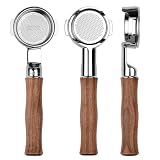
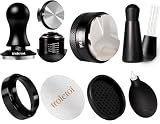
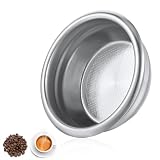
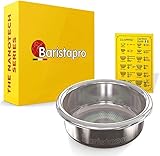
- Top Pick: Creamore 22g Espresso Filter Basket, 58mm – Precision Flat-Bottom High-Dose Double Shot Basket, 0.3mm Holes, 28mm Depth, AISI 304 Stainless Steel, Fits 58mm Portafilters & E61 Group Heads
- Best Value: IMS Precision Convex Filter Basket. 20-24g. Made for 54mm Breville, Sage, Solis Espresso Machines. Triple Shot. H:30mm
- Premium Choice: Creamore 18g Espresso Filter Basket, 58mm – Precision Flat-Bottom Double Shot Basket, 0.3mm Holes, 24mm Depth, AISI 304 Stainless Steel, Fits 58mm Portafilters & E61 Group Heads
Last updated: September 4, 2026
As an Amazon Associate we earn from qualifying purchases at no extra cost to you.


Disclosure: As an Amazon Associate we earn from qualifying purchases. This page contains affiliate links and we may earn a commission at no extra cost to you.
The filter basket is the cheapest part of an espresso machine and the one doing the most precise work: every drop of your shot passes through its holes, and the size, count, and uniformity of those holes decide how evenly the puck extracts. Stock baskets on home machines are stamped to a price, with holes that vary enough to create fast and slow zones across the bed. A precision basket attacks exactly that — tighter hole tolerances, consistent geometry, and honest dose markings — which is why swapping a ten-dollar disc of steel can audibly change how a shot pours.
There’s a second distinction hiding in basket listings that trips up nearly every beginner: single-wall versus dual-wall. A single-wall (non-pressurized) basket is the real thing — water pressure meets coffee directly, which rewards good grinding and punishes bad prep. A dual-wall (pressurized) basket forces the flow through a tiny exit hole that fakes crema and forgives supermarket pre-ground. Neither is wrong; they’re for different people, and knowing which you’re buying matters more than the brand on the box.
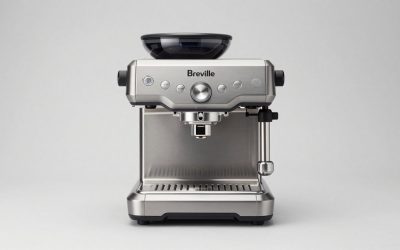
The six picks below serve the machines most homes actually own — 54mm Brevilles like the Barista Express (our BES870XL review explains that platform’s quirks) and the 51mm format used by countless De’Longhi, Casabrews, and compact machines — plus an Italian-made IMS upgrade for DeLonghi owners who want the full precision treatment. Pair any of them with a scale and a clear shot ratio recipe, because a precision basket without weighed doses is a violin played with oven mitts.
Quick Comparison
| Product | Price | Rating |
|---|---|---|
| 54mm Single-Dose Basket (10 g) | $8.99 | 4.7/5 |
| 54mm Dual-Wall Double Basket | $9.99 | 4.7/5 |
| 51mm CASABREWS Double Basket | $8.99 | 4.7/5 |
| IMS Precision Basket (DeLonghi) | $21.90 | 4.6/5 |
| 51mm Single-Dose Basket | $9.99 | 4.6/5 |
| 51mm Basket Set (Single + Double) | $8.49 | 4.6/5 |
Why Trust This Guide
See also: 6 Best Knock Box Mats (October 2026) Reviews & Picks • 6 Best Profitec Accessories (October 2026) Complete Guide
We evaluate baskets the way they deserve: by checkable details — diameter, rated dose, wall type, manufacturer fitment claims — and by what daily home-barista use actually reveals about a product category. We’re explicit about which picks are single-wall and which are pressurized, because that distinction changes who should buy them, and we don’t pretend a basket replaces a decent grinder.
54mm Single-Dose Basket (10 g)
This non-pressurized single basket for Breville’s 54mm portafilters exists for a quiet minority: people who genuinely want one proper espresso, not a double poured smaller. Rated for about 10 grams, it lets you halve your coffee consumption per drink without faking it — a true single-wall extraction, with all the honesty that implies.
Honesty is the catch as well as the feature. Single baskets are notoriously less forgiving than doubles — the shallower bed amplifies any distribution sloppiness — so this is a tool for someone whose prep is already tidy. If that’s you, it’s liberating: an evening espresso that doesn’t waste nine grams, a lighter caffeine day, decaf singles after dinner. At nine dollars it’s the cheapest way to add a genuinely new drink size to your machine.
54mm Dual-Wall Double Basket
The pragmatic pick. This 54mm dual-wall double, rated for the 18–22 gram range, is the basket for households where convenience wins: pre-ground coffee, a worn-out grinder, or family members who want a latte without learning extraction theory. The pressurized second wall builds resistance at a small exit, producing a foamy, crema-like pour even when the grind is far from dialed.
Purists sneer, and they’re missing the point — a dual-wall basket is the difference between a machine that gets used every day and one that intimidates half the household into the drive-through. It’s also a sensible backup basket for when your grinder is mid-adjustment or you’re brewing someone else’s beans. Just know what it is: a forgiveness device, not a quality ceiling. When you’re ready to taste the difference, the single-wall options here will be waiting.
51mm CASABREWS Double Basket
Casabrews’ compact machines like the 3700 Essential use 51mm baskets, and replacements or upgrades in that size used to mean settling for whatever generic stamping arrived in the mail. This double basket is sized specifically for the 3700-series portafilter, which solves the real problem of 51mm shopping: fit. A basket that’s fractionally wrong in diameter or depth rattles, seats badly, or won’t lock under the group’s clearance.
For 3700 owners it’s the straightforward buy — a spare for the inevitable day the stock basket gets dented or lost, or a step up in consistency if the original’s holes run ragged. A second basket also unlocks a nicer workflow: keep one loaded with your daily blend and one for decaf or guest coffee, swapping instead of fully re-dialing. Small money, real convenience.
IMS Precision Basket (DeLonghi)
IMS is the name in precision baskets — the Italian manufacturer whose competition filters live in cafés worldwide — and this single-espresso basket brings that pedigree to DeLonghi home machines. The premium buys you what precision actually means: photo-etched holes of uniform size and placement, consistent depth, and a flow profile you can trust shot after shot. Against a stamped stock basket, the difference shows up as more even pours and a cleaner, sweeter cup from the identical dose.
At nearly twenty-two dollars it costs double the other picks here, and it’s worth it precisely for owners who’ve done the rest: weighed doses, decent burrs, level tamps. A precision basket reveals upstream quality — and upstream flaws — with equal enthusiasm. For a DeLonghi owner chasing that last layer of refinement without buying a new machine, this is the highest-leverage twenty dollars available.
51mm Single-Dose Basket
The 51mm answer to solo espresso: a non-pressurized single basket holding around 10 grams, for the compact machines that rarely ship with a true single-wall option at all. Many 51mm machines include only pressurized baskets from the factory, so this is more than a dose change — for plenty of owners it’s their machine’s first taste of honest, unassisted extraction.
Expect a learning curve in exchange. Without the dual-wall safety net, your grind quality and prep are suddenly load-bearing, and the small single bed gives you less margin than a double would. Start with a slightly finer grind than you expect, weigh everything, and treat the first week as practice. The reward is a compact machine producing genuinely traditional espresso — and a clear signal about whether your grinder is up to the job.
51mm Basket Set (Single + Double)
The value bundle: a matched single and double basket in 51mm stainless for less than nine dollars total. For owners of compact machines this is the tidy way to backfill capability — one basket for proper solo shots, one for the standard double that anchors most milk drinks, both as replacements for stock parts that dent and clog with years of use.
Sets like this are also the cheap path to workflow flexibility. Dedicate the single to after-dinner decaf, keep the double for the morning latte; or use the spare while the other soaks in cleaner. The machining is honest for the price rather than IMS-grade — holes are uniform enough, edges clean enough — and at this cost there’s little reason for a 51mm machine owner not to have both sizes in the drawer.
What to Look For in a Precision Shot Basket
Baskets look identical in photos — a steel cup with holes. These are the details that separate an upgrade from a coaster.
- Exact diameter and depth — 51, 53, 54, and 58mm baskets are not interchangeable, and even correct-diameter baskets vary in depth. Confirm fit for your specific portafilter and machine clearance.
- Single-wall vs dual-wall — single-wall is true espresso and demands a good grinder; dual-wall fakes crema and forgives pre-ground. Buy deliberately, not accidentally.
- Hole uniformity — the entire premium of a precision basket lives in consistent hole size and placement. Etched or laser-cut beats rough stamping; reputable names publish their tolerances.
- Rated dose range — baskets are designed around a gram window. Match it to how you actually brew: ~10g singles, 18–22g doubles. Overdosing past the rating ruins headspace and extraction.
- Material and finish — solid stainless with cleanly finished edges seats properly, releases pucks cleanly, and survives years of knocking against the bin.
- Honest pricing — generic-but-decent baskets cost $8–10; genuine precision etching costs $20+. Be suspicious of anything claiming competition pedigree at stamped-steel prices.
Tips for Getting the Most Out of Your Precision Basket
Re-dial from scratch the day a new basket arrives. Different hole geometry means different flow, so your old grind setting is now just a starting guess — run your usual dose, watch the shot time, and adjust the grinder rather than forcing the old recipe. Weigh in and out every time; a precision basket’s whole value is consistency, and consistency is invisible without numbers. Within a handful of shots you’ll have a new baseline that’s usually noticeably better than the old one.
Keep the holes honest. Coffee oils and fines slowly blind a basket’s perforations, and a precision basket with clogged holes is a stock basket with a backstory. Rinse immediately after use, backflush-adjacent gunk off weekly, and give it an occasional soak in espresso machine cleaner until water sheets through every hole evenly when held to the light. While you’re inspecting, check the rim for dents — a dropped basket that no longer sits flat will leak around the gasket no matter how good its holes are.
And let the upgrade reach the whole menu. A more even extraction sweetens everything downstream: the doubles under your oat milk lattes taste rounder, a clean single elevates a simple whipped coffee, and you may find you need less from the syrup shelf than you used to. Espresso not your only brew? The same buy-the-right-filter logic applies everywhere — see our French press vs pour over comparison — and a good frother or steamer finishes whatever the basket starts.
Frequently Asked Questions
What makes a basket “precision” rather than standard?
Manufacturing tolerances. Precision baskets use etched or laser-cut holes of uniform size and spacing, with consistent basket geometry, so water flows evenly across the whole puck. Stock baskets are stamped quickly and cheaply, and their hole variation creates fast and slow extraction zones you can taste.
Should I use a single-wall or dual-wall basket?
Use single-wall if you grind fresh on capable burrs and want true espresso with full control. Use dual-wall if you brew pre-ground coffee or want forgiving, low-effort shots with artificial crema. Many households sensibly keep one of each — they solve different problems.
How much coffee should I dose in my basket?
Stay inside the basket’s rated range: singles typically take around 10 grams, doubles around 18–22 depending on the design. Underdosing leaves the puck too shallow to resist water; overdosing kills headspace and presses coffee into the shower screen. Weigh your dose — basket ratings assume you do.
Will a precision basket fix my bad shots?
It removes one source of unevenness, and often a meaningful one — but it amplifies the rest. If your grinder produces dust and boulders or your tamp is crooked, a precision basket will display those flaws more clearly, not hide them. Fix grind and prep first; the basket is the refinement that rewards them.