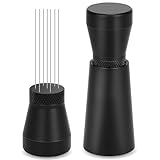
- Top Pick: WDT Espresso Distribution Tool Espresso Stirrer Tools for Barista, 0.35mm 7 Needles Espresso Coffee Stirrer with Extra 7 Replaceable Needles, Aluminum Alloy Handle with Stand (Black)
- Best Value: Nessus WDT Espresso Distribution Tool, Espresso Accessories with Built-in Cleaning Brush, 0.35mm 10 Needle Distributor and Extra 10 Needles for Espresso Stirrer, Aluminum Handle with Stand for Barista
- Premium Choice: Subminimal Flick WDT Espresso Distribution Tool – Retractable Needle Tamper
Last updated: October 20, 2026
As an Amazon Associate we earn from qualifying purchases at no extra cost to you.



Disclosure: As an Amazon Associate we earn from qualifying purchases. This page contains affiliate links and we may earn a commission at no extra cost to you.
The Weiss Distribution Technique — WDT to everyone who uses it — is the rare espresso upgrade that costs almost nothing and shows up in the cup immediately. The idea is embarrassingly simple: before tamping, you stir the loose grounds in the basket with a set of very fine needles, breaking up the clumps your grinder created and redistributing the coffee into an even, fluffy bed. Clumps and dense pockets are where channeling starts; water bores through the loose spots, skips the dense ones, and delivers a shot that’s somehow both sour and bitter. Stirring fixes the bed before the problem exists — and if that flavor description sounds familiar, our guide to why espresso tastes bitter explains the whole failure chain.
What began as a forum trick with a bent paperclip has matured into a real tool category, and the details have converged: needles around 0.3 to 0.35mm thick, long enough to reach the bottom of the basket, mounted in a handle that’s pleasant to hold twice a day. Thinner needles matter more than people expect — thick spokes plow furrows through the bed, while fine needles slip between particles and loosen without trenching.
The six picks below span the sensible range: a budget starter, a couple of beautifully made daily drivers, a design-forward stirrer from Subminimal, and a needle multipack for keeping any of them alive for years. None of them will outdo a better grinder — pairing WDT with something like a zero-retention single-dose grinder is where puck prep gets genuinely boring, in the best way — but every one of them will make the grinder you already own perform above its station.
Quick Comparison
| Product | Price | Rating |
|---|---|---|
| Normcore Replacement Needles (12-Pack) | $12.99 | 5.0/5 |
| MHW-3BOMBER WDT Tool | $23.99 | 4.8/5 |
| 10-Needle 0.35mm WDT Tool | $19.99 | 4.7/5 |
| Subminimal Flick | $29.00 | 4.7/5 |
| Walnut-Handle WDT Distributor | $24.99 | 4.7/5 |
| Budget Needle Distribution Tool | $9.99 | 4.6/5 |
Why Trust This Guide
See also: 6 Best Knock Box Mats (October 2026) Reviews & Picks • 6 Best Profitec Accessories (October 2026) Complete Guide
We prep and pull shots at home every day, and we judge tools by the parts that can be verified — needle gauge, needle count, materials, stand design, and price — plus how they hold up in a real morning routine. We don’t inflate simple tools into miracles: WDT is a modest, repeatable improvement, and we present it as exactly that.
Normcore Replacement Needles (12-Pack)
Not a tool but the thing that keeps a tool alive: a dozen genuine Normcore needles compatible across the brand’s WDT versions. Needles are the consumable of this category — they bend in drawers, snap during overzealous cleaning, and disappear under benches — and owners of a nice WDT handle too often retire the whole tool over two missing pins.
A twelve-pack effectively converts your existing Normcore into a lifetime tool, and the spares also enable experimentation: some users deliberately run fewer needles for a gentler stir, or refresh the full set when the originals develop micro-bends you can’t quite see but can feel dragging in the bed. If a Normcore distributor already lives on your bench, this is cheap insurance. If not, buy one of the tools below first.
MHW-3BOMBER WDT Tool
MHW-3BOMBER has carved out a reputation for barista tools that look like lab equipment, and this WDT model is the pick of this list for daily-driver duty. The needles sit in an adjustable spread, so you can set the working circle wider for big 58mm baskets or tighter for compact ones, and the magnetic stand is the unsung hero — the tool snaps upright into the same spot on your bench instead of rolling behind the grinder trailing coffee dust.
The build quality at this price is frankly unfair to competitors: solid handle, clean machining, replaceable needles. The adjustability also makes it the right choice for households running two machines with different basket sizes. If you want one distribution tool to buy once and stop thinking about, this is the one we’d hand you.
10-Needle 0.35mm WDT Tool
This is the specification-forward pick: ten 0.35mm needles in 304 stainless, pre-installed in the handle with a stand included. More fine needles means more of the bed gets loosened per pass, so a stir takes fewer rotations to homogenize the basket — a small but real workflow win when you’re prepping shots before work.
Ten thin needles also produce a noticeably fluffier bed than six-needle setups, which tamps into a more uniform puck. The flip side of fine pins is fragility; treat the tips kindly and store it on its stand rather than loose in a drawer. For the home barista who reads gauge numbers and wants maximum stir density per dollar, this is the sweet spot — and the shots it preps deserve better than a sad splash of milk, so see our milk frother roundup while you’re upgrading.
Subminimal Flick
Subminimal designs the kind of coffee tools that end up in design blogs, and the Flick is WDT distilled to its minimal form: a slim, beautifully balanced stirrer engineered for precise, controlled passes through the bed. It’s the most expensive distribution tool here, and you are partly paying for industrial design — but not only that. The balance and grip genuinely encourage the light, shallow-to-deep stirring motion that good WDT technique calls for, where cheaper tools invite stabbing.
This is the pick for the aesthete whose espresso corner is curated rather than accumulated, and for anyone who finds that nicer tools make them more consistent because they enjoy the ritual more. If you’re purely chasing function per dollar, the MHW-3BOMBER above wins; if your kitchen runs on intention, the Flick earns its spot every morning.
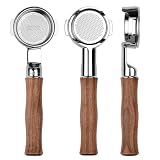
Walnut-Handle WDT Distributor
For those who’d rather their tools look like they belong in a kitchen than a dental office, this distributor mounts seven 0.3mm needles — the finest gauge on this list — in a turned walnut handle. The wood is warm, grippy, and ages gracefully, and the slim 0.3mm pins slip through the bed with almost no resistance, loosening clumps without carving furrows.
Walnut asks for the same courtesy as every wooden bench tool: wipe it dry, don’t let it sit in spilled water, and it will outlast the machine. Seven needles is a middle path — fewer passes than a ten-pin tool needs, gentler than dense arrays. As a gift for a coffee person, or as the tool that finally makes your bench feel finished, it’s the charmer of the group at a fair price.
Budget Needle Distribution Tool
Ten dollars, fine needles, a handle, done. This is the entry ticket to WDT, and the honest secret of the category is that even the cheapest competent needle tool captures most of the benefit — the technique is doing the work, and the technique is free. If you’re WDT-curious and unconvinced, this is how you find out without ceremony.
The compromises are real but livable: plainer materials, no stand worth mentioning, needles that may not be replaceable when they eventually bend. Think of it as the gateway tool — many owners use one happily for years, while others upgrade within a month purely for the magnetic stand and nicer hand feel. Either way, the shots improve the first morning, and that’s the point.
What to Look For in a WDT Tool
Every WDT tool is needles in a handle, which is exactly why the small details decide the winner.
- Needle gauge — 0.3 to 0.4mm is the proven range. Finer needles loosen the bed without trenching; anything thicker behaves like a fork and can do more harm than no stirring at all.
- Needle count and spread — more fine needles homogenize the bed in fewer passes; an adjustable spread adapts one tool to 51, 54, and 58mm baskets alike.
- Replaceable needles — pins bend and snap eventually. Tools with user-replaceable needles cost pennies a year to maintain; sealed ones become disposable.
- A stand, ideally magnetic — a needle tool loose on the bench is a hazard and a mess. A weighted or magnetic dock keeps it upright, clean, and exactly where your hand expects it.
- Handle feel and length — you’ll hold this every single shot. It should balance lightly and let the needles reach the basket floor without your knuckles in the grounds.
- Materials that wipe clean — stainless pins are standard; handles in anodized aluminum or finished hardwood shrug off the inevitable dusting of fines.
Tips for Getting the Most Out of Your WDT Tool
Technique first: stir deep, not just the surface. Drop the needles to the basket floor and work in gentle circles through the full depth of the bed, then finish with a few shallow passes to level the top. The goal is breaking clumps and evening density everywhere — a pretty surface over a clumpy interior is how WDT gets unfairly dismissed. Two things to avoid: violent stabbing, which compacts more than it loosens, and stirring so long the grounds start mounding against the basket wall.
Make it a fixed step, not an occasional rescue. WDT pays in consistency, and consistency only exists if the routine is identical every shot: grind, stir, settle with a light tap, tamp. Done that way it adds maybe fifteen seconds — less time than you’ll spend pouring the cold foam on top of the finished drink, and far less than you’ll save not re-pulling sour shots. Wipe the needles clean as part of the same ritual so oils never build up.
Finally, remember why you’re doing any of this: better-tasting drinks with less luck involved. An evenly extracted shot is sweeter and rounder before anything touches it, which means your oat milk latte needs less sweetener, your syrup pours become a choice instead of a cover-up, and a simple whipped coffee built on good espresso tastes like a café made it. Small needles, outsized returns.
Frequently Asked Questions
Does WDT actually improve espresso, or is it a fad?
It’s one of the most repeatable improvements in home espresso. Stirring breaks up grinder clumps and evens out the bed’s density, which reduces channeling — the main cause of shots that run fast and taste simultaneously sour and bitter. The effect is modest but consistent, and it’s most dramatic with grinders that clump heavily.
What needle thickness should a WDT tool have?
Look for roughly 0.3 to 0.4mm. Needles in that range slide between coffee particles and loosen the bed without leaving furrows. Thicker rods — toothpicks, straightened paperclips, fondue forks — displace coffee in chunks and can create the very density differences you’re trying to remove.
When in my workflow should I use the WDT tool?
After grinding into the portafilter and before tamping, every single shot. Stir through the full depth of the bed in light circles, level the surface with shallow passes, settle the basket with a gentle tap, then tamp. It adds about fifteen seconds to puck prep.
Do I still need WDT if I have an expensive grinder?
Often yes, just less dramatically. Even excellent grinders produce some clumping and uneven basket filling, especially with light roasts and single-dose workflows. High-end grinder owners typically keep WDT as cheap insurance — the cost is seconds, and the worst case is a bed that was already fine.