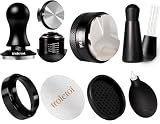
- Top Pick: Normcore V4 Coffee Tamper 53.3mm – Spring-Loaded Tamper – Barista Espresso Tamper with 15lb / 25lb / 30lbs Replacement Springs – Anodized Aluminum Handle and Stand – Flat Base, Black
- Best Value: Y-Step 51mm Espresso Tamper Set, 30 lb Consistent Pressure Calibrated Coffee Tamper with Spring Loaded, Silicone Mat, Coffee Stirrer Espresso Distribution Tool, Wooden Barista Kit for Espresso Machine
- Premium Choice: Apexstone Coffee Tamper Spring Loaded 51mm, Calibrated Espresso Tamper 51mm, Espresso Tamper Spring Loaded
Last updated: September 4, 2026
As an Amazon Associate we earn from qualifying purchases at no extra cost to you.


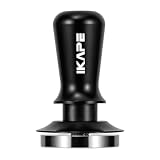
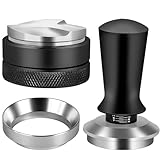

Disclosure: As an Amazon Associate we earn from qualifying purchases. This page contains affiliate links and we may earn a commission at no extra cost to you.
Ask ten home baristas to tamp “thirty pounds, perfectly level” and you’ll get ten different pucks — that’s the entire argument for a calibrated tamper. These tools build the judgment into the hardware: an internal spring compresses at a preset force, and a depth collar rides the basket rim so the press lands dead level every time. Tamping stops being a skill you practice and becomes a constant you can ignore, which frees your attention for the variables that actually move flavor — grind size, dose, and distribution.
This matters most on the compact machines that dominate home kitchens. Breville, De’Longhi, Casabrews and their peers use 51mm and 54mm portafilters, where the coffee bed is smaller and every distribution flaw is proportionally larger. A tilted tamp in a small basket is a bigger percentage of the puck than the same tilt in a commercial 58mm basket. If you own something like the Barista Express — our Breville BES870XL review covers it in depth — a calibrated tamper is among the highest-value upgrades you can make.
The six picks below run from a fourteen-dollar 51mm workhorse to rosewood-handled showpieces, including a clever two-in-one that bundles a WDT distribution tool into the tamper itself. One sizing note before we start: tampers for these machines run slightly under the nominal portafilter size — 53.3mm tampers are made for “54mm” Breville baskets — so trust the listed base diameter, not the marketing size of your machine.
Quick Comparison
| Product | Price | Rating |
|---|---|---|
| KNODOS 54mm Rosewood Tamper | $43.99 | 4.8/5 |
| Normcore V4 53.3mm | $42.29 | 4.7/5 |
| 53.3mm 30lb Calibrated Tamper | $34.98 | 4.7/5 |
| 54mm Triple-Spring Ripple Tamper | $29.99 | 4.7/5 |
| XIXUBX 2-in-1 Tamper & WDT | $25.19 | 4.7/5 |
| 51mm Spring-Loaded Tamper | $14.99 | 4.6/5 |
Why Trust This Guide
See also: 6 Best Knock Box Mats (October 2026) Reviews & Picks • 6 Best Profitec Accessories (October 2026) Complete Guide
We evaluate espresso gear on the details that are checkable — base diameter, spring force options, materials, and mechanism design — filtered through daily shot-pulling on the same home machines these tools are built for. We don’t parrot spec-sheet claims we can’t verify, and when two tools differ only in finish, we tell you to buy the cheaper one.
KNODOS 54mm Rosewood Tamper
The KNODOS leads this list by combining the two failure-proofing mechanisms in one tool: a double-spring calibrated core that standardizes force, plus an auto-leveling collar that squares the base against the basket rim. Built for Breville’s 54mm portafilters, it takes the machine most beginners own and removes the technique gap that keeps their shots inconsistent.
The rosewood handle is more than cosmetic — it’s warm in the hand, naturally grippy, and makes the tool feel like an instrument rather than a gadget, though wood does ask you to keep it off the wet drip tray. At its price it competes directly with Normcore, and choosing between them honestly comes down to handle feel and looks. For Breville owners who want one purchase that ends tamping doubt, this is it.
Normcore V4 53.3mm
Normcore’s V4 is the reference point every other calibrated tamper gets measured against, and this 53.3mm version is the one sized for Breville-style 54mm baskets. The spring-loaded mechanism compresses at a repeatable force — the included 15lb spring is plenty once you realize level matters more than muscle — and the self-leveling collar does the squaring for you. Machining quality is the brand’s calling card: tight tolerances, clean action, no rattle.
What you’re really buying is the ecosystem and consistency. Replacement springs in different weights are easy to find, parts are serviceable, and the tool’s behavior never drifts. It costs more than the no-name alternatives, but this is the calibrated tamper that turned the category mainstream, and it remains the safest default purchase. Once your shots are repeatable, the rest of the drink deserves equal care — a proper milk frother and steamer finishes the job.
53.3mm 30lb Calibrated Tamper
This is the value alternative for the same Breville-class baskets: a 53.3mm auto-leveling tamper with a firm 30lb spring at a noticeably lower price than the brand-name options. The heavier spring suits people who like definitive feedback — the press bottoms out with an unmistakable stop, so there’s never a question of whether you compressed fully.
The honest framing: a 30lb tamp doesn’t extract better than a 15lb tamp — once the puck is fully compacted, extra force is just ceremony — but it does remove all ambiguity, which is its own kind of consistency. Fit and finish are a step below Normcore, as the price suggests. For a budget-conscious Breville owner who wants calibration without the premium, it’s a thoroughly sensible buy.
54mm Triple-Spring Ripple Tamper
The interesting engineering here is the base: instead of a plain flat face, this 54mm calibrated tamper presses a shallow ripple pattern into the puck surface. The concentric grooves slightly increase the surface area where water first meets coffee, encouraging an even initial wetting — the same thinking behind ripple-bottom baskets. Behind that face sits a triple-spring calibrated mechanism for repeatable force.
Does the ripple transform your espresso? No — grind and distribution still dominate — but it’s a legitimate refinement, not snake oil, and shot-to-shot the surface does look beautifully uniform. At a midrange price it’s a fun pick for tinkerers who enjoy comparing puck faces and chasing marginal gains, and a perfectly competent everyday tamper for everyone else. Pair the experiments with a disciplined shot ratio recipe so you can actually taste what changed.
XIXUBX 2-in-1 Tamper & WDT
Small kitchens, rejoice: this 53mm tool hides a magnetic WDT distribution tool inside the tamper body, so the two puck-prep steps that matter most live in one piece of hardware. You stir out the clumps with the fine needles, snap the WDT section back into the anodized body, and tamp with the spring-loaded calibrated base — one object on the bench instead of two.
Combination tools always trade a little optimization for convenience: the needles are shorter than a dedicated WDT tool’s, and 53mm means you should check your basket’s true diameter before assuming a snug fit. But the price is modest and the workflow is genuinely slick — prep, stir, tamp, lock together, done. For anyone whose espresso corner is fighting for counter space with a toaster, this is the clever buy.
51mm Spring-Loaded Tamper
Owners of 51mm machines — countless De’Longhi and compact models — usually get ignored by the accessory market, which makes this calibrated 51mm tamper at fifteen dollars a quiet gift. The spring mechanism delivers the same repeatable-force benefit as tools costing three times more, and it replaces the flexing plastic tamper-scoop that ships with most small machines, which is arguably the single worst stock accessory in espresso.
At this price the finishing is basic and the spring action less silky than Normcore’s — fair trades. What matters is that the fundamental upgrade is intact: full, level, consistent compression on every shot. If your 51mm machine is your daily driver and your lattes still taste different every morning, start here before blaming the beans. It might be the best fifteen dollars in this entire category.
What to Look For in a Calibrated Espresso Tamper
Calibrated tampers all promise the same thing — consistency — but the execution details decide whether you get it.
- Exact base diameter — this is non-negotiable. “54mm” machines typically need a 53.3mm base, 51mm machines need true 51mm. A millimeter of slop leaves an untamped ring at the basket wall.
- Spring force and feel — 15lb, 25lb, and 30lb springs all produce fine espresso; what differs is feedback. Heavier springs give a more definite stop, lighter ones a gentler action. Interchangeable springs are a plus.
- Auto-leveling collar — the depth ring that registers on the basket rim is what guarantees a level press. For most people it matters more than the calibration itself.
- Mechanism serviceability — coffee dust gets everywhere. A tamper that unscrews for cleaning, with replaceable springs, outlives a sealed one.
- Base face design — flat is the proven default; ripple faces are a legitimate refinement for even wetting. Avoid anything with visible machining flaws on the face.
- Handle material and height — wood is warm but hates water; anodized aluminum and stainless shrug off the drip tray. Make sure the collar height suits how your hand grips.
Tips for Getting the Most Out of Your Calibrated Tamper
Let the tool do its one job completely: press straight down until the mechanism bottoms out or clicks, then stop. Don’t add a twist under pressure, don’t double-tamp, don’t lean in for luck — the entire point is that the spring decides when you’re done. Your only responsibilities now are keeping the portafilter on a stable surface and keeping your wrist stacked vertically, and the collar largely forgives even that.
Spend the attention you’ve reclaimed on what happens before the tamp. Distribution is now your biggest lever: break up clumps, level the loose bed, and only then press. And re-dial your grinder when you switch to a calibrated tamper — if your old tamps averaged softer than the spring’s force, your shots may suddenly run slower, which feels like a fault but is actually your new baseline revealing itself. Adjust the grind coarser a step and lock in the recipe.
Then cash in the consistency where it counts: the drinks. Repeatable shots are what make a weekend affogato reliably great, keep an oat milk flat white from going watery, and give a whipped coffee a base worth whipping. Consistent espresso is the boring foundation under every interesting drink you’ll make this year.
Frequently Asked Questions
What does “calibrated” actually mean in a tamper?
It means the tamper contains a spring or mechanism preset to compress at a specific force — commonly 15, 25, or 30 pounds. When you press, the mechanism gives way or bottoms out at that force, so every tamp lands identical regardless of who’s pressing or how they feel that morning.
Which spring weight should I choose?
Any of them, honestly — once a puck is fully compacted, extra force changes very little, so the spring weight is about feel rather than flavor. Lighter springs (15lb) feel smooth and effortless; heavier ones (30lb) give a firmer, unmistakable stop. Consistency is the benefit; the number is preference.
Why is my “54mm” machine’s tamper actually 53.3mm?
Because the 54mm figure describes the portafilter, not the basket’s usable interior. The basket walls and manufacturing clearances mean the real opening is a touch smaller, so tamper makers size to roughly 53.3mm for a close sliding fit. Always buy by the tamper’s stated base diameter.
Do calibrated tampers wear out?
The springs are wear items in theory, but they’re rated for enormous cycle counts and most brands sell cheap replacements. The realistic maintenance is cleaning: coffee fines work into the mechanism over months, so unscrew the base occasionally, brush it out, and the action stays like new for years.