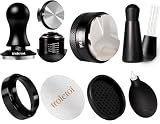
- Top Pick: Normcore 58mm Coffee Tamper – V4 Spring-loaded Tamper with Stainless Steel Flat Base – 15lb / 25lb / 30lbs Replacement Springs – Anodized Aluminum Handle and Stand – Fits 58mm Standard Baskets
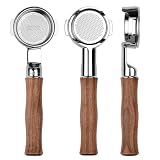
- Best Value: USEAMIE Coffee Tamper Espresso Press with Tamper Mat 304 Stainless Steel Flat Base Wooden Handle for Coffee Grounds Barista Espresso Machines Accessory (58MM)
- Premium Choice: omgogo Coffee Tamper 58mm Barista Espresso Base Coffee Bean Press
Last updated: September 4, 2026
As an Amazon Associate we earn from qualifying purchases at no extra cost to you.




Disclosure: As an Amazon Associate we earn from qualifying purchases. This page contains affiliate links and we may earn a commission at no extra cost to you.
The tamper is the most underestimated tool on the espresso bench. Grinders get the glory and machines get the budget, but the tamp is the last thing that happens to your coffee before water hits it — and an uneven or undersized tamp undoes everything upstream. Water is lazy: it finds the loosest path through the puck, races through it, and leaves the rest of the coffee under-extracted. That single failure mode, channeling, is behind a huge share of the harsh, unbalanced shots people blame on their beans. If your shots taste off in ways you can’t explain, our breakdown of why espresso turns bitter pairs well with this guide.
58mm is the commercial standard basket size, shared by prosumer heavyweights and an increasing number of midrange machines. That standardization is good news: the 58mm tamper market is deep, competitive, and full of genuinely well-machined tools at sane prices. The bad news is that the listings all look alike — a disc and a handle — while hiding real differences in base diameter precision, flatness, weight, and whether the tamper self-levels for you.
We’ve rounded up six 58mm tampers that span the honest range: machined classics, budget workhorses, and Normcore’s spring-loaded calibrated line that has quietly become the default recommendation for home baristas who want consistency without thinking about it. Every pick here assumes you actually have a 58mm basket — measure before you buy, because a tamper that fits loosely leaves a rim of loose grounds around the edge of every puck.
Quick Comparison
| Product | Price | Rating |
|---|---|---|
| LuxHaus 58mm Tamper | $24.99 | 4.8/5 |
| 58mm Barista Base Tamper | $17.50 | 4.8/5 |
| Normcore V4 58mm Spring Tamper | $43.99 | 4.7/5 |
| Wooden-Handle Tamper with Mat | $15.99 | 4.7/5 |
| Normcore V4 58.5mm Tamper | $43.99 | 4.7/5 |
| Normcore V4 Titanium PVD | $49.99 | 4.7/5 |
Why Trust This Guide
See also: 6 Best Knock Box Mats (October 2026) Reviews & Picks • 6 Best Profitec Accessories (October 2026) Complete Guide
We pull shots on home machines daily and we evaluate gear the way a skeptical friend would: by materials, machining quality, fit to real basket sizes, and price against the alternatives. We don’t repeat manufacturer claims we can’t reason about, we don’t invent measurements, and where a cheaper tool does the same job as an expensive one, we say exactly that.
LuxHaus 58mm Tamper
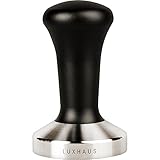
The LuxHaus is what most people should picture when they think “good basic tamper”: a fully flat stainless steel base with a comfortable weighted handle, machined to a true 58mm, at a price that doesn’t sting. There’s no spring, no calibration, no gimmick — just a properly made disc that distributes your downward force evenly across the puck.
A traditional tamper like this rewards technique. You control the pressure, the level, and the polish stroke, which means you also own the inconsistencies. For home baristas who enjoy the craft side of espresso — and who want a tool that will never wear out or need spring maintenance — it’s the sweet spot of the classic style. If your tamps come out tilted more often than you’d like to admit, look to the calibrated Normcore options below instead.
58mm Barista Base Tamper
This is the budget entry of the group, a straightforward stainless-base press that does the one thing a tamper must do: compress the bed flat. At this price it’s the natural upgrade for anyone still using the plastic scoop-tamper that shipped taped inside their machine box — and that upgrade is bigger than it sounds, because those plastic discs are usually undersized and flex under pressure.
The compromises are predictable: the finishing is plainer, the handle less refined, and the weight distribution less luxurious than the pricier tools here. None of that changes the puck. If you’re testing whether espresso is a hobby you’ll keep, spend less here and put the difference toward beans — you can always graduate later, and a spare tamper is never useless.
Normcore V4 58mm Spring Tamper
Normcore’s V4 is the tamper that solved the consistency problem for a generation of home baristas. An internal spring is calibrated to compress at a set force — this version ships with the 15lb spring — so every tamp lands at the same pressure no matter who is holding the handle or how awake they are. Combined with the self-leveling depth collar that rides on the basket rim, it removes the two classic tamping errors, tilt and pressure drift, in one tool.
Once tamping is mechanically consistent, your other variables become visible: grind, dose, distribution. That’s the real gift here — it turns dialing-in into a controlled experiment. It costs roughly twice what a classic tamper does and the spring mechanism is one more thing to keep clean, but for most home setups this is the best value in the lineup. Shots become repeatable enough that you can spend your attention on the fun parts, like perfecting the milk side with a proper frother or steamer.
Wooden-Handle Tamper with Mat
This package pairs a 304 stainless flat-base tamper with a wooden handle and includes a silicone tamping mat — a detail that matters more than it seems, because tamping against a bare countertop chips both the counter and the portafilter spouts. As a starter bundle it covers the bench basics in one purchase at the second-lowest price here.
The wooden handle is the personality choice: warmer in the hand than steel, lighter overall, and better looking on a shelf. The tradeoff is that wood wants to stay dry, so don’t leave it sitting in puddles on the drip tray. For gift-buying or for outfitting a first machine without spreadsheet-level research, this is the easy pick — functional, complete, and pleasant to use.
Normcore V4 58.5mm Tamper
Here’s a nerdy detail that genuinely changes shot quality: many “58mm” baskets actually measure a touch over 58mm inside, which leaves a thin ring of untamped grounds around a standard tamper’s edge. Normcore’s 58.5mm V4 closes that gap, hugging precision baskets nearly wall-to-wall. It ships with interchangeable 15, 25, and 30lb springs, letting you standardize whichever tamping force you prefer and keep it identical forever.
The caution flag: 58.5mm is a tight fit by design, and in a basket that runs true 58mm or slightly under, it can bind. This is a tool for people who know their basket’s actual dimensions — typically owners of aftermarket precision baskets. For them, the edge-to-edge tamp noticeably reduces side channeling; a bottomless portafilter will show you the difference in real time.
Normcore V4 Titanium PVD
Functionally this is the same excellent V4 spring-loaded, self-leveling design as the standard model — the upgrade is a titanium PVD finish on the base, a hard vapor-deposited surface that resists scratching and keeps its dark sheen through years of daily contact with abrasive coffee grounds. It’s the most expensive tamper in this roundup, and the extra spend buys durability and looks rather than better shots.
That’s not a criticism so much as a category: every hobby has its buy-it-once tier. If your espresso corner is a small altar and you want the tool that still looks new in five years, this is that tamper. If you’re optimizing purely for taste per dollar, the standard V4 delivers identical pucks and the difference funds a month of good beans — or a few bottles from our coffee syrup roundup if your household leans toward flavored lattes.
What to Look For in a 58mm Espresso Tamper
Tampers look interchangeable in photos. These are the details that separate a tool you’ll use for a decade from a drawer ornament.
- True base diameter — a tamper that’s loose in the basket leaves an untamped ring at the edge, the prime site for channeling. 58mm fits standard baskets; 58.35–58.5mm bases suit precision baskets that measure large.
- Base flatness and machining — the face must be genuinely flat and cleanly finished. Ripples, casting marks, or a convex surprise change how the puck compresses.
- Calibration mechanism — spring-loaded tampers click or bottom out at a fixed force, removing pressure guesswork. Worth the premium if consistency is your weak point; unnecessary if your technique is already solid.
- Self-leveling design — a depth collar that registers on the basket rim guarantees a level tamp every time, which matters more than absolute pressure does.
- Weight and handle comfort — a tamper you use twice a day should sit naturally in your palm. Heavier bases assist the press; slimmer handles suit smaller hands.
- Materials that survive the bench — stainless bases are the standard for good reason; wood handles look great but dislike sitting wet; coated finishes should be hard-wearing, not decorative paint.
Tips for Getting the Most Out of Your 58mm Tamper
Stop chasing maximum force. The old “30 pounds of pressure” folklore matters far less than levelness and consistency — once the puck is fully compressed, pressing harder changes almost nothing, but pressing crooked changes everything. Set the portafilter on a stable mat, keep your elbow stacked vertically over your wrist, press until the bed firmly resists, and stop. If you use a calibrated tamper, let the spring make that decision and never think about it again.
Remember that tamping is the last step of distribution, not a substitute for it. A clumped, lopsided bed tamped perfectly flat is still a lopsided bed underneath. Settle the grounds evenly first — a stir, a gentle side tap, a leveling tool if you have one — then tamp once, cleanly. Skip the old habit of knocking the portafilter with the tamper between presses; it can crack the compacted edge seal and reopen the exact channels you just closed.
And keep perspective: the point of consistent shots is drinking better, not auditing them. A reliable tamp is what makes a silky cold foam coffee, a proper oat milk latte, or a Friday-night affogato taste intentional instead of lucky. Dial it in, then go enjoy the drinks.
Frequently Asked Questions
Does tamper size really matter that much?
Yes — fit is the whole game. A base that’s even a millimeter undersized leaves a loose ring of grounds at the basket wall, and water exploits that ring instead of extracting the center evenly. Match the tamper to your basket’s true inner diameter, not just the nominal machine size.
How hard should I tamp?
Firm, level, and consistent beats hard. Once the coffee bed is fully compacted, additional force barely changes extraction, but inconsistent or tilted pressure changes it shot to shot. If you struggle to keep this repeatable by feel, a calibrated spring tamper standardizes it mechanically.
Are spring-loaded tampers better than traditional ones?
They’re more consistent, which for most home users means better. A traditional flat tamper in practiced hands produces identical results — the spring simply guarantees the same force and level every time regardless of mood or technique. Beginners and households with multiple espresso makers benefit most.
Will a 58mm tamper fit my machine?
Only if your basket is actually 58mm — that’s the commercial standard, common on prosumer machines. Many popular home machines use 51mm or 54mm baskets instead, and several precision aftermarket baskets run slightly over 58mm, which is what 58.35mm and 58.5mm tampers are made for. Measure the basket’s inner diameter before ordering.