- Top Pick: Wood Coffee Bar Organizer with 3-Tier Syrup Rack and Coffee Pod Drawer
- Best Value: Appliance Slider 360° Rolling Tray for Coffee Maker, Under Coffee Maker Mat
- Premium Choice: SUPERJARE Kitchen Bakers Rack with Power Outlet, Coffee Bar Table 4 Tiers, Kitchen Microwave Stand with 6 S-shaped Hooks, Storage Shelf Rack for Spices, Pots and Pans – Rustic Brown
Last updated: October 20, 2026
As an Amazon Associate we earn from qualifying purchases at no extra cost to you.




Disclosure: As an Amazon Associate we earn from qualifying purchases. This page contains affiliate links and we may earn a commission at no extra cost to you.
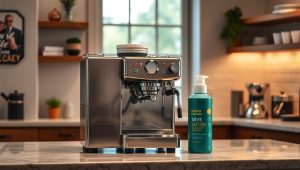
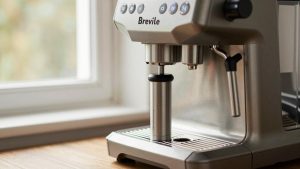
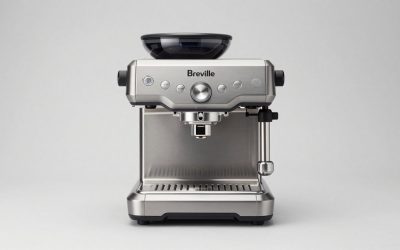
Espresso machines are heavy, thirsty appliances that need to move more often than you would think. The water tank fills from the back on many models, the drip tray wants emptying daily, and the space behind the machine becomes a dust-and-grounds graveyard unless you can slide the whole thing forward without a deadlift. That is the unglamorous case for an espresso machine stand or slider — and once you add one, you wonder how you tolerated dragging forty pounds of stainless steel across stone countertops.
The category is broader than it sounds. Rolling appliance sliders solve the daily-access problem. Sliding hardwood trays do the same job with more warmth and a fixed track. Pod drawers put a machine on a platform that stores capsules underneath, reclaiming vertical space. Folding stands give portable espresso makers a stable perch anywhere. And full bakers racks turn a blank wall into a complete coffee station, outlet and all.
We have organized this guide around those real use cases rather than a single winner, because the right stand depends entirely on your machine and your kitchen. Whether you run a plumbing-free counter setup or a dedicated drink station for oat milk lattes and weekend whipped coffee experiments, one of these six will fit.
🛒 Best Price Today on Amazon
Prime members get fast, free shipping on everything above, plus member-only deals. New members get a 30-day free trial — cancel anytime.
Quick Comparison
| Product | Price | Rating |
|---|---|---|
| Joy&Grace 360° Rolling Appliance Slider | Check on Amazon | 4.8/5 |
| OutIn Foldable Portable Coffee Stand | Check on Amazon | 4.8/5 |
| DecoBrothers Glass Vertuo Pod Drawer | Check on Amazon | 4.7/5 |
| Natural Acacia Sliding Tray | Check on Amazon | 4.7/5 |
| Stand for Outin Nano Espresso Maker | Check on Amazon | 4.7/5 |
| SUPERJARE Bakers Rack with Outlet | Check on Amazon | 4.7/5 |
Why Trust This Guide
See also: 6 Best Knock Box Mats (October 2026) Reviews & Picks • 6 Best Profitec Accessories (October 2026) Complete Guide
We evaluate coffee station gear in real kitchens — small ones, with too many appliances — judging stability under load, smoothness of movement, and whether a product survives daily contact with water, grounds, and hot metal.
Joy&Grace 360° Rolling Appliance Slider
This rolling tray is the most universally useful product here. Park your espresso machine on it and the daily chores — refilling the rear tank, emptying the tray, wiping underneath — become a gentle pull instead of a two-handed shove. The 360-degree rolling design also lets you rotate the machine to reach side panels, which anyone who descales regularly will appreciate.
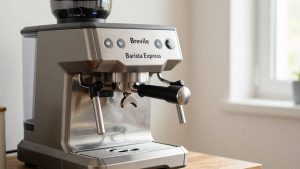
The thing to verify is the weight of your machine against the slider’s load rating before buying, and to check that the platform footprint matches your machine’s base — a slider that is too small puts feet near the edges. For mid-weight machines like a Barista Express, it is a near-perfect quality-of-life upgrade at a fair price.
OutIn Foldable Portable Coffee Stand
This one serves a different master: travel espresso. OutIn’s folding stand gives a portable espresso maker a stable, level base on picnic tables, camp kitchens, and hotel desks, then collapses flat with a carabiner clip for the trip home. The stability matters more than it sounds — pressing shots on a wobbling surface is how hot coffee ends up on your hands.
At fifty dollars it is the priciest small stand here, and it is solving a niche problem; home-only brewers should skip it. But if a portable machine is part of your kit, this is the difference between brewing crouched over a rock and brewing at a proper height. Campsite espresso with properly frothed milk is possible too, if you bring a battery-powered wand from our milk frother guide.
DecoBrothers Glass Vertuo Pod Drawer
For Nespresso households, this tempered-glass drawer is a clever double-duty stand: your Vertuo machine sits on top, and up to 24 large or 48 small capsules organize themselves in the drawer below. It reclaims the vertical space above your capsule clutter and puts every flavor in view, which sounds trivial until you have lived with a countertop pile of sleeves.
The crystal glass top wipes clean easily and looks more expensive than it is, though glass demands you set the machine down rather than drop it, and the drawer suits capsule storage only — it is not a general-purpose organizer. Vertuo owners who refill their own capsules (see our built-in frother machine guide for what pairs well with that setup) get the tidiest counter of all.
Natural Acacia Sliding Tray
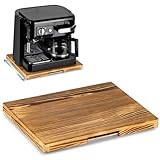
The acacia slider answers the same daily-access problem as the rolling tray, but in hardwood. The warm grain elevates a coffee corner the way a good cutting board elevates a kitchen, and the sliding mechanism glides the machine forward for tank refills without scratching the counter beneath. Acacia’s natural density and moisture resistance suit a splash-prone zone well.
Wood asks a little more of you than plastic: wipe up water promptly, oil it occasionally, and it will age beautifully; neglect it and it will not. It also costs a few dollars more than the rolling version. For anyone styling a deliberate coffee station — machine, grinder, cups on display — this is the slider that belongs in the photo.
Stand for Outin Nano Espresso Maker
This compact stand is purpose-built for the Outin Nano portable espresso maker, giving the little machine a stable base with proper cup clearance underneath. Nano owners know the awkwardness it solves: the maker otherwise needs hand-holding over a low cup, which gets old by the second shot of a camping trip.
It is a sixteen-dollar accessory with a single job, and it does that job well — but check compatibility carefully, because it is designed around the Nano’s dimensions rather than portable makers generally. As a stocking-stuffer companion to an existing Nano, it is easy to recommend; as a general espresso stand, look at the folding OutIn above instead.
SUPERJARE Bakers Rack with Outlet
The bakers rack is the nuclear option: a four-tier freestanding coffee station with a built-in power outlet, ready to host machine, grinder, frother, cups, beans, and the inevitable accessory creep. The outlet is the killer feature — your espresso corner stops competing for kitchen sockets — and the tiers turn vertical space into storage that countertops simply cannot offer.
Assembly takes an afternoon, it needs real floor space, and at sixty dollars it costs as much as some grinders. But for apartments with no spare counter, or households whose coffee hobby has outgrown the kitchen, a dedicated rack is transformative. It comfortably hosts the full milk-drink workflow too — machine on one tier, pitchers and the gear from our frother and steamer roundup on another.
What to Look For in an Espresso Machine Stand
The right stand depends on your machine’s weight, your counter situation, and how often you need to move things. These criteria separate the keepers from the returns.
- Load capacity with margin — Weigh your machine with a full water tank, then add a comfortable buffer. A stand at its limit flexes, rolls poorly, and wears out fast.
- Footprint match — The platform should be at least as large as your machine’s base so all feet sit fully supported, with no overhang toward the edge you pull from.
- Smooth, controlled movement — Sliders and rollers should move with light effort but not drift freely; a machine that wanders during tamping is worse than one that never moves.
- Water-resistant materials — Espresso stations get wet daily. Tempered glass, sealed hardwood, and quality plastics all survive; raw MDF and cheap laminates swell and fail.
- Storage that matches your habit — Pod drawers suit capsule machines; shelf tiers suit gear collectors; a plain slider suits minimalists. Buy for the clutter you actually have.
- Counter clearance — Adding a stand raises your machine by its platform height. Check the gap under your cabinets, especially for bean hoppers you load from the top.
Tips for Getting the Most Out of Your Espresso Machine Stand
Position the stand so the machine’s most-used access point — usually the water tank — faces the direction you pull it. A slider only saves effort if the motion it allows is the motion you need. Leave a finger’s width of wall clearance behind the machine for heat and steam to escape, and route the power cord with enough slack that sliding the machine forward never tugs the plug.
Clean the track or wheels monthly. Coffee grounds are abrasive, and a stray scatter under a slider becomes a grinding paste that scratches both the mechanism and your counter. A quick lift-and-wipe keeps everything gliding silently. While you are down there, it is the natural moment to empty the drip tray and check for the slow leaks that machines develop with age — catching one early can be the difference between a gasket replacement and a flooded counter.
Finally, think of the stand as the anchor of a workflow, not a pedestal. Arrange grinder, tamper station, and knock box within one step, keep cups within reach above or beside, and the whole ritual tightens up. If your station serves a household of varied drinkers — espresso for some, alternatives like the ones in our matcha and chicory guide or even mushroom coffee for others — tiered storage earns its keep within a week.
Frequently Asked Questions
Will a rolling slider move while I lock in the portafilter or tamp?
Quality sliders are designed to resist drift under normal use — the rolling mechanism engages with a deliberate pull, not incidental pressure. That said, heavy-handed portafilter locking can nudge any rolling platform, so develop the habit of steadying the machine with one hand, or tamp on the counter rather than on the machine’s tray.
Are appliance sliders safe for heavy prosumer espresso machines?
Only if the slider’s load rating comfortably exceeds the machine’s full operating weight, including a filled tank. Mid-weight machines suit most sliders; heavier dual-boiler machines need platforms rated accordingly, and at the top end many owners simply choose a fixed reinforced shelf instead.
Is a bakers rack stable enough for an espresso machine?
A properly assembled rack on a level floor handles an espresso station without trouble — place the machine on the sturdiest tier, usually the lowest or the dedicated appliance shelf, and load heavier items low to keep the center of gravity down. Wall-anchoring straps, included with many racks, add cheap insurance in busy households.
Do I actually need a stand, or is it clutter?
If you refill a rear water tank daily, clean behind the machine more than rarely, or fight for counter space, a slider or rack pays for itself in saved annoyance. If your machine has front-access water and a permanent home with generous clearance, you can skip the category guilt-free — spend the money on beans instead.