- Top Pick: MIGAKU HOME Coffee Grinder Cleaning Kit – 5Pcs Large Soft Brush, Small Hard Brush, Group Head Brush, Long-reach Brush & Air Blower for Coffee & Espresso Machine Parts & Accessories
- Best Value: TAKAVU Coffee Grinder Cleaning Kit, 4pcs Boar Bristle Detail Brushes
- Premium Choice: DXary 5 Pieces Coffee Brush Set Professional Espresso Brush Kit Include Wooden Coffee Grinder Machine Cleaning Brush and Nylon Espresso Brush for Coffee Machine Group Head (5)
Last updated: October 20, 2026
As an Amazon Associate we earn from qualifying purchases at no extra cost to you.






Disclosure: As an Amazon Associate we earn from qualifying purchases. This page contains affiliate links and we may earn a commission at no extra cost to you.
Here is an uncomfortable truth about home espresso: the grinder you researched for weeks is slowly sabotaging itself. Coffee is oily, and every gram that passes through the burrs leaves a film behind. Old grounds pack into the chute, stale fines cling to the burr teeth, and within a month or two your fresh, expensive beans are being ground through a layer of rancid residue. If your espresso has drifted bitter or ashy for no reason you can name, the grinder’s insides are the first suspect — our guide to why espresso turns bitter puts stale buildup high on the list.
The fix is embarrassingly cheap: a set of purpose-shaped brushes. Grinder cleaning kits bundle stiff narrow brushes for burr teeth, soft wide brushes for hoppers and chambers, and group head brushes for the espresso machine end of the workflow. Five minutes a week with the right bristles keeps the grind path clean, the dosing consistent, and the flavor the way the roaster intended.
They overlap heavily in function — every one of them will clean a grinder — so we have focused on which kit suits which setup, from a single hand grinder to a multi-machine coffee bar built around picks from our espresso grinder guide.
🛒 Best Price Today on Amazon
Prime members get fast, free shipping on everything above, plus member-only deals. New members get a 30-day free trial — cancel anytime.
Quick Comparison
| Product | Price | Rating |
|---|---|---|
| 7-Piece Walnut Grinder Brush Set | Check on Amazon | 5.0/5 |
| 3-Piece Dual-Head Grinder Brushes | Check on Amazon | 5.0/5 |
| 5-Piece Grinder Cleaning Kit | Check on Amazon | 4.8/5 |
| Walnut-Handle Grinder Brush Set | Check on Amazon | 4.8/5 |
| Grinder Cleaning Brush Kit | Check on Amazon | 4.8/5 |
| 5-Piece Nylon Brush Kit | Check on Amazon | 4.8/5 |
Why Trust This Guide
See also: 6 Best Knock Box Mats (October 2026) Reviews & Picks • 6 Best Profitec Accessories (October 2026) Complete Guide
We clean our own grinders weekly and have worn out enough brushes to know which bristles reach burr teeth and which just rearrange the mess.
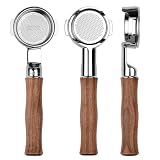
7-Piece Walnut Grinder Brush Set
The seven-piece walnut set is the complete toolkit of the group: multiple brush shapes covering burr teeth, chute, hopper, chamber, and the espresso machine’s group head, all with the warm walnut handles that make a cleaning kit feel like equipment rather than an afterthought. Having a dedicated shape for each zone genuinely speeds the routine — no single brush does corners and flats equally well.
Thirteen dollars for seven purpose-shaped tools is hard to argue with, and the wood handles earn display space by the grinder, which quietly increases how often cleaning actually happens. The only caution is the usual one for natural wood: shake the brushes dry rather than soaking them. For most home setups, this is the one-purchase answer.
3-Piece Dual-Head Grinder Brushes
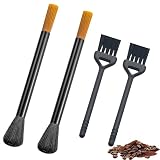
This compact trio takes the opposite approach: three small dual-head brushes, each pairing two bristle types on one handle, built for tight spaces. For hand grinders and small single-dose electric grinders, where the entire grind path is a few narrow chambers, these reach spots that full-size brushes simply cannot enter — around the central burr shaft, into the catch cup threads, along narrow chutes.
At seven dollars it is a minimal investment, and the dual heads mean six bristle options in three tools. Owners of large flat-burr machines will want longer handles and wider faces as a complement, but as the dedicated kit for a travel grinder or a compact setup, this is precise, cheap, and effective.
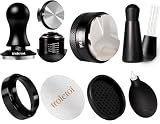
5-Piece Grinder Cleaning Kit
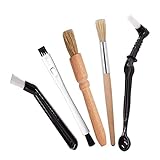
This five-piece kit is the heavy-duty option: a large soft brush for sweeping hoppers and counters, a small stiff brush for burr teeth, a dedicated group head brush, and supporting tools that bridge grinder and espresso machine cleaning in one box. The size and stiffness split is the right one — soft and wide where you are dusting, hard and narrow where you are dislodging packed fines.
At twenty-three dollars it is the most expensive kit here, which is the honest knock; you are paying for larger tools and a broader set rather than fundamentally better bristles. For households running a serious machine-and-grinder pair, the all-in-one scope justifies the price.
Walnut-Handle Grinder Brush Set
This set strikes the middle balance: walnut-handled brushes covering the essential grinder zones at a ten-dollar price. The bristle quality is the story — densely packed, with enough stiffness to lift oily fines off burr teeth without shedding into the grind path, which is the failure mode of the very cheapest brushes. Loose bristles in a burr set are worse than the dirt they replaced.
Compared with the seven-piece set at three dollars more, you get fewer shapes; compared with the nylon kit at four dollars less, you get nicer handles and better-anchored bristles. It is the sensible pick if you want quality over quantity and your grinder has a fairly simple grind path to service.
Grinder Cleaning Brush Kit
This straightforward kit covers grinder and espresso machine brushing duty at the same ten-dollar mark as the walnut set above, with a configuration aimed squarely at the weekly-cleaning routine: chute, burr area, and machine surfaces. It is the kind of unfussy tool set that gets used precisely because there is nothing precious about it.
Choosing between this and the walnut-handle set is splitting hairs — handle material and brush shapes differ more than results do. What we like is the no-nonsense honesty of the format: simple brushes, clearly assigned jobs, no gimmicks. If it is in stock and the walnut set is not, buy this and never think about it again; your grinder cares about bristles, not aesthetics.
5-Piece Nylon Brush Kit
At six dollars, this five-piece nylon-and-wood kit is the cheapest full-spread option here — group head brush included — and the natural pick for anyone testing whether a cleaning routine will actually stick before spending more. Nylon bristles are the right material at this price: stiff enough for burr teeth, easy to rinse, slow to wear.
Expect economy-grade fit and finish; what matters is that the heads stay attached and the bristles stay put, and for the modest demands of weekly brushing they do. Households with both an espresso machine and a drip or pour-over setup get extra mileage, since the soft brushes serve any coffee gear — whichever side of the French press vs pour over divide you brew on.
What to Look For in a Coffee Grinder Cleaning Kit
Brush kits look alike in photos. These are the differences you feel three months in.
- Bristle retention — The cardinal failure is shedding. Bristles must be anchored well enough that none end up in your burrs or your cup; tug a few when the kit arrives.
- Stiffness variety — Oily, packed fines need firm narrow bristles; hoppers and counters want soft wide ones. A good kit covers both ends deliberately.
- Shapes that match your grinder — Conical hand grinders need slim brushes; flat-burr electrics need wider faces and angled reach. Check the kit against your machine’s geometry.
- Group head brush included — Cleaning the espresso machine’s shower screen is the same weekly ritual; a kit that covers it saves a separate purchase.
- Handle comfort and length — You scrub at awkward angles inside chutes and chambers. Handles long enough to reach and shaped enough to grip make the routine faster, which makes it happen.
- Dry-use durability — Grinder cleaning is a dry job. Wood handles and natural bristles are fine if you keep them dry; anything that demands washing after each use adds friction.
Tips for Getting the Most Out of Your Grinder Cleaning Kit
Build the routine around frequency, not thoroughness. A two-minute brush of the chute, dosing area, and visible burr faces once or twice a week beats a heroic deep clean every quarter, because buildup never gets the chance to turn rancid. Unplug electric grinders first, always. Remove the hopper, run the last beans through, then brush from the top of the grind path downward so dislodged grounds fall out rather than in. Finish by purging a few grams of beans, which sweep loosened fines out of the chute.
Save the deep clean for monthly or whenever you switch to a dramatically different roast. That is when you remove the outer burr per your grinder’s manual, brush both burr faces thoroughly, and clear the threads — the stiff narrow brush earns its place here. Dark, oily roasts demand this more often than light ones; if you rotate beans frequently — espresso blends one week, coarse batches of the beans we recommend for cold brew the next — a clean grind path also stops yesterday’s dark roast from haunting today’s delicate single origin. The same hygiene logic extends to everything milk touches on your bar, which is why our frother and steamer guide bangs the cleaning drum just as hard.
Finally, keep the brushes themselves clean and dry — tap them out over the bin after each use, and never use the grinder brushes on wet surfaces or detergent jobs. Dedicated dry brushes last for years; cross-contaminated ones drag moisture and soap residue into a machine that should only ever see coffee.
Frequently Asked Questions
How often should I clean my coffee grinder?
A light brush-out of the chute and dosing area once or twice weekly, plus a monthly deeper clean of the burrs, suits most home espresso routines. Heavy use or oily dark roasts push both frequencies up. The honest test: if you can see buildup, you are overdue.
Can I wash my grinder’s parts with water instead of brushing?
Burrs and the grind path should stay dry — water flash-rusts carbon steel burrs and leaves residue that grounds stick to. Brushes and grinder-specific cleaning tablets are the safe tools for the grind path; removable hoppers and catch bins are usually washable, but dry them completely before reassembly.
Do grinder cleaning tablets replace brushes?
They complement rather than replace. Tablets purge oils and odors from the burr chamber effectively, but they cannot sweep the chute, hopper, or dosing area, and packed corners still need bristles. The cheapest effective routine is weekly brushing with occasional tablet use for deep refreshes.
Will regular cleaning actually change how my coffee tastes?
Noticeably, if you have never done it. Rancid oils and stale fines blend into every dose, muting brightness and adding bitter, ashy notes. The first brew after a proper clean is the convincing one — most people taste the difference immediately and never let the buildup return.