Last updated: October 21, 2026
As an Amazon Associate we earn from qualifying purchases at no extra cost to you.





Disclosure: As an Amazon Associate we earn from qualifying purchases. This page contains affiliate links and we may earn a commission at no extra cost to you.
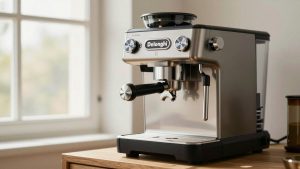
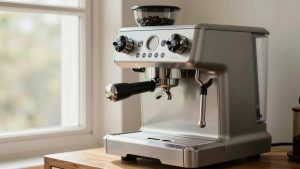
An espresso machine with a built-in grinder solves the problem most beginners don’t see coming: the machine is only half the purchase. Espresso demands coffee ground finer and fresher than anything a supermarket bag provides, and shoppers who buy a machine alone discover within a week that they need a grinder too — often one costing as much as the machine. Bean-to-cup combos fold that second purchase into the first, save a strip of counter, and remove the daily choreography of moving grounds between appliances.
The category splits into two philosophies, and this guide covers both. Semi-automatic combos — the Breville Barista Express, Gevi’s 2026 upgrade, the AMZCHEF, Electactic, and Kismile — grind into a portafilter you still tamp and lock yourself, keeping you in the barista’s seat. Fully automatic combos, represented here by a touch-screen 20 bar machine at $429.99, take the portafilter away entirely: press the screen, receive the drink. The right choice depends on whether grinding fresh is the chore you want eliminated, or the only chore you want eliminated.
If you are still weighing combos against separates, our grinder versus pre-ground test shows why fresh grinding is non-negotiable, and the espresso machine buying guide frames the bigger decision.
Quick Comparison
| Product | Price | Rating |
|---|---|---|
| Fully Automatic 20 Bar with Grinder & Touch Screen | $429.99 | — |
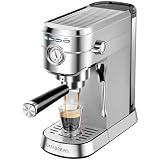
| AMZCHEF Espresso Machine with Grinder | $199.99 | — |
| Kismile 20 Bar with Grinder & Frother | $339.99 | — |
| Gevi 20 Bar with Grinder & Frother (2026) | $287.98 | — |
| Breville Barista Express BES870XL | $689.99 | — |
| Electactic with Built-in Grinder (2026) | $259.99 | — |
Why Trust This Guide
See also: How to Descale an Espresso Machine: Citric Acid vs Vinegar • Best Electric Kettles: Ten Glass, Steel and Gooseneck Picks Compared
Combo machines live or die by their grinders, so that is where our evaluation starts: adjustment range, consistency at espresso fineness, and how the grinder ages with daily use. We weigh workflow and maintenance the way owners experience them over months, we distinguish hands-on familiarity from category judgment, and we never decorate recommendations with invented figures.
Breville Barista Express BES870XL
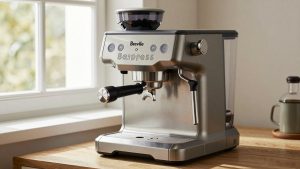
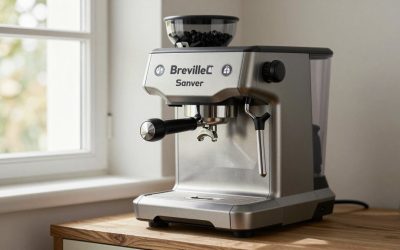
The Barista Express is the machine that defined this category, and a decade of imitators has not dethroned it. Its integrated conical burr grinder doses directly into the 54mm portafilter, the pressure gauge teaches you to read your own shots, and the steam wand produces true microfoam — the full barista curriculum in one stainless box. The grinder is the quiet star: its adjustment range and consistency at espresso fineness remain the standard the budget combos chase.
Who it suits: anyone serious enough to spend $689.99 once rather than $300 twice. The honest limits are a single fast-heating system that takes turns between brewing and steaming, and a grinder that, while excellent for a combo, will eventually be outclassed if you fall deep into light-roast territory. For the great majority of home baristas, it is the last combo they buy. See our brand comparison for where Breville sits in the wider landscape.
Gevi 20 Bar with Grinder and Frother (2026 Upgrade)
Gevi’s 2026 revision is the strongest of the mid-priced challengers. The formula mirrors the Breville at a $287.98 price: built-in grinder feeding a portafilter, 20 bar pump, steam frother for milk. The “upgrade” branding reflects iterative fixes to the usual budget-combo complaints, and the result is a machine that takes a beginner from beans to latte in one purchase with money left for a scale and good coffee.
The trade-offs against the Breville are where you would expect: a grinder with a narrower sweet spot, lighter components, and a steam system that asks more patience. The trade-offs against separates are the category’s own: when one half fails, the whole box visits the repair bench. As the value pick for a committed beginner, it hits the mark.
AMZCHEF Espresso Machine with Grinder
The AMZCHEF combo is the tinkerer’s pick of the budget tier, and its listed numbers explain why: brew temperature control across a 190°F–201°F range and a 44-step grind adjustment — two levers that cheap combos almost never hand the user. Temperature plus grind control is precisely the pair you need to chase a roast from sour to sweet, which makes this machine a legitimate teaching platform, not just a convenience appliance.
At $199.99 the compromises live in the chassis rather than the controls: lighter build, more workflow patience, and a frother that rewards technique. For the buyer who wants to learn dialing-in on a budget — adjusting one variable at a time and tasting the difference — it is the most interesting machine on this page below the Breville. Our grind size guide is the natural companion read.
Electactic with Built-in Grinder (2026 Upgrade)
The Electactic occupies the sensible middle: a 2026-revised combo at $259.99 that focuses on getting the fundamentals right rather than headline features. Beans go in the hopper, the burr grinder doses your portafilter, the pump pulls the shot, the frother handles milk — a complete morning workflow with no second appliance and no drama.
Its identity is balance. It does not match the AMZCHEF’s adjustment depth or the Gevi’s brand momentum, but owners get a coherent, compact package that simply works when treated to fresh beans and a consistent routine. For a household that wants real bean-to-cup espresso under $260 and does not intend to make a hobby of it, it is an easy machine to recommend.
Kismile 20 Bar with Grinder and Frother
The Kismile presses the convenience argument hardest in the semi-automatic group: one appliance, beans to milk-topped drink, with a 20 bar pump behind a portafilter and a frother alongside. Its price positions it between the budget combos and the Breville, and its pitch is for the buyer who wants more polish than the $200 tier without doubling the spend.
Judge it the way you judge every combo: the grinder is the heart, and integrated grinders at this tier have coarser adjustment than standalone burrs — fine for medium and dark roasts, limiting for light-roast adventures. If that ceiling fits your taste, the Kismile’s one-box tidiness is genuinely pleasant to live with; if not, separates serve you better, as our espresso grinder guide lays out.
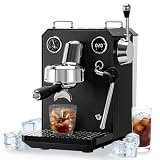
Fully Automatic 20 Bar with Grinder and Touch Screen
The fully automatic option removes the portafilter from the equation entirely: a touch screen takes your order, the machine grinds, doses, brews, and froths internally, and your involvement ends at pressing the glass. For households where multiple people of varying coffee literacy share one machine — guests, teenagers, the spouse who just wants a cappuccino — this design eliminates every failure mode that requires skill.
The trade is control for consistency: you tune drinks through menus rather than your hands, milk texture is what the machine decides, and value-brand automatics carry an open question about long-term parts support that the European marques have answered. As a kitchen appliance that happens to make fresh-ground espresso drinks, at $429.99 it is a strong proposition — just a different hobby from everything above it.
What to Look For in an Espresso Machine With a Grinder
The grinder is the half of the combo that varies most. Evaluate these before the badge:
- Grind adjustment steps — More, finer steps (like the AMZCHEF’s 44) mean you can actually dial espresso in. A handful of coarse steps means hoping one of them is right.
- Burr type and access — Conical burrs are the category standard; what matters is whether you can open the chamber to clean it without tools and ceremony.
- Semi versus fully automatic — Decide honestly whether you want to tamp and steam (a craft) or press a screen (an appliance). Neither is wrong; mixing them up causes regret.
- Hopper size versus freshness — Big hoppers tempt you to store a week of beans in open air. Smaller hoppers refilled often serve the cup better.
- Repair story — A combo is two machines sharing one fate. Established brands with parts and support de-risk the design’s biggest weakness.
- Counter dimensions with clearance — Bean hoppers load from the top; measure under-cabinet height with the lid open, not closed.
Tips for Getting the Most Out of an Espresso Machine With a Grinder
Feed the hopper like a pantry, not a warehouse. Beans oxidize in days once exposed to air, and a hopper is not an airtight vessel — load only a few days’ worth, keep the bag sealed elsewhere, and the grinder’s freshness advantage stays real instead of theoretical. When you change beans, run a small purge dose through the grinder; the previous roast’s remnants will otherwise haunt your first shot.
Dial in with discipline: change the grind one step at a time, keep dose and tamp constant, and taste. Combos make this easy precisely because the grinder and machine are calibrated for each other — exploit that by keeping notes for each bag of beans. Within two or three bags you will know your machine’s map by heart.
And clean the grind path monthly. Coffee dust and oils accumulate in the chute between burrs and portafilter, and a stale, rancid edge in otherwise good shots is almost always old grounds, not bad beans. A brush, a vacuum nozzle, and ten minutes restore the machine to honest flavor. Pair the routine with our broader maintenance habits in the best home espresso machines guide and the combo design’s convenience stays a joy for years.
Frequently Asked Questions
Is an espresso machine with a built-in grinder better than separates?
It is better at convenience, footprint, and total beginner cost; separates are better at performance ceiling and repairability. The honest rule: combos win until espresso becomes a hobby, at which point a standalone grinder becomes the upgrade that matters.
What is the best espresso machine with a grinder for beginners?
The Breville Barista Express if the budget allows — its grinder quality and feedback shorten the learning curve dramatically. On a tighter budget, the Gevi 2026 or AMZCHEF deliver the same complete workflow with more patience required of the owner.
Do built-in grinders wear out faster than standalone grinders?
Not inherently — burr life depends on volume and cleaning, not location. The real difference is consequence: when a standalone grinder needs service, you still have a working machine. When a combo’s grinder fails, the whole appliance is down. Cleaning the grind path regularly is the best longevity insurance.
Can I use pre-ground coffee in a bean-to-cup machine?
Many semi-automatic combos let you bypass the grinder and dose pre-ground into the portafilter, which is useful for decaf evenings. It defeats the machine’s main advantage as a daily habit — freshness is the reason the grinder is there.