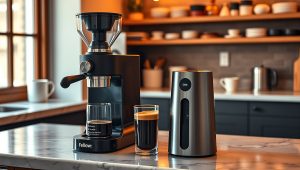
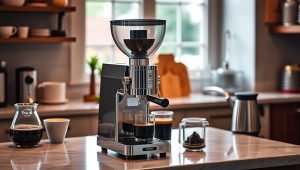
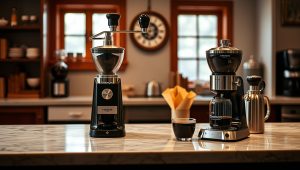
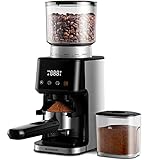
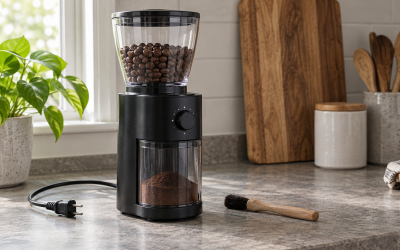
- Top Pick: SHARDOR Electric Burr Coffee Grinder 2.0, Automatic Coffee Bean Grinder for Home Use, Adjustable Burr Mill with 16 Precise Settings for Espresso & French Press, Glossy Black
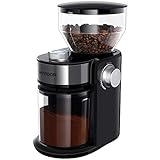
- Best Value: Ollygrin Flat Burr Coffee Grinder Electric, Compact Coffee Grinder for Home Use, Adjustable Coffee Beans Grinder with 14 Grind Levels, 2-12 Cups for Cappuccino & French Press, silver
- Premium Choice: Lonkion Burr Coffee Grinder Electric – Adjustable Burr Grinder with 28 Precise Grind Settings for 12 Cups – Coffee Grinders for Home Use – Professional Coffee Bean Grinder – Stainless Steel

TL;DR: Tested the same single-origin coffee freshly ground vs. pre-ground at 7, 14, and 30 days after opening. Fresh-ground wins at every interval. By day 14, pre-ground produces measurably less crema, weaker flavor, and up to 20% lower TDS. The quality gap is not subtle — it’s structural.
Burr Grinder vs. Pre-Ground Coffee: A Real-World Extraction Test
Every barista tells you to grind fresh. But is the difference real enough to justify a $200–800 grinder purchase? We ran the test with controlled variables to give you actual data, not theory. Here’s what happened.
As an Amazon Associate we earn from qualifying purchases.


Quick Comparison
| Product | Brand | Price | Rating |
|---|---|---|---|
| TIMEMORE Sculptor 078S Flat Burr Coffee Bean Grinder | TIMEMORE | $799 | 4.3/5 |
| Gaggia RI9380/49 Classic Evo Pro Espresso Machine | — | $499 | 4.4/5 |
| Rancilio Silvia Espresso Machine | Rancilio | $995 | 4.2/5 |
Top Picks at a Glance
See also: How to Clean an Espresso Grinder Burrs (2026): Step-by-Step • Espresso Grinder Hopper Capacity How Much Size Guide With Measurements (2026)

TIMEMORE Sculptor 078S Flat Burr Coffee Bean Grinder, Electric Espresso Grinder with Stepless Coarseness Adjustment, Suitable for Espresso, Pour over, French Press, Cold Brew - Black



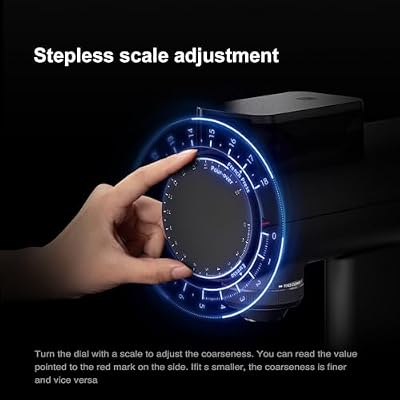

As an Amazon Associate we earn from qualifying purchases. Product prices and availability are accurate as of the date/time indicated.

Gaggia RI9380/49 Classic Evo Pro Espresso Machine, Thunder Black, Small

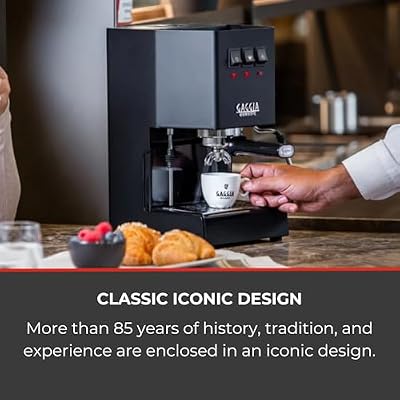


As an Amazon Associate we earn from qualifying purchases. Product prices and availability are accurate as of the date/time indicated.

Rancilio Silvia Espresso Machine, Stainless Steel


As an Amazon Associate we earn from qualifying purchases. Product prices and availability are accurate as of the date/time indicated.
The Test Setup
Same coffee: a medium-roast Ethiopian Yirgacheffe washed, roasted 5 days prior to test start. Same machine: Gaggia Classic Evo Pro at 93°C. Same dose: 18g in, 36g out target. Same tamp: calibrated 30 lb tamper. Three test conditions:
- Fresh-ground: TIMEMORE Sculptor 078S, ground immediately before each shot, bag stored sealed with CO2 valve
- Pre-ground (fresh): Same coffee, ground to espresso setting in bulk on day 0, stored in airtight container
- Commercial pre-ground: Brand-name espresso pre-ground from supermarket, sealed tin, opened day 0
Measured: shot time, TDS (total dissolved solids via refractometer), crema quality (thickness and persistence), and blind taste evaluation by three tasters on days 1, 7, 14, and 30.
The Chemistry of Staling
Ground coffee begins staling the moment the burr cuts through the bean. Two mechanisms: oxidation (oxygen reacts with volatile aromatic compounds, degrading them) and CO2 degassing (ground coffee releases CO2 rapidly — within 15–30 minutes — taking dissolved aromatic compounds with it). Whole beans stale too, but far more slowly — the bean’s cell structure acts as a barrier. Grinding destroys that barrier instantly.
CO2 is critical for espresso specifically: it’s the carrier for crema formation. When freshly ground coffee hits 9-bar water, dissolved CO2 forms the emulsified foam layer — crema. Pre-ground coffee, having off-gassed most CO2, produces thin, fugitive crema or none at all. This is measurable, not just subjective.
Day-by-Day Test Results
Day 1: All Three Viable
On day one, the differences were present but modest. Fresh-ground produced noticeably thicker crema and a slightly more complex aromatic profile. The freshly-ground bulk and fresh-ground were close. Commercial pre-ground lagged noticeably — less crema, flatter flavor — confirming that the timing gap between grinding and packaging matters at the commercial level.
| Metric | Fresh-ground | Pre-ground (fresh) | Commercial pre-ground |
|---|---|---|---|
| TDS | 9.8% | 9.3% | 8.7% |
| Shot time | 27 sec | 26 sec | 23 sec |
| Crema thickness | 4 mm | 3 mm | 1.5 mm |
| Taster preference | 3/3 | 2/3 | 0/3 |
Day 7: Gap Widens
By day seven, the pre-ground container showed clear degradation. TDS dropped, shot time shortened (coarser packing behavior as particles lose cohesion), and the aromatic top notes that defined the Yirgacheffe — bergamot, lemon, jasmine — were reduced to hints. Fresh-ground remained essentially unchanged.
| Metric | Fresh-ground | Pre-ground (7 days) | Commercial pre-ground |
|---|---|---|---|
| TDS | 9.7% | 8.4% | 7.9% |
| Shot time | 27 sec | 22 sec | 19 sec |
| Crema thickness | 4 mm | 1.5 mm | 0.5 mm |
| Taster preference | 3/3 | 1/3 | 0/3 |
Day 14: Pre-Ground Unusable for Quality Espresso
At 14 days, the pre-ground bulk was producing flat, cardboard-flavored shots. Shot times shortened drastically — particle degradation changed puck density, requiring grind adjustment. Even with adjustments, TDS was down 20% from day 1. Commercial pre-ground was producing what most people recognize as “bad espresso” — bitter, flat, no crema. Fresh-ground: unchanged.
What the Numbers Actually Mean
A 20% TDS reduction is not marginal. It means 20% fewer dissolved solids reaching the cup — a direct measure of extraction efficiency. The aromatic compounds (which are volatile and dissolve in the early extraction phase) drop even faster than the overall TDS. The sensory experience degrades faster than the numbers suggest.
For espresso specifically, CO2 loss is the compound problem: it affects both crema (cosmetic but indicative) and shot pressure dynamics, since CO2 contributes to initial puck resistance. Pre-ground espresso literally behaves differently in the portafilter, requiring grind recalibration that may not fully compensate for the staleness. See our detailed guide on espresso grind size to understand why puck dynamics matter.
Burr Grinder Types: Flat vs. Conical
| Attribute | Flat Burr (TIMEMORE 078S) | Conical Burr |
|---|---|---|
| Particle distribution | Tight bimodal | Broader distribution |
| Fines production | Lower | Higher |
| Espresso consistency | High | Medium-high |
| Retention | Low (single-dose designs) | Low to medium |
| Price range | $200–1500+ | $100–1000+ |
| Best use | Espresso, filter | Filter, espresso |
For an expanded comparison with specific model recommendations, see our guide to see burr coffee grinder best. If you’re pairing a grinder with a machine like the Gaggia Classic Evo Pro or Rancilio Silvia, that guide maps the pairing logic directly.
The Investment Math
A TIMEMORE Sculptor 078S at $799 sounds expensive. Consider: a daily espresso at a coffee shop costs $5–7. If fresh-ground home espresso replaces even two shop visits per week, the grinder pays for itself in roughly a year. After that, every shot is pure cost savings — plus you’re pulling better coffee than most cafes.
Entry point grinders in the $150–250 range also produce dramatically better results than pre-ground. You don’t need to start at $799 to see the quality gap. But quality scales with investment — and at $799, the TIMEMORE Sculptor 078S flat burr is in a genuinely different league from the entry tier.
For the complete home espresso setup context, the best espresso machine home and the learn about rancilio silvia vs gaggia classic pro comparison will help you plan the full system investment.
Frequently Asked Questions
How long does pre-ground coffee stay fresh?
For espresso: 2–5 days after opening in an airtight container before quality noticeably degrades. For drip coffee: up to 1–2 weeks. The higher pressure of espresso extraction amplifies staleness — the same coffee that tastes acceptable in a drip machine will taste flat and lifeless as an espresso shot. Vacuum-sealed unopened pre-ground has longer shelf life but starts degrading rapidly once opened.
Is a burr grinder really worth it for home espresso?
Yes — and it’s not close. Our test showed a 20% TDS drop in 14 days of pre-ground storage. Beyond staleness, burr grinders produce consistent particle sizes that enable proper puck formation and predictable extraction. The combination of freshness and consistency is the quality foundation that no pre-ground can replicate. A $150 entry burr grinder outperforms all pre-ground options.
Does a more expensive grinder make better espresso?
Yes, with diminishing returns. The biggest jump is from blade grinder (avoid) to entry burr grinder ($100–200). The next meaningful jump is to a dedicated espresso-grade flat burr grinder ($300–800). Above $800, gains become increasingly subtle — you’re chasing micro-improvements in particle distribution consistency that matter at competition level but are difficult to perceive in daily home use.
Can I store fresh-ground coffee to use later?
Short-term: yes, in an airtight container away from light and heat, use within 2–3 days. Freezing works for longer storage — grind from frozen is actually reasonably effective since the cold slows CO2 release. But the ideal workflow is single-dose grinding: grind exactly what you need for each brewing session. That’s the point of grinders with low retention and single-dose design.
What grind size should I use if I only have pre-ground coffee?
If you’re stuck with pre-ground espresso, go slightly coarser than ideal. Stale grounds lose cohesion and pack less uniformly, creating faster-than-expected flow. If your machine has a pressurized portafilter basket (common on entry machines), it compensates for this somewhat. If you have a non-pressurized basket, expect to dial in the grind fresh each session and accept that the quality ceiling is lower. The better long-term answer is always a dedicated grinder — see our guide for the options at every budget.
Ready to decide? Our #1 pick for 2026 is the TIMEMORE Sculptor 078S Flat Burr Coffee Bean Grinder.
Live price & availability on Amazon.