- Top Pick: Fresh Roast SR540 Automatic Coffee Bean Roaster | Roast Coffee At Home | Variable Heat Settings | Convection Fan Control | Digital Status Display | Speed Roasting System | The Freshest Roast On Earth
- Best Value: Fresh Roast SR540 Coffee Roaster Bundle – Includes Glass Extension Tube, Coffee Bean Cooler, Green Coffee Beans, Sample Trays & Chaff Brush
- Premium Choice: Fresh Roast SR540 Coffee Roaster Bundle with Glass Extension Tube, Digital Coffee Scale & Green Coffee Beans
Last updated: October 20, 2026
Quick Comparison
| Product | Brand | Price | Rating |
|---|---|---|---|
| Fresh Roast SR800 Coffee Roaster – Roast Coffee at Home… | FreshRoast | $334 | 4.4/5 |
| SR800 Coffee Roaster Pour Over Bundle with Glass Extens… | FreshRoast | $399 | 3/5 |
| Fresh Roast SR800 Coffee Roaster Bundle – Includes Glas… | FreshRoast | $359.99 | 4.9/5 |
Why Roast Coffee at Home?
See also: How to Descale an Espresso Machine: Citric Acid vs Vinegar • Best Electric Kettles: Ten Glass, Steel and Gooseneck Picks Compared
Home coffee roasting is the deepest rabbit hole in the coffee hobby — and also the one with the most dramatic payoff. Roasting your own coffee means you control freshness from the very start: commercially roasted coffee begins losing flavor within weeks of the roast date, but coffee you roast yourself can be at peak flavor within 24-72 hours. It also means access to the world's finest green coffee varietals at a fraction of roasted coffee prices, allowing you to experiment with single origins and processing methods that most specialty roasters never stock.
Fresh Roast SR800
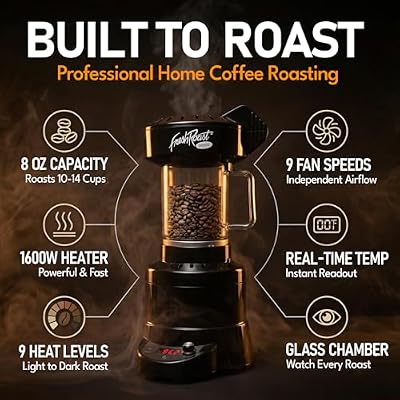
The Fresh Roast SR800 is the most popular dedicated home coffee roaster among enthusiasts who want real control without the complexity of commercial drum roasters. It uses a fluid bed (hot air) roasting system that roasts 300g batches in 8-15 minutes with excellent chaff collection and adjustable fan speed and temperature. The SR800's transparent roasting chamber lets you watch the beans develop in real time, and its controls are precise enough to profile different roast levels from light filter roasts through dark espresso roasts. It connects to Artisan roasting software via USB for those who want data logging.

Fresh Roast SR800 Coffee Roaster – Roast Coffee at Home – Variable Heat and Fan Control – Digital Display – Roasts 6–8 oz (170–226g) Per Batch – Easy to Use – Fast Roast Time




As an Amazon Associate we earn from qualifying purchases. Product prices and availability are accurate as of the date/time indicated.
As an Amazon Associate we earn from qualifying purchases.



Behmor 1600 Plus
The Behmor 1600 Plus is a drum roaster that looks and operates more like a countertop oven than a fluid bed roaster. It roasts up to 1 pound of green beans per batch — significantly more than fluid bed machines — and uses a rotating drum that moves beans through the heat zone the way commercial drum roasters do. This produces a slightly different flavor profile than fluid bed roasting, often described as rounder and heavier body. The Behmor has a smoke suppression system that makes it genuinely usable indoors, though ventilation is still recommended. It's the right choice for anyone who wants large batch capacity and drum roaster character.

Fresh Roast SR800 Coffee Roaster Pour Over Bundle with Glass Extension Tube, Digital Scale, Gooseneck Kettle & Green Coffee Beans


As an Amazon Associate we earn from qualifying purchases. Product prices and availability are accurate as of the date/time indicated.
Gene Cafe CBR-101
The Gene Cafe uses an off-axis rotating drum design that's unique in the home roasting market. The drum is mounted at an angle and rotates to tumble beans through the heat zone, producing very even roasts with excellent consistency between batches. Its digital temperature control and 300g capacity make it ideal for experimental roasters who want to try different roast profiles with the same green coffee. The Gene Cafe is particularly beloved for light roasts of high-quality single-origin coffees where evenness of development is critical.

Fresh Roast SR800 Coffee Roaster Bundle - Includes Glass Extension Tube, Digital Coffee Scale, 2 lbs Green Coffee Beans & Chaff Brush


As an Amazon Associate we earn from qualifying purchases. Product prices and availability are accurate as of the date/time indicated.
Buying Guide: Starting Home Coffee Roasting
- Green coffee sourcing: Sweet Maria's, Genuine Origin, and Crop to Cup are top green coffee suppliers
- Batch size: 250-300g fluid bed; up to 450g drum roasters — size affects roast consistency
- Smoke: all roasters produce smoke; drum roasters produce more; ventilation is essential
- Rest time: roasted coffee needs 24-72 hours of degassing before it tastes its best
- Learning curve: expect 5-10 practice batches before achieving consistent results
- Cost savings: quality green coffee at $5-8/lb vs roasted at $18-30/lb; pays back machine cost quickly
How Home Coffee Roasting Works
Roasting transforms green coffee beans into the aromatic brown beans you brew, and doing it at home gives you the freshest possible coffee and total control over the roast. As green beans heat, they pass through recognizable stages: they dry and turn yellow, then brown as sugars caramelize, and eventually reach first crack, an audible popping that signals the beans have expanded and entered the light-roast range. Continue heating and the beans move through medium roasts and on toward second crack, where oils emerge and the roast becomes dark.
Where you stop determines the flavor. Lighter roasts preserve more of a bean’s origin character, acidity, and nuanced fruit or floral notes, while darker roasts develop bolder, more bittersweet, smoky flavors and mute origin distinctions. The art of home roasting is learning to read color, smell, and the timing of the cracks so you can pull the beans at the profile you want. Most home roasters, whether air, drum, or fluid-bed style, give you enough control over heat and time to chase that target consistently once you learn your machine.
Getting Great Results and Storing Your Roast
Consistency comes from controlling the variables. Use a steady batch size, keep notes on time and temperature, and listen for first and second crack as your landmarks. Good ventilation matters, because roasting produces smoke and chaff, the papery skin that flakes off the beans, so roast near an exhaust or outdoors when possible. Stopping the roast promptly and cooling the beans quickly afterward locks in the profile you reached and prevents them from carrying on roasting in their own heat.
Freshly roasted coffee needs to rest, or degas, before it tastes its best. Beans release a lot of carbon dioxide in the first day or two after roasting, which can make espresso and brews taste uneven, so most home roasters let beans rest roughly 2 to 7 days before brewing, with espresso often benefiting from the longer end. Store the rested beans in an airtight, opaque container in a cool, dark place, and use them within a few weeks while the flavor is at its peak. Roasting in small, frequent batches rather than large stockpiles keeps every cup tasting fresh.
Final Thoughts
Home coffee roasting is the ultimate expression of the home barista hobby and delivers the freshest possible coffee at significant cost savings over specialty roasted beans. The Fresh Roast SR800 is the ideal starter machine for most enthusiasts, the Behmor 1600 Plus suits those who want large batches, and the Gene Cafe CBR-101 rewards those who want the finest roast evenness. Whichever you choose, the experience of drinking coffee you roasted yourself from green beans is deeply satisfying in a way that no pre-roasted coffee, however good, can match.
Frequently Asked Questions
How long do home-roasted beans need to rest before brewing?
Freshly roasted beans release a lot of carbon dioxide, and brewing immediately produces a sour, uneven cup. Most home roasters let beans degas for 24 to 72 hours in a one-way valve bag or loosely sealed jar. Espresso usually peaks around 7 to 14 days off the roast, while filter coffee is great as early as 2 to 4 days.
How much green coffee should I buy at a time?
Green beans stay fresh for a year or more when stored cool, dry, and out of sunlight, so buying in bulk is sensible. Many home roasters keep 5 to 10 pounds of a few different origins on hand. Roast only what you will drink in the next week or two, since the clock starts ticking once beans are roasted, not while they are green.
Is air roasting or drum roasting better for beginners?
Air (fluid-bed) roasters like the Fresh Roast SR800 heat beans quickly and give fast, repeatable results, which makes them forgiving for learning. Drum roasters develop deeper body and handle larger batches but take longer and demand closer attention. For most people starting out, an air roaster is the easier path to consistent results.
Will roasting coffee at home set off my smoke detector?
Roasting produces smoke and chaff, especially in the final minutes of darker roasts, so ventilation matters. Roast near a range hood, an open window, or outdoors when possible. Keep batches modest, clean out chaff between roasts, and you can manage the smoke without filling the kitchen.