Last updated: September 16, 2026
All three drinks are espresso and steamed milk. What separates them is the ratio of liquid milk to foam, the total volume in the cup, and, in the case of the flat white, how the espresso itself is pulled. Nothing else. There is no different bean, no different machine setting, no secret technique that belongs to one and not the others.
The confusion is real, though, because US cafe sizing has stretched all three away from their traditional proportions. A 16 ounce “cappuccino” from a drive-through has almost nothing in common with the 5 ounce Italian version, and the flat white has been reinterpreted differently by nearly every chain that sells one. This guide gives you the traditional definitions, the practical American versions, and the exact steaming difference so you can make all three at home from the same pitcher of milk.

The Original Donut Shop Vanilla One-Step Latte, Single Serve Coffee K-Cup Pod, Flavored Coffee, 20 Count
Selected for "latte vs cappuccino vs flat white difference": this listing is a coffee gear product (The Original Donut Shop Vanilla One-Step Latte, Single Serve Coffee K-Cup Pod, F), matching the product category this article compares.
View on Amazon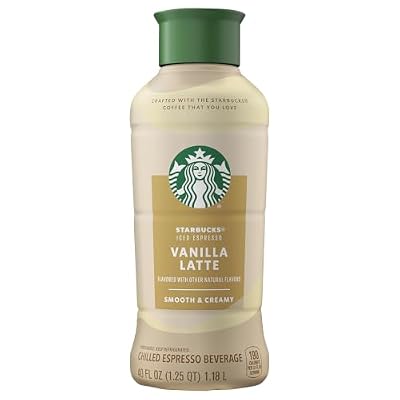
Starbucks Iced Espresso Vanilla Latte Coffee, 40 Fl Oz Bottle, Naturally Flavored Chilled Espresso Beverage
Selected for "latte vs cappuccino vs flat white difference": this listing is a coffee gear product (Starbucks Iced Espresso Vanilla Latte Coffee, 40 Fl Oz Bottle, Naturally Flavore), matching the product category this article compares.
View on Amazon
Maxwell House Instant Cafe Beverage Mix, Vanilla Caramel Latte, 8.7 oz
Selected for "latte vs cappuccino vs flat white difference": this listing is a general product (Maxwell House Instant Cafe Beverage Mix, Vanilla Caramel Latte, 8.7 oz), matching the product category this article compares.
View on Amazon
La Colombe, Latte Draft Vanilla, 9 Fl Oz, 4 Pack
Selected for "latte vs cappuccino vs flat white difference": this listing is a general product (La Colombe, Latte Draft Vanilla, 9 Fl Oz, 4 Pack), matching the product category this article compares.
View on AmazonQuick answer: Our top pick in 2026 is the Latte — our #1 rated choice. See the full ranked comparison, alternatives and buying advice below.
Quick Verdict
| Drink | Traditional size | Espresso | Steamed milk | Foam layer | Character |
|---|---|---|---|---|---|
| Latte | 8 to 12 fl oz | Double shot | 6 to 8 fl oz | About 1/4 inch | Mildest, most milk-forward |
| Cappuccino | 5 to 6 fl oz | Double shot | 3 to 4 fl oz | 1/2 inch or more | Airy, foam-dominant, strong |
| Flat white | 5 to 6 fl oz | Double, often ristretto | 4 to 5 fl oz | Barely any, all texture | Strongest, silkiest |
| Cortado | 4 fl oz | Double shot | 2 fl oz | None to speak of | Espresso with just enough milk |
| Macchiato, traditional | 2 to 3 fl oz | Single or double | A spoonful | A dollop | Espresso, marked |
How to Tell Them Apart
See also: Gaggia classic pro 54mm vs 58mm portafilter in 2026 • Espresso puck too wet causes in 2026
The latte is defined by volume of milk
A latte, short for caffe latte, is the mildest of the three because it has the most milk relative to coffee. A double shot into 6 to 8 fluid ounces of steamed milk puts the coffee in the minority by a wide margin. The foam layer is thin and glossy, roughly a quarter inch, integrated rather than sitting on top. This is the drink latte art was invented for, because a broad surface of thin microfoam over crema is the ideal canvas. If you like coffee flavor but want it rounded and sweet, this is your drink.
The cappuccino is defined by foam
A traditional cappuccino is a small drink, 5 to 6 fluid ounces total, served in a cup you could hold in one hand. The old shorthand was equal thirds espresso, steamed milk and foam, which is roughly right even if no barista measures it. The point is that foam makes up a substantial portion of the volume, so the drink is lighter in the mouth, warmer at the top and stronger tasting than a latte despite having the same espresso in it, simply because there is less liquid milk diluting it.
To make one, you stretch the milk longer: five to seven seconds of air instead of the two to four you would use for a latte. That extra air is the whole difference in the pitcher.
The flat white is defined by texture and strength
Originating in Australia and New Zealand, the flat white is a small drink, 5 to 6 fluid ounces, with almost no foam layer at all. The milk is steamed to a fine, velvety microfoam and poured flat, hence the name. Because the cup is small and the milk is minimal, the coffee comes through much more strongly than in a latte.
The other common distinction is the shot. Many cafes pull a ristretto for a flat white, a shorter extraction that stops earlier and gives a sweeter, more concentrated, less bitter espresso. In practice, in the US, a flat white from a large chain typically means two ristretto shots in a small cup with steamed whole milk. It is not a smaller latte, it is a stronger one.
Size is where American cafes break the definitions
A 16 ounce latte and a 16 ounce cappuccino at most US counters contain the same double shot. The cappuccino just has more foam on top and therefore less liquid. Neither resembles what those names mean in Italy, where a cappuccino is a 5 ounce breakfast drink. If you want the traditional experience at a US cafe, order the smallest size available and specify a double shot.
Same espresso underneath all three
Every one of these starts from the same place: roughly 18 to 20 grams of ground coffee in a double basket, brewed at around 9 bar, yielding about 36 grams of espresso in 25 to 30 seconds at a 1:2 ratio. The only variation is the ristretto option for a flat white, which stops the shot earlier, closer to 1:1.5, so about 27 grams out from an 18 gram dose. If your milk drink tastes sour and thin, the shot was under-extracted and needs a finer grind. If it tastes harsh behind the milk, it was over-extracted and needs a coarser one. The milk does not create those flavors, it only hides them slightly.
Making All Three at Home from One Pitcher
The workflow is identical up to the steam wand. Pull your double shot directly into the cup. Use a 6 ounce cappuccino cup, sets run $26.99 for six or $32.99 for four, for the cappuccino and flat white, and a 10 to 12 ounce cup for the latte. Fill a stainless pitcher with cold milk to just below the spout base: about 4 to 5 fluid ounces for the small drinks, 6 to 8 for the latte. A 12 ounce pitcher costs $6.29 to $8.99.
Purge the wand, then set the tip just under the surface and count your air. Two to four seconds gives you latte milk. One to two seconds gives you flat white milk. Five to seven seconds gives you cappuccino milk. Then submerge the tip, spin the milk into a fast whirlpool until it looks glossy, and stop between 140 and 150 degrees Fahrenheit. Above 160 the milk tastes cooked and the foam goes dry and stiff, which ruins all three equally.
Pour differently as well. For a latte, fill high to mix, then drop the pitcher low and draw. For a flat white, keep the whole pour low and gentle so the minimal foam stays integrated. For a cappuccino, pour the liquid milk in first and then spoon or tip the thicker foam on top, which is the traditional presentation.
On a single boiler machine, and that includes most home machines under $600 such as the Gaggia Classic Pro at $451.90, pull the shot first and steam second. The boiler has to climb well above brew temperature to make steam, and brewing right afterward gives you over-hot water and a bitter shot.
Related guides: best milk for frothing lattes, how to pour latte art for beginners, how to steam milk for a latte at home, best espresso machine for small spaces, best tamper size for gaggia classic
FAQ
What is the main difference between a latte and a cappuccino?
Foam and size. A cappuccino is smaller, traditionally 5 to 6 fluid ounces, with a thick foam layer that can be half the drink. A latte is larger with far more liquid milk and only a thin foam cap, which makes it milder and creamier.
Is a flat white just a small latte?
No. It is smaller, but it also has essentially no foam layer and is frequently made with ristretto shots, so the coffee flavor is stronger and the texture is silkier. A small latte still carries a visible foam cap and usually a standard shot.
Which one has the most caffeine?
Typically they are identical, since all three are usually built on a double shot. What differs is the perceived strength: the flat white and cappuccino taste stronger because there is less milk diluting the same amount of espresso.
Which is the easiest to make at home?
The latte, because thin microfoam is the most forgiving target and the larger cup hides minor texture faults. The flat white is the hardest, since its near-zero foam layer exposes every flaw in your steaming.
Can I use the same milk for all three?
Yes. Whole milk works for all three and only your aeration time changes: a second or two of air for a flat white, two to four for a latte, five to seven for a cappuccino. Same pitcher, same wand, same finishing temperature.
Ready to decide? Our #1 pick for 2026 is the Latte.
Live price & availability on Amazon.