Last updated: September 15, 2026
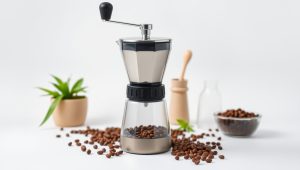
Coffee grinders fail slowly and quietly. Oils from the beans coat the burrs and the chute, stale fines pack into corners, and one morning your espresso tastes flat and rancid and you blame the beans. Cleaning a grinder properly is a fifteen minute job you do every few weeks, plus a deeper strip-down two or three times a year, and it costs somewhere between nothing and $20 in supplies.
The important rule, before anything else: no water on the burrs. Burrs are hardened steel and they will rust, and rust on a cutting edge is permanent. Everything else, hoppers, plastic chutes, catch bins, is usually washable, but the grinding chamber gets brushes, tablets and air only. This guide covers the routine clean, the deep clean and the mistakes that damage grinders.
Quick answer: Our top pick in 2026 is the Brush out chute and burr chamber — our #1 rated choice. See the full ranked comparison, alternatives and buying advice below.
Quick Verdict
| Method | How often | Time | Cost | What it removes |
|---|---|---|---|---|
| Brush out chute and burr chamber | Weekly | 3 minutes | $5.49 to $9.99 for a brush | Loose fines, retained grounds |
| Cleaning tablets through the burrs | Every 2 to 4 weeks | 5 minutes | $12.95 to $23.99 | Oil film, stale residue |
| Full disassembly, burrs removed | Every 3 to 6 months | 20 to 40 minutes | Free, plus a vacuum | Packed fines behind the burrs |
| Wash hopper and bin with soap and water | Monthly | 5 minutes | Free | Rancid oils on plastic |
| Rice through the burrs | Never on a burr grinder | n/a | n/a | Can damage burrs and motor |
| Water or dishwasher on burrs | Never | n/a | n/a | Causes rust, ruins the grinder |
How to Do It
See also: Why is my espresso bitter and how to fix it? • How to pour latte art for beginners?
1. Unplug the grinder and empty it
Always unplug first. Burr grinders have enough torque to injure a finger, and the one time you reach in while it is live is the time it starts. Empty the hopper back into an airtight container, then run the grinder empty for a second or two to clear what is in the throat.
2. Brush what you can reach
A stiff-bristle brush with a narrow head gets into the chute and around the outer burr. Basic brushes cost $5.49, multi-piece sets with a soft dusting brush and a small hard brush run $6.28 to $9.99, and a walnut-handled Normcore barista brush is $19.99 if you want one that lives on the counter. Brush downward and out through the exit chute, then blow or vacuum the loosened material away rather than pushing it deeper into the grinder.
3. Run cleaning tablets through the burrs
Grinder cleaning tablets are food-safe granules that behave like very dry, very hard coffee. They scrub oil off the burr faces and carry old grounds out with them. Urnex Grindz, the standard, is $19.99 for 430 grams or $13.49 for three single-use packets, Urnex SuperGrindz is $23.99, and Cafetto Grinder Clean is $16.48 for three 45 gram sachets. Pour in the recommended amount, usually 35 to 40 grams for a home grinder, grind it all through on a medium setting, then purge 15 to 20 grams of sacrificial coffee to clear any tablet residue. Discard both.
Check your manual first. A handful of grinders, particularly some flat-burr and single-dose designs, advise against tablets. Almost none advise against a brush.
4. Take the burrs out for the deep clean
Most conical burr grinders, including popular models like the OXO Brew at $109.95 and the Breville Smart Grinder Pro at $199.95, let you remove the hopper and then unlock the upper burr carrier by hand or with a small screwdriver. Note the grind setting before you start so you can return to it. With the upper burr out you will find packed fines behind and beneath it that no tablet ever reaches. Brush and vacuum those out. Wipe the burr faces with a dry cloth or a microfiber. If there is a stubborn oil ring, a cloth barely dampened with a little grain alcohol and then dried immediately is acceptable, water is not.
5. Wash the plastic separately
The hopper and catch bin accumulate a sticky oil film that goes rancid and taints everything after it. Wash them in warm soapy water, rinse, and dry them completely before reassembly. Most are not dishwasher-safe, since heat warps the plastic and ruins the clarity. Never wash any part containing bearings, electronics or steel burrs.
6. Reassemble and recalibrate
Put the burr carrier back exactly as it came out, return the grind setting to where it was, then grind and discard about 10 grams. Grind size often shifts slightly after a burr reinstall, so pull a throwaway shot before you commit good beans to breakfast. If your espresso suddenly runs fast and sour after a clean, you lost fines that were padding the setting, and a step finer usually restores it.
Why It Matters for Espresso Specifically
Espresso lives on a knife edge that drip coffee does not. You are pushing water at roughly 9 bar through 18 to 20 grams of coffee and expecting about 36 grams of liquid, a 1:2 ratio, in 25 to 30 seconds. That target is set by particle size, and particle size is set by the burrs. A layer of oil and compacted fines on the burr faces changes the effective gap, which changes the grind, which changes the shot. People chase this by adjusting the grinder finer and finer, wondering why the machine keeps drifting, when the answer was a five minute clean.
Rancid oil also shows up directly in taste, and it is easy to mistake for an extraction fault. Old oils read as stale and vaguely bitter, which sends people chasing a bitterness fix, coarsening the grind and shortening the shot, when the coffee itself never had a chance. Before you rebuild your dial-in, clean the grinder and pull a fresh baseline.
Retention is the third issue. Every grinder holds some coffee inside between uses, and yesterday’s grounds coming out in today’s dose means your first shot of the day is a blend of fresh and stale. A weekly brush keeps retention from growing, and if you notice the first shot of the morning is always worse than the second, purge 3 to 5 grams before dosing.
One thing cleaning does not fix is worn burrs. Burrs are consumables, rated in hundreds of pounds of coffee depending on material and geometry, and a worn set produces a wider spread of particle sizes that no cleaning will tighten. If a well-cleaned grinder still cannot produce a shot that runs slower than 20 seconds no matter how fine you set it, burr wear is the thing to investigate with the manufacturer.
Related guides: best espresso machine for small spaces, best tamper size for gaggia classic, breve vs half and half in coffee, espresso puck too wet causes, gaggia classic pro 54mm vs 58mm portafilter
FAQ
Can I use rice to clean a coffee grinder?
No, not on a burr grinder. Rice is harder than roasted coffee and can damage burrs or strain the motor, and most grinder manufacturers explicitly warn against it. Purpose-made cleaning tablets are engineered to be softer than the burrs while still scrubbing oil, and three single-use packets cost under $14.
How often should I clean my espresso grinder?
Brush the chute weekly, run tablets every two to four weeks, and do a full disassembly with the burrs out every three to six months. If you grind oily dark roasts or go through more than a pound a week, move to the shorter end of each interval.
Can I wash burrs with water?
No. Steel burrs rust, and a rusted cutting edge cannot be restored. Use brushes, tablets, a vacuum and a dry cloth. Only wash detachable plastic parts like the hopper and grounds bin, and dry them fully before reassembly.
My grind changed after cleaning. Did I break something?
Almost certainly not. Removing packed fines from behind the burrs restores the true gap, so the same setting now grinds slightly differently. Adjust one step and pull a test shot. Also confirm the upper burr carrier is seated and locked fully, since a partially seated carrier produces an inconsistent grind.
Do cleaning tablets leave a taste?
Only if you skip the purge. Grind 15 to 20 grams of cheap coffee through after the tablets and discard it. That clears residue and re-seasons the burrs so your next real dose tastes the way it should.
Ready to decide? Our #1 pick for 2026 is the Brush out chute and burr chamber.
Live price & availability on Amazon.