Last updated: October 20, 2026
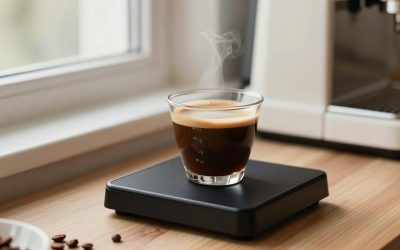
Nescafe Gold Espresso is a decent instant coffee that tastes best as a quick, concentrated base for milk drinks, and it is a sensible pick for desks, trips and tiny kitchens. It is not a substitute for a pulled shot: the crema is engineered foam, the body is thinner, and the Intense jar is the version to start with if you want the closest thing to espresso character. Below you will find verified specs, honest trade-offs, a comparison with the other jars, sticks and capsules in this group, and clear advice on who should skip it.
Quick Verdict
- Best for: hot or iced lattes, whipped coffee and baking where you want a strong coffee flavor without a machine.
- Intense is the headline jar: the brand calls it a dark roast, full-bodied instant espresso made from 100% coffee, with up to 50 cups per 3.5 oz (100 g) jar.
- Crema is a foam effect: instant powders do not form crema the way 9 bar extraction does, so treat the golden layer as a pleasant topping, not proof of espresso quality.
- Skip it if you already own an espresso machine and a grinder, or if you want nuanced single-origin flavor.
- Heads-up: some retailer pages label the roast differently from the brand page, so read the jar before you decide.
Key Specs
See also: 4 Best Coffee Beans for Iced Coffee (October 2026) Honest Reviews • Instant Espresso Brands Ranked
| Spec | Nescafe Gold Espresso Intense (3.5 oz jar) |
|---|---|
| Format | Instant coffee granules in a recyclable jar |
| Net weight | 3.5 oz (100 g) |
| Ingredient | 100% pure coffee, per the brand page |
| Roast (brand wording) | Dark roast, described as golden roasted |
| Beans (brand wording) | Arabica and Robusta blend from Ethiopia, Brazil and Vietnam; some retailer pages say Arabica only |
| Espresso serving | 1 teaspoon in 2 fl oz of hot water |
| Americano serving | 1 teaspoon in 6 fl oz of hot water |
| Yield | Up to 50 cups per jar, per retailer and brand-sourced listings |
| Caffeine | Retailer listings cite about 63 mg per serving; confirm on the label |
| Drying method | Not stated on the pages checked |
Two details deserve a second look. First, the 50-cup yield is a label calculation: 100 g divided by 50 works out to about 2 g of powder per serving, which is close to a level to slightly heaped teaspoon. Second, the bean description is inconsistent across sources. The brand page names a blend of Arabica and Robusta, while several retailer summaries say Arabica. If bean type matters to you, trust the printed jar.
Who It Is For (and Who Should Skip It)
Good fit
- Desk and dorm drinkers who want a strong coffee in under a minute with nothing but a kettle and a spoon.
- Travelers and campers who need something lighter than a portable espresso maker. A jar or a box of sticks weighs almost nothing compared with a grinder and brewer.
- Home bakers who want a coffee flavor in brownies, tiramisu-style desserts or frostings without adding extra liquid volume.
- Latte lovers on a tight setup who need a concentrated coffee that survives being diluted with 6 to 8 oz of milk.
Probably skip it
- Anyone who already has a grinder and a capable machine. Fresh-ground espresso has more aroma and more texture, and the gap shows in a straight shot.
- Black-coffee purists who value origin character. Instant coffee flattens most subtle flavors.
- People who want real crema. Conventional instant powders, freeze-dried or spray-dried, generally do not produce a satisfying crema on their own, and manufacturers rely on special processing to trap gas inside the granules.
- Nespresso Original owners who would rather have a pod-based dark roast, which is why a capsule alternative is covered below.
What It Does Well
Speed and low effort
The label instructions are simple: scoop one teaspoon, add 2 fl oz of hot water for an espresso-style serving or 6 fl oz for an Americano, and stir. There is no grind adjustment, no puck prep and no cleaning beyond a spoon and a mug. For a morning where the alternative is skipping coffee, that is a real advantage.
Concentration that holds up in milk
A typical latte uses roughly one part espresso to three or four parts milk. A 2 fl oz instant shot plus 6 to 8 oz of warm milk lands in that range, and the Intense roast has enough bitterness and roastiness to stay noticeable. A milder jar can disappear in the same amount of milk, which is one reason the Intense jar is the sensible starting point for milk drinks.
Whipped coffee and desserts
Whipped, or dalgona, coffee needs instant granules because brewed coffee will not hold a foam. The classic ratio is equal parts instant coffee, sugar and very hot water, usually 2 tablespoons of each, whipped for about 3 to 4 minutes with a mixer or 5 to 8 minutes by hand, then spooned over milk. The sugar matters, because without it the foam collapses quickly. A jar that dissolves cleanly, as granulated instant tends to, makes the process painless.
Portability
A closed jar is light and needs no equipment, which makes it a reasonable pantry backup and a handy item for an office drawer.
Where It Falls Short
It is not espresso
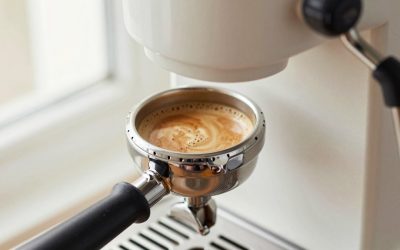
Espresso is made by forcing hot water through finely ground coffee at about 9 bar, usually 18 g in and 36 g out in 25 to 30 seconds. Instant coffee is already-extracted, dried solids that dissolve in hot water, so there is no pressure, no puck and no oils emulsified by extraction. The result can be pleasantly strong, but the texture is thinner and the aroma is flatter than a freshly pulled shot.
Crema is a different thing here
True crema forms when carbon dioxide dissolved under pressure comes out of solution as the shot leaves the portafilter. Instant products that show a foam layer rely on gas trapped in pores inside the granules and released when they dissolve. It looks the part, but it tells you little about flavor, and you should not expect it to behave like crema on a machine shot.
Label inconsistencies
Roast level, bean type and even jar weight vary between sources. The brand page calls the Intense jar a dark roast and the Blonde a mild roast, while some retailer pages label the same jars as medium. The flavored jars are listed as 3.35 oz (95 g) on brand and grocery pages but shown as 3.5 oz in some marketplace titles. Always check the printed label.
Water temperature advice is loose
The brand simply says hot water. Coffee guidance for brewed coffee is 195 to 205 degrees Fahrenheit, but that figure is for ground coffee. Advice for instant varies by source, from roughly 180 to 205 degrees. A rolling boil can taste harsher, so letting the kettle rest for about a minute is a low-risk habit.
Caffeine is modest
Published reference figures put a 1 oz espresso shot at about 63 mg of caffeine and an 8 oz cup of instant coffee at about 62 mg. A 2 fl oz instant serving made with one teaspoon sits near the same ballpark, but spoon size changes the number a lot. If you want a double-shot kick, plan on two scoops or a longer drink.
How It Compares
| Option | Format | Roast or style | Needs a machine? | Best use |
|---|---|---|---|---|
| Nescafe Gold Espresso Intense (jar) | Instant granules, 3.5 oz | Dark, full-bodied | No | Lattes, americanos, baking |
| Nescafe Gold Espresso Blonde (jar) | Instant granules, 3.5 oz | Mild, smooth | No | Lighter cups, iced drinks |
| Nescafe Gold Espresso Caramel and Vanilla | Flavored instant, 95 g | Coffee plus natural flavor | No | Dessert-style lattes |
| Nescafe Gold Espresso sticks | 25 single-serve sticks, 1.8 g each | Gold Espresso style | No | Travel, office |
| Nescafe Clasico Dark Roast | Instant, 10.5 oz jar | Dark, everyday | No | Large mugs, daily use |
| Cafe Bustelo Espresso Capsules | 40 capsules, Nespresso Original compatible | Dark roast, intensity 11 | Yes, a Nespresso Original machine | Pulled-style shots |
The pattern is straightforward. Every Gold Espresso jar trades texture for convenience, the sticks trade jar value for portability, the Clasico jar trades the espresso positioning for a bigger everyday supply, and the capsules are the only option here that actually pushes pressurized water through ground coffee.
Alternatives Worth Considering
Nescafe Gold Espresso Intense, 3.5 oz Jar – the reviewed pick
As an Amazon Associate we earn from qualifying purchases at no extra cost to you.

This is the single-jar version of the product reviewed above and the best starting point for most readers. It is the darkest of the Gold Espresso jars, it holds up in milk, and one jar gives up to 50 servings at 1 teaspoon each. The caveats are the usual ones: it is instant coffee, the crema is a foam effect, and roast labeling differs by retailer. A twin-jar bundle of the same Intense product is also listed, and it only makes sense if you drink it daily, since an opened jar should be used within a reasonable time.
Nescafe Gold Espresso Blonde – why consider it

The brand describes Blonde as a smooth, mild-roasted espresso topped with a golden layer of crema. It is the better pick if Intense tastes too roasty to you, or if you mostly make iced drinks where a gentler profile reads cleaner. The trade-off is that a mild roast gets lost in a full 8 oz latte more easily, so you may need an extra half teaspoon. Retailer pages disagree on whether it is light or medium, so treat the label on the jar as the final word. Same 3.5 oz size and the same one-teaspoon preparation as Intense.
Nescafe Gold Espresso Caramel – why consider it

This flavored jar lists instant coffee and natural flavor, with up to 50 cups per jar and the same one-teaspoon, 2 fl oz preparation. It suits readers who like a syrup-style latte but do not want to buy and store a separate bottle. The caveat is flexibility: a flavor baked into the jar is hard to dial down, and it will not suit savory baking or a plain Americano. A Vanilla version of the same jar is also listed and works in the same way, so choose based on whether you prefer a buttery or floral sweetness. Both are packaged at 95 g on brand pages.
Nescafe Gold Espresso Instant Coffee, 25 Sticks – why consider it

Each stick is 1.8 g, so one box holds 45 g, and the portions are pre-measured for travel bags, hotel rooms and office drawers. It removes the guesswork of a heaped spoon, which matters because spoon size changes both strength and caffeine. The downside is value per cup: packaging is heavier per serving than a jar, and the listing describes an imported box, so label wording and roast descriptions may differ from the US jar. Confirm contents on the listing before you buy.
Nescafe Clasico Dark Roast, 10.5 oz Jar – why consider it

Clasico is the everyday workhorse in the group. The brand says it contains 100% pure instant coffee made from robusta and arabica beans roasted separately, and the 10.5 oz jar is listed at up to 150 cups using 1 teaspoon per 6 fl oz mug, or 1.5 teaspoons for a stronger cup. It is the better fit for big mugs and heavy daily drinkers. It is not positioned as espresso, so it will not give the concentrated 2 fl oz shot that Gold Espresso is aimed at, and it is a different product line from the Gold jars.
Cafe Bustelo Espresso Capsules, Nespresso OriginalLine Compatible – why consider it

If you own a Nespresso Original machine, these dark roast capsules, listed at intensity 11 in a 40-count pack of four boxes, produce a pressure-extracted shot that instant cannot match. They are made from Brazilian beans and sold as single-serve aluminum capsules, though one reviewer reported part of the capsule is plastic, so check the packaging if recyclability matters. Original machines are built around 40 ml espresso and 110 ml lungo pours with roughly 5 to 6 g of coffee per capsule. The big caveat is obvious: without a compatible machine, these are useless. They are third-party capsules, not made by Nespresso.
Questions
Is Nescafe Gold Espresso real espresso?
No. It is instant coffee marketed in an espresso style. Real espresso is extracted from ground coffee at about 9 bar, while instant is dissolved, previously extracted solids. It can taste strong and roasty, but it will not match a freshly pulled shot.
How much powder makes a shot?
The label says 1 teaspoon in 2 fl oz of hot water for an espresso-style serving, or 1 teaspoon in 6 fl oz for an Americano. A jar sized for 50 cups works out to roughly 2 g per serving. For a stronger drink, add a second half teaspoon rather than more water.
Can I use it for an iced latte?
Yes. Dissolve the teaspoon in 2 fl oz of hot water first, because instant coffee dissolves poorly in cold liquid, then add ice and cold milk. A latte ratio of about 1 part coffee to 3 or 4 parts milk keeps the flavor balanced.
Why does the crema disappear?
The foam layer on instant coffee comes from gas trapped in the granules, not from pressurized extraction, so it behaves more like a quick topping than the stable emulsion on a machine shot. Stir it in or enjoy it while it lasts.
Which jar is best for lattes?
Intense is the safest choice because its darker roast is easier to taste in milk. Blonde suits lighter drinkers, and the Caramel and Vanilla jars suit sweeter, dessert-style lattes.
Is it vegan and free of added sugar?
The plain jars list 100% pure coffee, and several grocery pages describe them as vegan and vegetarian. The flavored jars list natural flavor, so check the label if you follow a strict diet.
Update History
- October 20, 2026 – Updated with specification checks and a revised product comparison.
- Check the product page for current specifications and availability before buying.
Sources
- Nescafe US product pages for Gold Espresso Intense, Blonde, Caramel, Vanilla and Clasico Dark Roast
- Grocery and retailer listings for ingredients, jar sizes and serving counts
- Retailer listings for the 25-stick box and the Cafe Bustelo capsule pack
- Caffeine reference figures for espresso and instant coffee, USDA-based and as compiled by coffee reference sites
- Coffee industry and patent literature on instant coffee processing and foam creation
- Brewing-temperature guidance from coffee roasters and the Specialty Coffee Association range
- Recipe sources for whipped coffee ratios and timing
- Nespresso Original cup-size and capsule-weight references