Last updated: September 7, 2026
🛒 Best Price Today on Amazon
Prime members get fast, free shipping on everything above, plus member-only deals. New members get a 30-day free trial — cancel anytime.
Top Choose Coffee Scale Complete Picks for 2026
Here are our current top choose coffee scale complete picks, compared on real Amazon owner reviews, price, and features. Live prices update below.
As an Amazon Associate we earn from qualifying purchases at no extra cost to you. Product prices and availability are accurate as of the date shown and are subject to change.


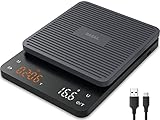
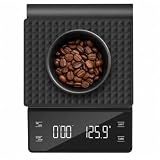

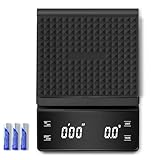
How to Choose a Coffee Scale: Complete Buying Guide (2026)
For any coffee enthusiast aiming to elevate their brewing game, a high-quality coffee scale isn’t just an accessory; it’s a fundamental tool. Precision and consistency are the cornerstones of exceptional coffee, and without accurate measurements of both beans and water, achieving your desired flavor profile becomes a matter of luck rather than skill. Whether you’re a seasoned barista meticulously dialing in your espresso shots or a home brewer exploring the nuances of pour-over, the right scale empowers you to replicate successful brews and troubleshoot less-than-ideal ones. It’s the unsung hero that bridges the gap between good coffee and truly great coffee.
This comprehensive buying guide is designed to demystify the process of selecting the perfect coffee scale for your needs. We’ll delve into the different types of scales available, explore the essential features that differentiate them, and provide guidance on budget considerations. Furthermore, we’ll highlight common pitfalls to avoid and answer your most pressing questions. By the end of this guide, you’ll possess the knowledge to confidently choose a coffee scale that will become an indispensable part of your brewing ritual for years to come.
Types of Coffee Scales
See also: How to Season a New Coffee Grinder (2026): Step-by-Step • How to Clean a Moka Pot Safely (2026): Step-by-Step
Basic Digital Kitchen Scales
These are the entry-level digital scales, often found in general kitchenware sections. They typically offer straightforward weight measurements with a digital display and may have a tare function. While they can measure coffee grounds and water, they often lack the precision, speed, and specialized features needed for optimal coffee brewing, especially for methods requiring very fine adjustments.
Specialty Coffee Scales (Brewing Scales)
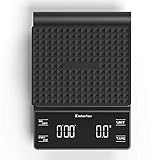
Designed specifically for coffee brewing, these scales prioritize accuracy, responsiveness, and often incorporate features tailored to the brewing process. They tend to have higher precision (e.g., measuring to 0.1 grams), faster response times for real-time weight changes, and sometimes include built-in timers. These are the go-to for most home brewers and aspiring baristas.
Espresso Scales
A subset of specialty coffee scales, espresso scales are optimized for the unique demands of espresso preparation. They are typically smaller in footprint to fit under an espresso machine’s drip tray, feature extremely fast response times to accurately capture the fleeting moments of a shot extraction, and often have a low profile to maintain clearance. High precision is paramount here, often to 0.01 grams, to account for the subtle variations in espresso yield.
Smart Coffee Scales
These advanced scales often connect to a smartphone app via Bluetooth. They can offer features like recipe saving, brew tracking, and even integration with other smart brewing devices. While offering a high level of convenience and data logging, they come at a higher price point and may be overkill for users who prefer a simpler, manual approach to brewing.
Key Features to Look For
Accuracy and Precision
This is paramount. Look for scales that measure in increments of 0.1 grams (for brewing) or even 0.01 grams (for espresso). This level of precision ensures you can accurately measure small quantities of coffee beans and water, crucial for consistent and repeatable results.
Response Time (Update Speed)
A fast response time means the scale’s display updates quickly as you add or remove weight. For brewing, especially pour-over, this allows you to monitor the water flow in real-time. For espresso, it’s critical for capturing the exact moment to stop the shot based on yield.
Tare Function
The tare function (often a “zero” button) allows you to reset the scale to zero after placing a container on it. This is essential for measuring the weight of ingredients accurately, as it subtracts the weight of the container, letting you measure only the coffee or water.
Built-in Timer
Many specialty coffee scales feature an integrated timer. This is incredibly useful for tracking brew times, especially for methods like pour-over or French press, where time is a critical variable alongside weight. It eliminates the need for a separate timer.
Weight Capacity
Consider the maximum weight you’ll typically need to measure. For most home brewing, a capacity of 2kg (around 4.4 lbs) is more than sufficient. Espresso scales might have a lower capacity but prioritize precision over sheer volume.
Surface Area and Design
The scale’s surface should be large enough to comfortably accommodate your brewing equipment (e.g., pour-over dripper, server, espresso portafilter). A non-slip surface is also a valuable feature to prevent accidents. For espresso, a low profile is often preferred to fit under the machine.
Durability and Water Resistance
Coffee brewing can be a wet process. Look for scales made from robust materials that can withstand spills and splashes. Some scales are even designed with a degree of water resistance, making them easier to clean and more resilient to the kitchen environment.
Power Source (Battery vs. Rechargeable)
Most scales are powered by batteries, which are convenient but require periodic replacement. Rechargeable scales, often via USB, offer a more eco-friendly and potentially cost-effective solution over time, though initial investment might be higher.
How Much Should You Spend?
Budget (Under $30)
At this price point, you’ll typically find basic digital kitchen scales with a decent level of accuracy (0.1g is common) and a tare function. They may lack a built-in timer or the ultra-fast response times found in higher-end models. These are suitable for casual brewers who are just starting to experiment with weighing their coffee and water, but may not offer the precision needed for advanced techniques.
Mid-Range ($30
This tier offers the sweet spot for most home baristas. You’ll find dedicated coffee scales with excellent accuracy (0.1g), fast response times, and integrated timers. They often have a more robust build quality, larger display for better readability, and a more refined design. These scales provide the precision and features necessary for consistent and enjoyable brewing across various methods.
Premium
In the premium category, you’ll encounter scales with the highest precision (0.01g for espresso), exceptional response times, and advanced features like Bluetooth connectivity for smart scales. These are often built with premium materials, offer superior durability, and may include specialized designs for specific brewing setups (like very low-profile espresso scales). They are for the serious enthusiast or professional who demands the utmost in accuracy and control.
Common Mistakes to Avoid
- Overlooking Accuracy: Buying a scale that doesn’t measure to at least 0.1 grams for brewing can severely limit your ability to achieve consistent results.
- Ignoring Response Time: A slow-updating scale makes real-time brewing adjustments difficult, especially for pour-over methods where water flow is crucial.
- Not Considering Size and Fit: A scale that’s too small might not accommodate your brewing setup, leading to spills or awkward maneuvering. For espresso, ensure it fits under your machine.
- Forgetting the Tare Function: While seemingly basic, the absence of a tare function makes accurate measurement of individual ingredients extremely cumbersome.
- Buying a Scale Solely for Looks: While aesthetics are nice, prioritize functionality, accuracy, and features that directly benefit your brewing process over mere appearance.
Frequently Asked Questions
Q: Do I really need a scale specifically for coffee, or can I use my regular kitchen scale?
A: While a basic kitchen scale can get you started by measuring grams, specialty coffee scales offer superior accuracy (often to 0.1g or 0.01g), faster response times for real-time adjustments, and integrated timers, all of which are crucial for consistent and precise coffee brewing, especially for methods like pour-over and espresso.
Q: What is the difference between a 0.1g and a 0.01g scale?
A: A 0.1g scale measures in increments of one-tenth of a gram, which is sufficient for most coffee brewing methods like pour-over or Aeropress. A 0.01g scale measures in increments of one-hundredth of a gram, offering even finer precision, which is highly recommended for espresso extraction where even small variations in yield can significantly impact taste.
Q: How important is the tare function?
A: The tare function is absolutely essential for accurate coffee measurement. It allows you to place your brewing vessel (like a mug, server, or portafilter) on the scale, press “tare” to reset the reading to zero, and then accurately measure only the weight of the coffee or water you’re adding, rather than the combined weight of the vessel and its contents.
Q: Should I get a scale with a built-in timer?
A: Yes, a built-in timer is a highly beneficial feature for coffee scales. It allows you to simultaneously track both the weight of your coffee and water and the duration of your brew, providing all the critical variables in one place. This simplifies your brewing process and makes it easier to replicate successful results.
Q: How do I clean my coffee scale?
A: Most coffee scales can be cleaned with a damp cloth and mild soap. Avoid submerging the scale in water, as this can damage the electronics. For stubborn residue, a soft brush can be helpful. Ensure the scale is completely dry before use or storage.
Final Thoughts
Choosing the right coffee scale is an investment in the quality and consistency of your coffee. By understanding the different types, prioritizing essential features like accuracy and response time, and being mindful of your budget, you can confidently select a tool that will enhance your brewing experience for years to come. Don’t underestimate the impact a precise measurement can have on your daily cup – happy brewing!
Recommended Coffee Scale Guides
- Best Kitchen Scale For Coffee 2026
- Best Good Scale For Coffee 2026
- Best Espresso Machine For Macchiato 2026
- Best Espresso Machine For Under 500 2026
- Best Portafilter For Breville 2026