- Top Pick: Califia Farms – Oat Barista Blend Oat Milk, 32 Oz (Pack of 6), Shelf Stable, Dairy Free, Plant Based, Vegan, Gluten Free, Non GMO, High Calcium, Milk Frother, Creamer, Oatmilk
- Best Value: Pacific Foods Barista Original Oat Milk – Ordering Only, 32 FZ
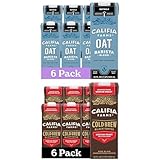
- Premium Choice: Bundle of Califia Farms Oat Barista Blend Oat Milk, 32 Oz (Pack of 6) + Califia Farms Pure Black Medium Roast Cold Brew Coffee, 32 Oz (Pack of 6)
Last updated: October 21, 2026
As an Amazon Associate we earn from qualifying purchases at no extra cost to you.




Disclosure: As an Amazon Associate we earn from qualifying purchases. This page contains affiliate links and we may earn a commission at no extra cost to you.
Oat milk did something no other plant milk managed: it made dairy optional for latte art. Almond splits, rice refuses to foam, and early soy curdled at the first sign of acidic espresso — but a good barista-edition oat milk stretches into glossy, paintable microfoam that holds a rosetta nearly as well as whole milk. That is why oat conquered specialty café menus in a few short years, and why the “barista” label on the carton is not marketing fluff but a real reformulation.
The difference lives in the recipe. Barista editions add plant fats and stabilizers and tune the protein content so the milk builds fine, durable bubbles and — critically — survives contact with hot, acidic espresso without splitting into flakes. Regular oat milk from the same brand will often foam briefly, then collapse or feather in the cup. If your oat art keeps dissolving before you reach the table, the carton is the suspect, not your pitcher technique.
We compared six widely available options — four true oat barista players, a vanilla wildcard, and one almond outlier for contrast — to sort out which cartons deserve a place next to your machine. Price per carton varies widely with pack size, so we have flagged the multi-pack listings where they appear; what matters for daily pouring is how each milk behaves at the wand, and that is where these six genuinely differ.
Quick Comparison
| Product | Price | Rating |
|---|---|---|
| Oatly Barista Edition, 1L | Check on Amazon | 4.8/5 |
| Chobani Oat Barista Edition | Check on Amazon | 4.7/5 |
| Califia Farms Oat Barista Blend, 32 oz | Check on Amazon | 4.6/5 |
| Califia Farms Unsweetened Almond, 32 oz 6-Pack | Check on Amazon | 4.6/5 |
| MALK Organic Oat Milk, 32 oz 6-Pack | Check on Amazon | 4.5/5 |
| Califia Farms Vanilla Oat Barista, 32 oz 6-Pack | Check on Amazon | 4.5/5 |
Why Trust This Guide
See also: Bloody Mary Recipe: Classic, Spicy, and Easy • Copycat Starbucks Drink Recipes You Can Make at Home
We judge plant milks on the qualities that matter at the steam wand — foam stability, behavior with espresso, flavor neutrality, and shelf-stable practicality — based on published formulations and widespread barista practice. Prices and ratings come directly from current listings; pack sizes vary by seller, so check the unit count before comparing per-carton cost.
The Best Oat Milks for Latte Art
Oatly Barista Edition
Oatly’s Barista Edition is the carton that started the oat revolution, and it remains the reference point: faintly sweet, neutral enough to flatter espresso, and engineered to stretch into microfoam with nearly dairy-like persistence. Cafés standardized on it for a reason — it behaves the same way every time, which is exactly what latte art practice needs.
The listing here is a multi-unit case, which explains the price; per liter it is a premium but unremarkable spend. If you want the most predictable canvas for learning oat-milk hearts and rosettas, start with the original.
Chobani Oat Barista Edition
Chobani’s barista oat entry is the dairy company’s bid for café counters, and it steams convincingly: a rounded, creamy body with foam that pours cleanly and holds definition through a slow sip. Shelf-stable cartons make it easy to keep a backstock, so running out mid-week never derails practice.
Flavor-wise it reads slightly creamier and less oaty than Oatly, which some palates prefer in milk-heavy drinks. Try both against the same espresso and let your own cup decide — that bake-off is half the fun of oat milk coffee drinks anyway.
Califia Farms Oat Barista Blend
It is dairy free, vegan, and gluten free, and it textures well enough that café chains pour it daily.
Oat foams are marginally less elastic than Oatly’s at the extreme fine-art end, but for hearts, tulips, and everyday flat whites the difference is academic. For sheer reps per dollar, nothing here touches it.
Califia Farms Unsweetened Almond Milk
The almond option earns its slot as the contrast pick — and the honest caveat. Unsweetened almond milk is the choice for low-sugar and nut-forward preferences, and Califia’s is among the better-behaved almonds at the wand. But almond’s lower protein simply builds looser, shorter-lived foam than oat, and it is quicker to feather in very hot or very acidic shots.
If latte art is the priority, stay with oat. If almond flavor or macros drive your order, steam it gentler and cooler than you would oat, and pour promptly; the six-pack format keeps the habit affordable.
MALK Organic Oat Milk
MALK plays the clean-label card: organic, non-GMO, shelf-stable oat milk with a famously short ingredient list. It is the pick for drinkers who want their plant milk minimally processed and are willing to trade some foam engineering to get it — without barista-blend stabilizers, its froth is softer and settles faster.
In practice that means MALK shines in lattes, smoothies, and cereal, and will still produce a respectable simple pour. Expect adequate art rather than competition art, and enjoy the cleaner label the rest of the day.
Califia Farms Vanilla Oat Barista Blend
Vanilla in a barista blend sounds like a gimmick until you realize what it replaces: the pump of syrup in a vanilla latte. This Califia variant textures like its plain sibling — proper barista-blend foam — while building dessert-adjacent flavor straight into the milk, which keeps the drink smoother than syrup-sweetened versions.
The flavored milk does mean your espresso shares the stage. Use it deliberately for vanilla lattes and iced pours rather than as a daily default, and it becomes a genuinely useful second carton alongside cold foam experiments.
What to Look For in Oat Milk for Latte Art
Cartons do not advertise their steaming behavior honestly, so read for these markers instead.
- The word “barista” on the carton — it signals added fats and stabilizers tuned for foaming and espresso contact; regular versions of the same brand behave very differently.
- Protein and fat content — foam structure comes from protein, mouthfeel from fat; richer barista blends stretch and hold patterns best.
- Acid stability — milks formulated for coffee resist curdling in hot, acidic shots; non-coffee formulations may feather, especially with bright roasts.
- Flavor neutrality — a good art milk flatters espresso rather than competing; strongly oaty or sweetened milks change the drink’s character.
- Shelf-stable packaging — aseptic cartons let you stockpile practice milk without racing expiration dates.
- Per-carton economics — latte art practice burns milk; multi-packs and budget blends make the learning curve affordable.
Tips for Getting the Most Out of Oat Milk Latte Art
Steam oat milk slightly differently than dairy. Oat blends generally want a touch less air — a shorter stretch phase of one to two seconds — because they whip up faster and over-aerated oat foam turns dry and meringue-like in seconds. Keep the milk cold from the fridge, spin a strong whirlpool after the brief stretch, and stop a few degrees earlier than you would with dairy, since overheated oat milk picks up a porridge note. Sharp jug work helps here more than ever; our latte art pitcher guide covers the spout control that thin oat foam demands.
Pour faster than you would with dairy. Oat microfoam sets up and stiffens quicker in the jug, so the gap between final swirl and finished pour should be seconds, not a leisurely interlude. Swirl constantly while the espresso settles, then commit: dive the spout low, keep the stream confident, and finish your pattern before the foam tightens. If the milk stiffens anyway, a few firm taps and another hard swirl buy you one more attempt.
Finally, keep your equipment honest. Plant milks leave residue on steam tips that alters spray patterns, and an irregular spray quietly sabotages texture — wipe and purge after every steam, and inspect the wand tip monthly if oat is your daily milk. An angled pitcher can also make oat’s faster-setting foam easier to monitor as you pour.
Frequently Asked Questions
Why does barista oat milk work better than regular oat milk?
Barista editions are reformulated for the steam wand: extra plant fat for mouthfeel, stabilizers and acidity regulators so the milk does not split in espresso, and protein levels tuned for fine, durable bubbles. Regular cartons are built for cereal and drinking, and their foam typically collapses within a minute.
Is oat milk really the best plant milk for latte art?
For most people, yes. Oat barista blends currently offer the best combination of stable microfoam, espresso compatibility, and neutral flavor. Soy barista blends foam well but split more readily with acidic coffee; almond builds weaker foam; coconut and rice are not serious art contenders.
Why does my oat milk curdle in espresso?
Acidity and heat. Espresso — especially lighter roasts — is acidic enough to destabilize non-barista plant milks, and scalding accelerates it. Switch to a barista formulation, steam to a slightly lower temperature, and let the shot sit thirty seconds before adding milk; all three changes reduce feathering dramatically.
Does oat milk foam need different steaming technique?
Slightly. Give it less air (a shorter stretch), a strong whirlpool, and a marginally lower finish temperature than dairy, then pour immediately — oat foam stiffens faster in the jug. Once those three adjustments become habit, oat pours patterns nearly as cleanly as whole milk.