- Top Pick: Chefman Electric Kettle, 1.8L 1500W, Hot Water Boiler, Removable Lid for Easy Cleaning, Auto Shut Off, Boil-Dry Protection, Stainless Steel Filter, BPA Free, Borosilicate Glass Electric Tea Kettle
- Best Value: OVENTE 1.7L Electric Tea Kettle, 1100W BPA-Free Water Boiler, White KP72W
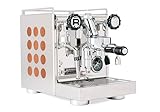
- Premium Choice: Rocket Espresso Appartamento 2.0 Espresso Machine | Heat Exchanger | 1.8L | (Black and Copper)
Last updated: September 18, 2026
Choosing between a single boiler vs heat exchanger espresso machine is less about which design is “better” and more about how you actually make coffee at home. The real decision is whether you want a compact, lower-cost machine focused on one drink at a time—or a larger, more capable machine that can brew espresso and steam milk with less waiting.
A single-boiler machine uses one boiler for both brewing and steaming. A heat exchanger (HX) machine keeps a steam boiler hot while fresh water passes through a separate tube for brewing. That difference affects speed, workflow, size, energy use, maintenance, and price. For 2026 shoppers, the right choice depends especially on drink volume, available counter space, and whether milk drinks are an occasional treat or a daily routine.
As an Amazon Associate we earn from qualifying purchases at no extra cost to you. Product prices and availability are accurate as of the date shown and are subject to change.


Quick Verdict
Choose a single-boiler espresso machine if you primarily drink straight espresso, make one or two milk drinks at a time, have limited counter space, or want to keep your budget near $400 to $1,200. These machines are usually simpler, smaller, and less expensive to own.
Choose a heat exchanger espresso machine if you regularly prepare cappuccinos or lattes, serve several people, or want to brew and steam without waiting between tasks. Expect to spend roughly $1,200 to $3,500, with a larger footprint and more involved maintenance.
For a premium HX example, the Rocket Espresso Appartamento 2.0 appears in Black and Copper at $2,200 and in Copper at $2,150. Those prices illustrate the investment, although the machine’s size and workflow may be more than a casual espresso drinker needs.
Side by Side
See also: How to Season a New Coffee Grinder (2026): Step-by-Step • How to Clean a Moka Pot Safely (2026): Step-by-Step
| Factor | Single Boiler | Heat Exchanger |
|---|---|---|
| Brewing and steaming | Usually one function at a time; requires a wait between brewing and steaming | Can brew and steam at the same time |
| Comfort | Simple controls, but milk drinks require a pause and temperature change | Smoother workflow for multiple drinks; more controls to learn |
| Durability | Fewer major components can mean easier long-term servicing | Robust prosumer construction, but more parts and plumbing to maintain |
| Price range | About $400–$1,200 for common home models | About $1,200–$3,500 for prosumer home models |
| Maintenance | Descaling, backflushing, gasket care, and occasional boiler service | Similar routine care, plus additional attention to the steam boiler and heat-exchange system |
| Space needed | Often about 8–10 inches wide, 12–16 inches deep, and 11–15 inches tall | Often about 10–12 inches wide, 16–20 inches deep, and 15–17 inches tall |
| Look | Ranges from compact modern designs to small stainless-steel machines | Often has a substantial stainless-steel body and café-inspired styling |
| Resale | Good for well-known models in clean condition; lower entry price helps demand | Strong among enthusiasts, especially for recognizable prosumer brands |
| Best for | Espresso drinkers, small kitchens, and occasional milk drinks | Frequent cappuccino and latte makers, couples, families, and entertaining |
Where Single Boiler Wins
The biggest single-boiler advantage is simplicity. One boiler handles brewing and steaming, so the machine generally has fewer heating components, valves, and control systems. That can make the initial purchase easier to justify and repairs less intimidating over time.
Single boilers also make better use of a small counter. Many are roughly 8 to 10 inches wide and weigh about 20 to 35 pounds, although dimensions vary by model. That is easier to fit beneath cabinets than a larger HX machine. Check cabinet clearance carefully: the machine may need several inches above it to remove a water tank or load coffee beans.
They are especially appealing when most of your drinks are straight espresso, Americanos, or long blacks. If you make a milk drink, the typical sequence is to brew first, switch the machine into steam mode, wait for the boiler to heat, steam milk, and then allow the machine to cool or refill before brewing again. That pause is inconvenient for a crowd but rarely troublesome for one person.
A single boiler can also be the better learning platform. The slower workflow encourages attention to dose, grind, extraction time, and milk texture instead of hiding everything behind automation. For buyers moving up from a basic machine, it offers a more traditional experience without immediately committing to a $2,000-plus setup.
Do not confuse an electric kettle with an espresso boiler. The $23.52 Chefman 1.8-liter electric kettle and the $15.99 OVENTE 1.7-liter kettle are useful for tea or separate hot water, but they do not create espresso pressure or replace an espresso machine’s brewing system.
Where Heat Exchanger Espresso Wins
A heat exchanger machine is designed for a busier workflow. Its steam boiler stays at a high temperature while brewing water travels through a separate heat-exchange tube. As a result, you can pull espresso while steaming milk, or move quickly from one task to the other.
That matters when making several drinks in succession. A family breakfast, weekend guests, or a partner who wants a latte at the same time you want an espresso can expose the limits of a single boiler. With an HX machine, the main constraint becomes grinder speed, puck preparation, and your own technique—not waiting for the boiler to change modes.
Heat exchanger machines also tend to have larger steam boilers, commonly around 1.5 to 2.0 liters in home prosumer models. That provides stronger, more sustained steam than many compact single boilers. The trade-off is a longer warm-up, often around 15 to 30 minutes, compared with approximately 5 to 15 minutes for smaller single-boiler machines. Exact times depend on wattage, ambient temperature, and design, so treat these as practical ranges rather than guarantees.
The learning curve is different, too. HX machines may require a cooling flush before brewing, depending on the machine’s temperature behavior and how long it has been idle. Learning the correct flush routine is part of getting consistent results. You are buying speed and capacity, but also accepting a little more technique.
Size and weight can be significant. A machine such as the Rocket Espresso Appartamento 2.0 is in the larger prosumer category, with a footprint that needs careful planning and a body weight commonly listed around 50 pounds. Its $2,150 Copper price and $2,200 Black and Copper price show how quickly the budget rises for premium heat-exchanger construction and styling.
Cost Over 5 Years
Purchase price is only the first part of ownership. A reasonable five-year budget for a single boiler might include $400 to $1,200 for the machine, $150 to $400 for routine supplies and replacement parts, and roughly $100 to $500 for professional service if needed. That creates an approximate five-year machine-related total of $650 to $2,100, excluding coffee, a grinder, water filters, and electricity.
For a heat exchanger, plan on roughly $1,200 to $3,500 initially. Routine supplies and replacement parts may total $200 to $500 over five years, while professional service can add $150 to $700 or more depending on boiler, pump, valve, and gasket work. A practical five-year range is therefore about $1,550 to $4,700 before coffee and accessories.
Electricity usually is not the deciding expense. HX machines can draw about 1,200 to 1,500 watts while heating, while single boilers often fall near 1,000 to 1,400 watts. Usage patterns matter more than the maximum rating: an HX machine that stays warm all morning may consume more energy than a single boiler used for two quick drinks.
Which One for Your Home
Small apartment
Choose a single boiler unless you make several milk drinks every day. Measure the counter, cabinet clearance, and the path to the sink before buying. A compact machine around 8 to 10 inches wide is easier to live with, and its lower heat output and weight may be friendlier in a small kitchen.
Family with kids or pets
An HX machine is convenient if multiple adults want drinks back-to-back, but safety and supervision matter. Steam wands, hot metal surfaces, and drip trays should stay out of reach. If espresso is an occasional adult ritual rather than a household routine, a single boiler reduces cost and counter congestion.
Rental
Favor a single boiler. It is easier to move, less expensive to replace if a relocation causes damage, and more likely to fit a rental kitchen. Avoid buying an oversized HX machine simply because it looks professional; you may have to transport 40 to 60 pounds of equipment during your next move.
Long-term home
If you have a permanent coffee station and regularly entertain, a heat exchanger can be worth the investment. Choose a single boiler for a long-term home when straight espresso is your priority and you prefer fewer systems to maintain.
FAQ
Is a heat exchanger better than a single boiler?
It is better for simultaneous brewing and steaming, larger drink batches, and frequent milk drinks. A single boiler is often better for straight espresso, smaller kitchens, lower budgets, and simpler maintenance.
Can a single boiler make lattes and cappuccinos?
Yes. It can make excellent milk drinks, but you must switch from brewing to steaming and wait for the temperature to change. The process is slower, especially when preparing several drinks.
Does a heat exchanger make better espresso?
Not automatically. Espresso quality also depends on the grinder, coffee freshness, water, dose, puck preparation, and temperature management. An HX machine offers a faster workflow, but it still requires proper technique and may need cooling flushes.
How long should an espresso machine last?
A well-maintained home machine can last many years, but lifespan depends on water quality, usage, cleaning, and service. Backflush when appropriate, descale according to the manufacturer’s guidance, replace worn group gaskets, and use filtered water when recommended.
Ready to decide? Our #1 pick for 2026 is the Brewing and steaming.
Live price & availability on Amazon.