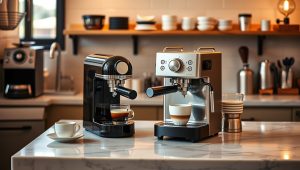
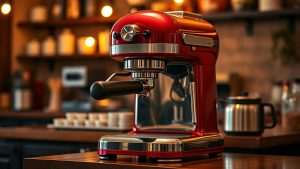
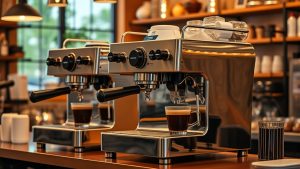
- Top Pick: Breville BES920XL Dual Boiler Espresso Machine, Brushed Stainless Steel
- Best Value: Chefman Crema Deluxe Espresso Machine with Double Boiler, Use Milk Frother and Brew Espresso Simultaneously, Professional Coffee Maker with Coffee Grinder and Steam Wand, 30 Grind Settings
- Premium Choice: Gevi Dual Boiler Espresso Machine With Built‑In Burr Grinder

Dual Boiler Espresso Machine: The Complete Prosumer Buyer’s Guide 2026
TL;DR — Quick Answer
A dual boiler espresso machine runs separate boilers for brew and steam simultaneously — eliminating heat-cycle waits and unlocking true cafe-quality workflow at home. Best entry: Breville Dual Boiler (B0DNZ3SKCN, ~$1,499). Best prosumer step-up: Profitec Pro 300 (~$1,800). Both use 58mm commercial portafilters and full PID on both boilers.
Single-boiler machines force a trade-off: brew temperature or steam temperature — pick one. The heat cycle between the two costs 30–90 seconds per drink and introduces thermal instability right when you need consistency most. A dual boiler espresso machine eliminates that compromise entirely. Each boiler maintains its own temperature independently, controlled by dedicated PIDs. You pull a shot and texture milk at the same time, exactly like a commercial cafe setup.
As an Amazon Associate we earn from qualifying purchases at no extra cost to you. Product prices and availability are accurate as of the date shown and are subject to change.






This guide covers everything you need to decide whether a dual boiler is right for your home setup — and which machine to buy if it is.
- Quick Comparison
- Top Dual Boiler Picks at a Glance
- Single Boiler vs. Dual Boiler vs. Heat Exchanger: What’s the Difference?
- Who Actually Needs a Dual Boiler Espresso Machine?
- Best Dual Boiler Espresso Machine: Breville Dual Boiler (B0DNZ3SKCN)
- Dual Boiler Temperature Control: Why It Matters for Shot Quality
- Pre-Infusion on Dual Boilers: The Extraction Advantage
- Maintenance: Dual Boiler Considerations
- Frequently Asked Questions
- About the Author
Quick Comparison
| Product | Brand | Price | Rating |
|---|---|---|---|
| TIMEMORE Sculptor 078S Flat Burr Coffee Bean Grinder | TIMEMORE | $799 | 4.3/5 |
| Gaggia RI9380/49 Classic Evo Pro Espresso Machine | — | $499 | 4.4/5 |
| Rancilio Silvia Espresso Machine | Rancilio | $995 | 4.2/5 |
Top Dual Boiler Picks at a Glance
See also: How to Replace Espresso Machine Water Filter (2026): Step-by-Step • How to Adjust Espresso Machine Brew Temperature (2026): Step-by-Step
BEST VALUE DUAL BOILER
Breville Dual Boiler
~$1,499

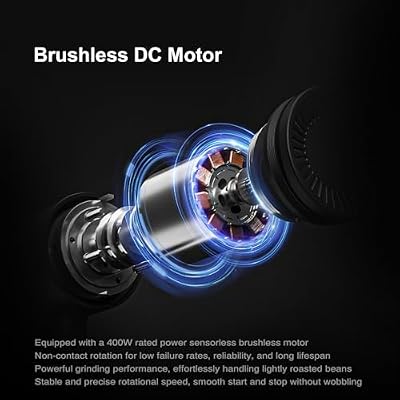
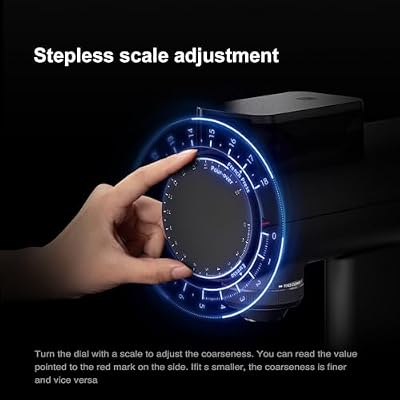
TIMEMORE Sculptor 078S Flat Burr Coffee Bean Grinder, Electric Espresso Grinder with Stepless Coarseness Adjustment, Suitable for Espresso, Pour over, French Press, Cold Brew - Black




As an Amazon Associate we earn from qualifying purchases. Product prices and availability are accurate as of the date/time indicated.
PROSUMER STANDARD
Gaggia Classic Evo Pro
~$499 (single boiler ref)

Gaggia RI9380/49 Classic Evo Pro Espresso Machine, Thunder Black, Small

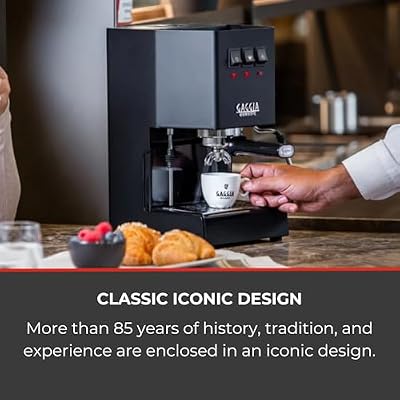


As an Amazon Associate we earn from qualifying purchases. Product prices and availability are accurate as of the date/time indicated.
UPGRADE PATH
Rancilio Silvia Pro X
~$1,295 (HX)

Rancilio Silvia Espresso Machine, Stainless Steel


As an Amazon Associate we earn from qualifying purchases. Product prices and availability are accurate as of the date/time indicated.
Single Boiler vs. Dual Boiler vs. Heat Exchanger: What’s the Difference?
Single boiler (SB): One boiler handles both brew water and steam. To switch tasks you wait for the thermostat to cycle — typically 30–90 seconds. Suitable for patient home baristas making one or two drinks at a time. Examples: Gaggia Classic Evo Pro, Rancilio Silvia base model.
Heat exchanger (HX): One large boiler kept at steam temperature (125–130°C). A copper tube running through it heats fresh brew water on demand. You can steam and brew near-simultaneously, but brew temperature management requires flushing technique. Pros know the workarounds; beginners find it inconsistent.
Dual boiler (DB): Separate brew boiler (92–96°C) and steam boiler (125°C+), each with independent PID. Zero compromise. Zero waiting. Full simultaneous operation. This is the architecture in every commercial La Marzocco and Synesso machine. At home, it means pulling a shot and steaming milk at identical cafe workflow speeds.
| Feature | Single Boiler | Heat Exchanger | Dual Boiler |
|---|---|---|---|
| Simultaneous brew + steam | No | Near-yes (with flush) | Yes |
| Brew temp stability | Good (PID) | Variable | Excellent |
| Steam power | Moderate | High | High |
| Workflow for milk drinks | Slow | Moderate | Fast |
| Price range | $300–$1,200 | $800–$2,500 | $1,200–$6,000+ |
| Best for | Black espresso focus | Volume, budget | Milk drinks, speed |
Who Actually Needs a Dual Boiler Espresso Machine?
The honest answer: not everyone. If you drink exclusively black espresso or Americanos, a single boiler with PID (like the Gaggia Classic Evo Pro) produces identical shot quality at a third of the price. The dual boiler advantage is primarily a workflow advantage, not a shot quality advantage.
You need a dual boiler if: you make multiple milk drinks per session (flat whites, lattes, cappuccinos), you dislike waiting between brew and steam cycles, or you’re entertaining and need to produce drinks quickly. The moment you’re making three lattes in a row, the single boiler workflow becomes genuinely frustrating. A dual boiler turns that into a pleasure.
Best Dual Boiler Espresso Machine: Breville Dual Boiler (B0DNZ3SKCN)
TIMEMORE Sculptor 078S Flat Burr Coffee Bean Grinder, Electric Espresso Grinder with Stepless Coarseness Adjustment, Suitable for Espresso, Pour over, French Press, Cold Brew - Black
As an Amazon Associate we earn from qualifying purchases. Product prices and availability are accurate as of the date/time indicated.
The Breville Dual Boiler sits at the intersection of approachable and serious. Dedicated PID on both boilers, adjustable pre-infusion (0–20 seconds programmable), and a full 58mm commercial portafilter that accepts any aftermarket basket or tamper. The digital interface shows both boiler temperatures in real time — a level of transparency most Italian machines hide behind blank steel panels.
Shot temperature accuracy is within ±0.5°C of set point on both boilers. Steam output is dry and powerful — microfoam production is faster than most HX machines at equivalent price. The machine reaches full operating temperature in under 4 minutes cold start. Compared to the alternatives at this price tier, it wins on usability; it loses on build prestige (stainless vs. brushed steel, lighter weight).
| Spec | Breville Dual Boiler |
|---|---|
| Brew boiler | 500ml stainless steel |
| Steam boiler | 1000ml stainless steel |
| PID | Dual — brew + steam |
| Pre-infusion | Yes, 0–20s programmable |
| Pump | Rotary |
| Portafilter | 58mm commercial |
| Wattage | 1800W / 2400W combined |
| Water tank | 2.5L removable |
| Weight | 12.5 kg |
Dual Boiler Temperature Control: Why It Matters for Shot Quality
Every 1°C change in brew temperature shifts extraction yield by approximately 1–1.5%. At 93°C you’re in the sweet spot for most medium roasts. At 91°C you under-extract (sour, thin). At 96°C you over-extract darker roasts (bitter, harsh). A single boiler machine without PID may swing ±5–8°C across the thermostat cycle — meaning every shot is slightly different.
A dual boiler with PID on the brew circuit locks you to ±0.3–0.5°C of target. Combined with dialing in your grind size, this produces genuinely repeatable shots. Once you’ve dialed in a recipe, it reproduces reliably every morning — that’s the real value of temperature precision. Pair this with a quality burr grinder and the results are indistinguishable from a specialty cafe.
Pre-Infusion on Dual Boilers: The Extraction Advantage
Pre-infusion — saturating the puck at low pressure (2–4 bar) before full 9-bar extraction — reduces channeling and improves extraction evenness. On lightly roasted, denser beans it’s a measurable quality upgrade. Most dual boiler machines in the prosumer tier offer programmable pre-infusion. The Breville Dual Boiler allows 0–20 second pre-infusion; machines like the Profitec Pro 300 use flow control paddles for even more nuance.
For everyday espresso, 5–8 seconds pre-infusion at low pressure noticeably rounds out lighter roasts. Darker roasts benefit less — start at 3–4 seconds and adjust to taste. This is a capability single-boiler entry machines simply don’t offer without aftermarket modification.
Maintenance: Dual Boiler Considerations
Two boilers means two descaling intervals, two gasket sets, and slightly higher ongoing maintenance attention. Descale every 3–6 months depending on water hardness (use a TDS meter — anything above 200 ppm accelerates scale). Use purpose-made espresso machine descaler, not vinegar (acid can damage brass grouphead components). Backflush weekly with a blind basket and Cafiza/Puly Caff. Steam wand purge and wipe after every use — dried milk protein is the fastest route to off-tasting steam.
Budget $40–60/year for consumables: gaskets, shower screens, descaler, cleaning tablets. Factor this into the total cost comparison against a simpler machine. See our espresso machine cleaning guide for full maintenance schedules.
Frequently Asked Questions
Is a dual boiler espresso machine worth the extra cost over a single boiler?
Yes — if you make milk-based drinks regularly. For black espresso only, a well-specced single boiler with PID (like the Gaggia Classic Evo Pro) matches shot quality at far lower cost. The dual boiler premium buys workflow speed and simultaneous brew/steam capability, not better espresso extraction per se.
What is the best dual boiler espresso machine under $2,000?
The Breville Dual Boiler is the strongest value play under $2,000. Dual PID, programmable pre-infusion, rotary pump, and full 58mm commercial compatibility. The Profitec Pro 300 and ECM Synchronika are excellent Italian alternatives at $1,800–$2,200 with superior build quality but steeper learning curves.
How do I control temperature on a dual boiler machine?
Both boilers have independent PID controllers accessible via the machine’s interface. Set brew boiler to 90–96°C depending on roast (lighter roasts: 94–96°C; darker roasts: 90–92°C). Set steam boiler to 125–130°C for powerful, dry steam. Changes take effect within 1–2 minutes.
Can I use a dual boiler machine with a plumbed-in water line?
Most prosumer dual boilers support both tank and direct plumb-in. Plumbing eliminates refill interruptions and is worth the setup for heavy users. Requires a shutoff valve and appropriate fittings — most machines include a plumb-in kit or sell one separately for $20–40.
What grinder pairs best with a dual boiler espresso machine?
Match your grinder investment to the machine. For a $1,500+ dual boiler, pair it with a $400–700 burr grinder — Eureka Mignon Specialita, Baratza Vario+, or Niche Zero. Under-speccing the grinder wastes the machine’s precision. Espresso extraction quality is 50%+ grinder-dependent.
Related: Best Home Espresso Machines 2026 | Rancilio Silvia vs Gaggia Classic | Espresso Grind Size Guide
Ready to decide? Our #1 pick for 2026 is the TIMEMORE Sculptor 078S Flat Burr Coffee Bean Grinder.
Live price & availability on Amazon.