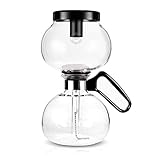
- Top Pick: Yama Glass 8-Cup Stovetop Siphon Coffee Maker, 24 Oz Vacuum Brew, Heat-Resistant Borosilicate Glass
- Best Value: QWORK 5-Cup (600ml) Siphon Coffee Maker – Borosilicate Glass Syphon Brewer with Adjustable Buffer Clamp, High-Temperature Resilience, Tabletop Glass Siphon Pot for Coffee Aficionados
- Premium Choice: Nispira Belgium Royal Family Balance Syphon Unique Gravity Vintage Coffee Maker Vacuum Brewing System Copper 500 ml
As an Amazon Associate we earn from qualifying purchases at no extra cost to you. Product prices and availability are accurate as of the date shown and are subject to change.



![[Factory Store] QUEEN SENSE Patented Siphon/Syphon Coffee Maker Electric Vacuum Coffee Pot CM0601 (Siphon Coffee Maker)](https://m.media-amazon.com/images/I/31r6O4KlRQL._SL160_.jpg)

TL;DR: A coffee siphon (vacuum brewer) uses vapor pressure and vacuum physics to produce an exceptionally clean, full-bodied cup. It’s the most theatrical brewing method in home coffee, and genuinely produces a distinct cup profile. Expect a learning curve, longer brew time, and more cleanup — rewarded with a uniquely nuanced extraction.
Coffee Siphon Vacuum Brewer Guide: Science, Technique, and Buyer Tips
The coffee siphon vacuum brewer — also called a syphon, vac pot, or vacuum coffee maker — is the most visually striking brewing apparatus in coffee. Rooted in 19th-century chemistry lab equipment, it uses vapor pressure to push water into a brew chamber and then vacuum suction to draw it back through a filter. The result is a cup profile unlike anything produced by pour-over or immersion methods: clean like a filtered brew but with the full body and complexity of immersion extraction.
- Quick Comparison
- Siphon Brewers to Consider
- How a Coffee Siphon Works
- Siphon Cup Profile: What Does It Actually Taste Like?
- Siphon Components: What You Need
- Filter Types: Cloth vs. Paper vs. Metal
- Heat Source Matters More Than You Think
- Step-by-Step Siphon Brewing
- Grind and Ratio for Siphon
- FAQ
- About the Author
- Frequently Asked Questions
Quick Comparison
| Product | Brand | Price | Rating |
|---|---|---|---|
| Fermtech – Auto Siphon Mini with 6 Ft of Food Safe Tubi… | Fermtech | $15.99 | 4.6/5 |
| Cold Brew Coffee Maker | QHH | $17.99 | 4.5/5 |
| Hario Siphon Cloth Coffee Filter Syphon FS-103 for TCA-… | Hario | $8.24 | 4.7/5 |
| Bodum 34 oz Pebo Vacuum Coffee Maker | Bodum | $85.21 | 4/5 |
| Belgian Balance Syphon Coffee Maker | Dfmyhked | $81.99 | — |
Siphon Brewers to Consider
See also: How to Replace Espresso Machine Water Filter (2026): Step-by-Step • How to Adjust Espresso Machine Brew Temperature (2026): Step-by-Step
How a Coffee Siphon Works
The siphon consists of two sealed glass chambers stacked vertically, connected by a tube sealed with a rubber grommet. The lower chamber holds water; the upper chamber holds coffee grounds and a filter.
The physics proceed in two phases:
- Pressure phase: Heat applied to the lower chamber converts water to steam, building vapor pressure above the remaining liquid. This pressure forces water upward through the connecting tube into the upper brew chamber. Coffee grounds are now in contact with near-boiling water at approximately 195-205°F.
- Vacuum phase: Heat is removed. The lower chamber cools, steam condenses back to water, and pressure drops sharply — creating a partial vacuum. This suction draws the brewed coffee down through the filter and tube back into the lower chamber, leaving spent grounds behind in the upper vessel.
The filter (cloth, metal mesh, or paper) separates grounds from the finished brew as it passes back down. The entire brew cycle — from water rising to coffee dropping — takes approximately 3-5 minutes depending on heat source and batch size.
Siphon Cup Profile: What Does It Actually Taste Like?
The siphon produces a cup that’s genuinely difficult to achieve with other methods: clean-filtered clarity combined with the full extraction depth of immersion brewing. The vacuum draw through the filter removes most fine particles and oils, similar to paper filter methods, but the full immersion contact time (1-2 minutes in the upper chamber) extracts a broader flavor spectrum than a typical pour-over’s shorter contact time.
Expect: bright acidity, pronounced aromatic complexity, medium body with texture, and a long clean finish. The siphon is particularly expressive with complex single-origin coffees — washed Ethiopians, Kenyan AAs, Yemeni naturals. High-quality beans shine; lower-quality beans have nowhere to hide.
Compare to other methods: the Chemex produces a cleaner, lighter-bodied cup; French press produces more body with more fines; pour-over methods like the V60 sit between these extremes. The siphon occupies its own space — technically filtered but experientially immersive.
Siphon Components: What You Need
| Component | Purpose | Options |
|---|---|---|
| Lower chamber | Water reservoir and serving vessel | Borosilicate glass standard |
| Upper chamber | Brew chamber | Glass or ceramic |
| Filter | Separates grounds during draw-down | Cloth, paper, metal mesh |
| Stand/frame | Holds chambers during brewing | Metal frame or tabletop stand |
| Heat source | Heats lower chamber | Butane burner, halogen beam, stovetop |
| Stirring paddle | Agitates grounds during infusion | Bamboo, glass, or silicone |
Filter Types: Cloth vs. Paper vs. Metal
Cloth filters are the traditional choice for siphon brewing and produce the best cup quality. They remove fines without the paper-like absorption of oils. Cloth filters require rinsing before each use and soaking in water between sessions to prevent mildew. Replace after 40-60 brews or when they show discoloration that doesn’t wash out.
Paper filters are more convenient but slightly over-filter the cup — the result is cleaner but less complex, similar to Chemex-level filtration. Use if cloth maintenance is a dealbreaker.
Metal mesh filters allow the most oils and fines through, producing a heavier-bodied cup similar to French press. Less common in siphon brewing but valid for darker roast preferences.
Heat Source Matters More Than You Think
The heat source defines your control over the brew:
Butane burner (most common with tabletop siphons): Portable, produces a focused flame for good heat control. Adjust flame size to maintain water in the upper chamber without aggressive boiling. A simmer-level flame after water rises is the target.
Halogen beam heater (Hario beam heater, others): Provides precise, consistent heat without an open flame. More expensive but preferred in professional settings for temperature consistency. The beam can be directed precisely at the lower chamber base.
Stovetop adapter: Works on gas or electric ranges. Less visual drama, less control — boiling can be too vigorous on high heat settings. Use lowest effective burner setting.
Step-by-Step Siphon Brewing
- Prepare your filter. Rinse cloth filter in hot water and attach it to the upper chamber tube. The metal chain or hook should anchor it centered over the tube opening.
- Fill the lower chamber with pre-heated water (approximately 350ml for a 2-cup batch). Pre-heating reduces total brew time and prevents thermal stress on the glass.
- Apply heat and wait for water to rise into the upper chamber. The rise is not instantaneous — allow 2-3 minutes on a butane burner.
- Add coffee grounds once water has fully risen. Use medium-fine grind, approximately 1g per 15ml of water.
- Stir gently to ensure all grounds are saturated. Maintain gentle heat — enough to keep water in the upper chamber but not enough to cause vigorous boiling.
- Brew for 60-90 seconds in the upper chamber. Stir once at 30 seconds and again at 60 seconds.
- Remove heat. Immediately move the heat source away or extinguish. The vacuum will begin pulling coffee down within 20-30 seconds.
- Watch the draw-down. The coffee should filter through cleanly in 30-45 seconds, leaving a dry puck in the upper chamber.
- Remove upper chamber with a gentle twisting motion, serve from the lower chamber.
Grind and Ratio for Siphon
Use medium-fine grind — slightly coarser than V60, finer than French press. Standard ratio: 1:15 (1g coffee per 15ml water). A 350ml batch uses approximately 23g of coffee. Our coffee ratio guide covers dose-to-yield ratios across brewing methods.
FAQ
Is a coffee siphon vacuum brewer worth it?
If you already enjoy pour-over and want to explore a different extraction style, yes. The siphon produces a genuinely unique cup profile — clean, complex, and full-bodied — that no other method replicates. It requires more setup and cleanup than most brewers, and the learning curve is steeper. For casual brewing, a simpler method may suit daily use better. The siphon rewards the coffee enthusiast who enjoys the process as much as the cup.
How does a coffee siphon vacuum brewer compare to French press?
The siphon is significantly cleaner in the cup — the filter removes fines and most oils, producing bright clarity that French press can’t match. French press produces more body and sediment with bolder, heavier texture. Both are full-immersion methods, but the siphon’s filtered draw-down separates them clearly in cup character. See our French press review for a complete comparison.
What grind size should I use for a coffee siphon?
Medium-fine grind — roughly the consistency of granulated sugar or slightly finer than pour-over. If draw-down takes more than 60 seconds after heat removal, grind coarser. If the cup tastes under-extracted (watery, sour), grind finer or extend infusion time by 15-20 seconds before removing heat.
Can I use a coffee siphon on a regular stovetop?
Yes, with caution. Most siphons are compatible with gas and electric ranges using a stovetop adapter ring. Induction cooktops require a special heat diffuser. The challenge with stovetop use is heat control — you need a low, steady flame after water rises, which is harder to achieve on home ranges than with a dedicated burner. Use the lowest effective setting and monitor closely to prevent vigorous boiling in the upper chamber.
How do I clean a coffee siphon after brewing?
Disassemble while still warm (easier ground removal). Knock spent grounds into a compost bin, rinse the upper chamber immediately. Cloth filters require thorough rinsing in hot water after each use and must be stored submerged in clean water in the refrigerator. Glass chambers can be washed with standard dish soap — avoid abrasive scrubbers on the glass. Reassemble with a fresh cloth filter soaked in water when ready for the next brew.
Frequently Asked Questions
How does a siphon brewer actually work?
Heat in the lower chamber builds vapor pressure that pushes water up into the upper chamber, where it steeps with the grounds. When you remove the heat the lower bulb cools, creates a partial vacuum and pulls the brewed coffee back down through the filter into the globe.
What grind and ratio should I use?
Medium, similar to drip and slightly coarser than you might expect for an immersion method, because the coffee steeps close to boiling. A 1:15 ratio is a sensible starting point, with roughly one minute of steep time after the water has fully risen into the upper chamber.
Which heat source is best?
Butane burners are fast and controllable and suit tabletop service, halogen beam heaters are elegant and very consistent but expensive, and alcohol lamps are cheap yet slow and hard to modulate. Whatever you use, you need to cut or remove heat cleanly to trigger drawdown.
Cloth, paper or metal filter?
Cloth is traditional and gives a clean but full-bodied cup, though it must be stored wet in the fridge and replaced regularly before it turns rancid. Paper is cleanest and most convenient. Metal passes more oils and fines for a heavier body with slight sediment.
Are siphons fragile?
The borosilicate globes are the vulnerable part, and thermal shock or a knock against the tap will crack them. Buy a model whose replacement bulbs are still stocked, never set a hot chamber on a cold wet surface, and wash the glass by hand carefully.
Ready to decide? Our #1 pick for 2026 is the Fermtech – Auto Siphon Mini with 6 Ft of Food Safe Tubi….
Live price & availability on Amazon.