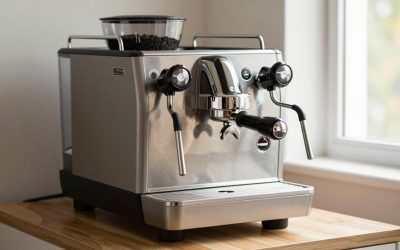
- Top Pick: Philips 3200 Series Fully Automatic Espresso Machine, LatteGo Milk Frother, 5 Coffee Varieties, Intuitive Touch Display, 100% Ceramic Grinder, AquaClean Filter, My Coffee Choice, Black (EP3241/54)
- Best Value: PHILIPS 3300 Series Fully Automatic Espresso Machine, LatteGo Milk System
- Premium Choice: PHILIPS 2300 Series Fully Automatic Espresso Machine, LatteGo Milk System
Last updated: October 20, 2026
As an Amazon Associate we earn from qualifying purchases at no extra cost to you.


Disclosure: As an Amazon Associate we earn from qualifying purchases. This page contains affiliate links and we may earn a commission at no extra cost to you.
The Philips 3200 LatteGo has become the default answer to a very common question: “I want a latte at home, I don’t want to learn barista skills, and I don’t want to spend Jura money.” It grinds the beans, brews the shot, and froths the milk with a two-piece milk system that has no tubes to clog — and that LatteGo carafe, more than anything else, is why the machine earned its reputation. Milk systems are where most super-automatics go to die, and Philips designed one you can rinse under the tap in seconds.
This page is a long-term owner’s view of the 3200 LatteGo ecosystem rather than a single unboxing. That means we cover the machine, yes, but also the parts that keep it alive — the replacement LatteGo carafe, the milk container assembly, and the O-ring kit that fixes the most common leak — because a super-automatic is a small appliance with a service life, and the smart owner plans for it. We also look at the Philips 5500 Series for those ready to spend more, and two budget semi-automatics from Gevi and CASABREWS for readers who would rather trade convenience for control.
If you are weighing the whole category before settling on a brand, our espresso machine brand comparison and buying guide set the stage well.
Quick Comparison
| Product | Price | Rating |
|---|---|---|
| Philips LatteGo Replacement Carafe (EP2230/EP3241) | $55.99 | — |
| LatteGo Milk Container Assembly (5000 Series) | $51.00 | — |
| O-Ring Replacement Kit for Philips LatteGo | $18.89 | — |
| Philips 5500 Series Fully Automatic LatteGo | $699.00 | — |
| Gevi 20 Bar Espresso Maker with Milk Frother | $126.99 | — |
| CASABREWS CM5418 20 Bar Espresso Machine | $139.99 | — |
Why Trust This Guide
See also: How to Descale an Espresso Machine: Citric Acid vs Vinegar • Best Electric Kettles: Ten Glass, Steel and Gooseneck Picks Compared
Our recommendations come from living with machines through the unglamorous parts of ownership — descaling cycles, worn gaskets, milk-system cleanups — not just the first week of shiny novelty. We focus on what fails, what it costs to fix, and whether the daily cup justifies the maintenance. Where we have not used a specific part or revision ourselves, we say so plainly, and we do not invent test figures.
Philips 5500 Series Fully Automatic (LatteGo)
Since the 3200 is frequently sold out or superseded at retail, the 5500 Series is the LatteGo machine you can most reliably buy new today, and it represents the same philosophy with more drink variety and a nicer interface. You get the identical core promise: beans in, latte out, two-piece milk carafe rinsed in the sink before your drink cools. The wider drink menu matters more than it sounds — once the novelty fades, households genuinely use the one-touch cappuccino, latte macchiato, and americano presets daily.
Who should buy it: anyone who wants café drinks with zero technique, several times a day, and values cleanup speed above all. The trade-offs are the same ones the 3200 has always had — a ceramic grinder you can adjust but not obsess over, shots that are good rather than transcendent, and plastic construction that asks to be treated gently. For one-button milk drinks at this price, it is very hard to beat. Pair it with decent beans and our bean-to-cup grind size guide to get the most from that grinder.
Philips LatteGo Replacement Carafe (EP2230/EP3241)
This is the part every 2200 and 3200 owner eventually searches for. The LatteGo carafe is brilliant precisely because it is simple — two plastic pieces, no tubes — but it lives a hard life of daily clipping, rinsing, and dishwasher trips, and the latch or frothing channel eventually wears. A genuine replacement restores frothing exactly to day-one quality. Check your model number against the listing before ordering (it fits the EP2230/14 and EP3241/54 family), because Philips uses several carafe revisions across its range. At under sixty dollars it is dramatically cheaper than replacing a machine that otherwise works perfectly.
LatteGo Milk Container Assembly (5000 Series)
The same logic applies to 5000 Series owners: the milk container assembly is the consumable. If your froth has gone thin, sputtery, or inconsistent and a deep clean has not fixed it, the container is the first suspect — hairline cracks in the frothing channel are nearly invisible but ruin the foam. As the listing itself urges, verify compatibility with your exact machine code before buying, since the 5000-family containers are not interchangeable with every LatteGo model. Owners who keep a spare report the machine effectively never has a down day.
O-Ring Replacement Kit for Philips LatteGo
The eighteen-dollar kit that saves a seven-hundred-dollar machine. The brew group and water path on Philips machines rely on small O-rings that dry out and flatten over years of heat cycles; the symptoms are water under the machine, pressure loss, or coffee dribbling where it should not. This kit spans the 2200, 3200, 3500, and several EP-series models, and replacing the rings is a screwdriver-and-patience job that most owners can do in an afternoon with a video walkthrough. A dab of food-safe silicone grease during installation roughly doubles the life of the new seals. Keep a kit in the drawer; future-you will be grateful.
Gevi 20 Bar Espresso Maker with Milk Frother
The Gevi is here for the reader who looks at a super-automatic’s price and asks what the other path costs. For about $127 you get a pump machine with a steam frother — real pressure-pulled espresso from grounds you dose and tamp yourself. The cup ceiling is genuinely higher than any super-automatic in this price universe, and steamed milk from a wand beats carafe froth for texture. The price you pay is your own time and attention: a grinder, a scale, and a few messy weeks of learning. Our guide to diagnosing bitter espresso is the companion reading if you choose this road.
CASABREWS CM5418 20 Bar Espresso Machine
The CASABREWS CM5418 is the other semi-automatic counterweight, a compact stainless-bodied machine that has become a budget favorite for first portafilter setups. It is narrow enough for small kitchens, heats quickly, and its steam output is adequate for a milk pitcher once you learn to keep the wand tip just under the surface. Against the Philips machines the comparison is philosophical: the CASABREWS makes you the barista, with everything that implies on a rushed Tuesday. Against the Gevi it is mostly a matter of styling and availability — both are honest entry points. A proper frothing pitcher is the first accessory either machine deserves.
What to Look For in a Super-Automatic Like the Philips 3200 LatteGo
Super-automatics are appliances first and coffee gear second, so evaluate them the way you would any appliance you will touch a thousand times a year:
- Milk system cleanability — This is the make-or-break feature. Tube-based systems need flushing and weekly disassembly; the LatteGo’s two-piece carafe rinses in seconds. Convenience you do not maintain is convenience you lose.
- Parts availability — Carafes, O-rings, and brew-group seals wear out. A machine with cheap, findable spares (as the Philips line has) outlives one without.
- Grinder adjustability — Built-in ceramic grinders adjust within a sensible range. Make sure the machine lets you go fine enough for a syrupy shot, not just a fast drip.
- Drink presets you will actually use — Count the one-touch drinks that match your real order. Paying for a wider menu you never open is wasted money.
- Removable brew group — Philips brew groups pull out for a weekly rinse. Sealed groups require service visits; avoid them at this price tier.
- Counter footprint and refill access — Check that the water tank and bean hopper are reachable when the machine sits under a cabinet, not just on a showroom floor.
Tips for Getting the Most Out of a Philips LatteGo Machine
Rinse the LatteGo carafe immediately after the last milk drink of the morning, not at the end of the day. Milk residue that dries in the frothing channel is the number-one cause of weak foam, and a five-second rinse while the milk is still wet prevents it entirely. Once a week, pull the brew group, rinse it under lukewarm water, and let it air-dry before reseating — it takes two minutes and prevents the stale, woody taste that creeps into neglected machines.
Adjust the grinder one notch at a time, and only while the grinder is running. Finer grind and a darker roast will get you closer to a traditional espresso body; lighter roasts at this grinder’s range tend to shine in longer drinks instead. Use filtered water and respect the descale prompt — on these machines the water path is narrow, and scale shows up as slow flow and lukewarm drinks long before the machine actually fails.
Finally, buy the spare parts before you need them. A carafe, a set of O-rings, and a bottle of descaler on the shelf turn every common failure into a ten-minute fix instead of a two-week wait. For more on stretching machine lifespan, our drip tray mat review covers the small quality-of-life additions owners swear by, and our best home machines guide shows where the LatteGo line sits in the bigger picture.
Frequently Asked Questions
Is the Philips 3200 LatteGo still worth buying?
Yes, when you can find it at a good price — and the 5500 Series is the natural pick when you cannot. The core LatteGo formula has not changed: easy milk drinks, easy cleaning, modest but respectable espresso. Newer models mostly add drink presets and interface polish rather than better coffee.
How do I know if my LatteGo carafe needs replacing?
Thin, bubbly, or inconsistent froth after a thorough clean is the classic sign, along with milk leaking from the seam or a latch that no longer clicks firmly. Because the carafe has no tubes, there is little else to go wrong — if cleaning does not restore the foam, the part has worn.
Can the Philips LatteGo make a real espresso shot?
It makes a genuine pressure-brewed espresso-style shot with crema, and for milk drinks most people cannot tell the difference. Tasted straight, a well-pulled shot from a semi-automatic like the Gevi or CASABREWS has more body and aromatic depth. The Philips trades that ceiling for push-button consistency.
How often should I replace the O-rings on a Philips espresso machine?
There is no fixed schedule — replace them when you see weeping water, pressure loss, or drips from the brew path, which typically appears after a few years of daily heat cycles. The kits are inexpensive, so many owners simply refresh the rings whenever they do a deep annual clean.