Last updated: September 18, 2026
Choosing between a flat burr vs conical burr grinder is less about finding a universally “better” design and more about matching the grinder to your coffee routine, kitchen, and tolerance for noise, cleaning, and adjustment. Both use two burrs to crush beans into grounds, but their shape changes how the grinder handles heat, particle size, retention, and workflow.
Flat burr grinders are often associated with clarity, repeatable espresso adjustments, and a more performance-focused experience. Conical burr grinders tend to appeal to home brewers who want a compact, forgiving, and generally quieter appliance. Price does not settle the question: home grinders in both categories can cost under $100 or well above $300.
As an Amazon Associate we earn from qualifying purchases at no extra cost to you. Product prices and availability are accurate as of the date shown and are subject to change.



For 2026 buyers, the real decision is whether you want maximum control and consistency or a simpler grinder that fits easily into everyday life. Your preferred brewing method matters, but so do counter space, household noise, cleaning habits, and how many cups you make each day.
Quick Verdict
Choose a flat burr grinder if you primarily make espresso, switch between beans often, value precise grind adjustments, or want a more equipment-oriented workflow. Flat burrs can produce a highly uniform grind and are commonly available in larger sizes, such as 64mm, which may support faster grinding and a more controlled espresso setup.
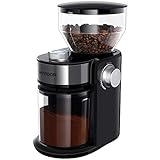
Choose a conical burr grinder if you want a practical all-purpose machine for drip coffee, pour-over, French press, or occasional espresso. Conical models are often easier to live with in small kitchens and can be less demanding to dial in. A model such as the OXO Brew Conical Burr Electric Coffee Bean Grinder is positioned in the accessible home-grinder category, with listed prices ranging from about $98.99 to $109.95 depending on finish and retailer.
Neither design automatically guarantees better flavor. Burr quality, motor control, alignment, adjustment range, freshness of the beans, and the grinder’s ability to deliver the right dose all matter.
Side by Side
See also: How to Clean an Espresso Grinder Burrs (2026): Step-by-Step • Espresso Grinder Hopper Capacity How Much Size Guide With Measurements (2026)
| Consideration | Flat Burr Grinder | Conical Burr Grinder |
|---|---|---|
| Comfort | Often more adjustment-focused; may require a little more dialing in | Usually straightforward for everyday brewing |
| Durability | Can be very durable, especially with steel burrs and a sturdy motor | Also durable; simpler home designs can have fewer performance-oriented controls |
| Price range | About $140-$600+ for home models | About $70-$500+ for home models |
| Maintenance | May need more frequent cleaning when used for oily beans or frequent dialing in | Generally approachable to clean, though the chute and burrs still need regular attention |
| Space needed | Commonly about 5-8 inches wide and 12-18 inches tall | Commonly about 5-8 inches wide and 12-17 inches tall |
| Look | Often has a more technical, café-style appearance | Frequently designed to blend into a conventional kitchen |
| Resale | Strong appeal among espresso hobbyists if the burrs and motor are in good condition | Usually easiest to resell as a general-purpose home grinder |
| Best for | Espresso, high control, repeatable adjustments, and enthusiasts | Drip, pour-over, French press, mixed household use, and convenience |
These ranges are broad because grinder construction varies significantly. A compact entry-level grinder and a commercial-style 64mm model may both use flat burrs while offering very different motors, controls, and capacities.
Where Flat Burr Wins
Particle uniformity is the main attraction. Flat burrs use two parallel cutting surfaces. In a well-aligned grinder, this design can produce a narrow distribution of particle sizes, which is especially useful for espresso. More uniform grounds can make it easier to adjust dose, grind size, and extraction time without changing several variables at once.
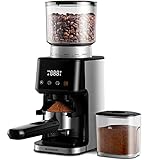
Flat burr grinders also tend to offer a strong adjustment experience. Many include dozens of settings or stepless controls, allowing small changes between shots. The SHARDOR 64mm Flat Burr Coffee Grinder, for example, lists 100 grind settings and a price of $149.98. The MOKKOM 64mm Flat Burr Coffee Grinder also lists 100 settings and is priced at $161.46. Those specifications make this type of grinder attractive to shoppers who want a broad range for espresso and other brew methods, though the number of settings alone does not prove that every adjustment is equally useful.
Speed and capacity can be advantages. Larger flat burrs, including 64mm designs, are often chosen by people who grind several doses in succession. A typical home flat-burr machine may weigh roughly 10-18 pounds and occupy a similar footprint to a compact countertop blender. That extra mass can help the grinder feel stable during use, but it also makes it less convenient to move into a cabinet after every brew.
They suit people who enjoy the process. If you regularly switch coffee beans, measure doses, and make espresso adjustments, a flat burr grinder gives you a more hands-on platform. The tradeoff is that the grinder may expose inconsistencies in your technique. You may spend more time cleaning, recalibrating, or testing settings than you would with a simpler conical model.
Where Conical Burr Grinder Wins
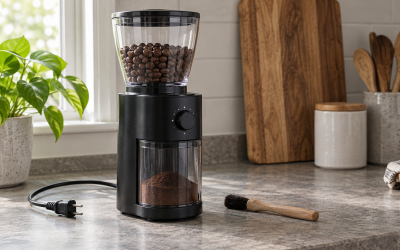
Convenience is the conical design’s strongest argument. Conical burrs use an inner cone and an outer ring. This arrangement is common in home grinders because it can deliver reliable results without requiring a large, heavy appliance. For drip coffee and other immersion methods, the practical difference between a good conical grinder and a good flat grinder may be less important than bean freshness and correct brewing ratios.
Conical grinders are often a comfortable choice for mixed households. One person may want a medium grind for a 10-cup drip machine, while another prefers a coarser setting for French press. A grinder with simple numbered settings, a timer, and a hopper that holds around 8-12 ounces can make those daily changes less intimidating. The 12-ounce OXO Brew Conical Burr Electric Coffee Bean Grinder, available in silver at $98.99 and matte black at $109.95, illustrates the kind of capacity and price point many general-purpose buyers seek.
They can also be easier to place. A typical conical home grinder weighs approximately 5-10 pounds, although premium models may be heavier. That is manageable for renters or anyone who stores appliances in a cupboard. Before buying, measure the clearance beneath your cabinets: a grinder may be only 6 inches wide but 14-17 inches tall, and a hopper lid can add several inches when opened.
Conical does not mean maintenance-free. Coffee oils can collect around the burrs, grounds can remain in the exit chute, and static can scatter grounds onto the counter. Brush the burr chamber as directed, empty old beans before changing varieties, and avoid washing electrical components or burrs unless the manufacturer specifically allows it.
Cost Over 5 Years
The purchase price is only part of the ownership cost. Consider two simplified examples:
- A $100 conical grinder plus about $10 per year for cleaning supplies or replacement accessories equals approximately $150 over five years.
- A $155 flat burr grinder plus about $15 per year for cleaning supplies or replacement accessories equals approximately $230 over five years.
Those figures exclude coffee, electricity, shipping, and repairs. They also assume the original burrs last the full period. Replacement burrs may cost roughly $30-$100 or more, depending on the grinder, and professional service can add substantially to the total. If a grinder is used twice daily, a five-year period represents more than 3,600 grinding sessions. Paying an additional $50-$100 for better workflow may be reasonable if it prevents frustration every morning.
Energy costs are usually a minor part of ownership. A home grinder commonly uses roughly 150-300 watts while the motor is running, but it operates for only seconds or a few minutes per day. Ease of cleaning, warranty support, burr replacement availability, and resale value generally matter more than electricity use.
Which One for Your Home
Small apartment
Choose a compact conical grinder if counter space, storage, and noise are your biggest concerns. Look for a footprint around 6 by 8 inches or smaller, a removable hopper, and controls that are easy to use without leaving the grinder permanently on display. A flat grinder can work in an apartment, but its greater weight and more technical workflow may not justify the space unless you make espresso frequently.
Family with kids or pets
A conical grinder is usually the safer practical choice because it can support quick, repeatable brewing with less adjustment. Choose a model with a secure hopper, a stable base, and a timer that prevents accidental overfilling. Keep any grinder unplugged and out of reach when not in use. If several adults make espresso, a flat grinder may be worthwhile for its adjustment control, but designate one storage location for beans and accessories.
Rental
Renters should prioritize manageable weight, a modest footprint, and a grinder that can move without special installation. A 5-10-pound conical model is easier to pack and store than a larger flat-burr machine that weighs 15 pounds or more. If you expect to move soon, a neutral silver or black finish may also be easier to match with different kitchens, although appearance should come after grind performance and reliability.
Long-term home
If you have a dedicated coffee station and plan to improve your espresso skills, a flat burr grinder may be the more satisfying long-term purchase. Favor replaceable burrs, accessible service information, a rigid adjustment mechanism, and a warranty with clear coverage. For a household focused on drip coffee, pour-over, and French press, a quality conical grinder can remain the better value for years without taking over the counter.
FAQ
Is a flat burr grinder better than a conical burr grinder?
Not universally. Flat burrs can offer excellent control and particle uniformity, particularly for espresso, while conical burrs often provide a more convenient and forgiving home experience. The grinder’s burr quality, alignment, motor, adjustment system, and retention can matter as much as its shape.
Which is quieter, flat or conical?
There is no guaranteed winner. Motor speed, housing, gearing, bean path, and insulation all affect sound. Some conical grinders are relatively quiet, but a carefully designed flat grinder can also be comfortable in a kitchen. Look for manufacturer noise information or hands-on reviews rather than judging by burr shape alone.
Can either grinder make espresso and drip coffee?
Yes, if it has an appropriate adjustment range. A grinder marketed for espresso should still offer settings coarse enough for drip or French press, but not every model transitions smoothly across the full range. Check whether adjustments are stepped or stepless and whether the manufacturer lists both espresso and filter brewing.
How often should I clean a burr grinder?
Brush or lightly clean the accessible burr area about every one to two weeks with regular use, and perform a more thorough cleaning approximately every one to three months. Oily beans, dark roasts, and heavy daily use may require more frequent attention. Always follow the grinder’s instructions and keep moisture away from the motor and electrical controls.
Ready to decide? Our #1 pick for 2026 is the Comfort.
Live price & availability on Amazon.