Last updated: October 7, 2026
The best espresso grinders under 1000 dollars are the Niche Zero for single dosing, the DF64 Gen 2 for value and burr flexibility, the Eureka Mignon Specialità for a quiet traditional hopper workflow, and the Baratza Sette 270 for fast adjustment and accessible service.
Below $1,000, the important differences are not simply motor power or burr diameter. Your choice should reflect whether you change coffees often, make several drinks each day, need a compact grinder, or prefer a repeatable hopper-and-timer routine. The comparison below focuses on burrs, adjustment, dosing, noise, repeatability, and ownership rather than marketing features.
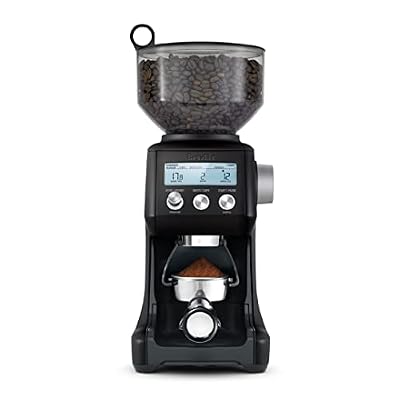
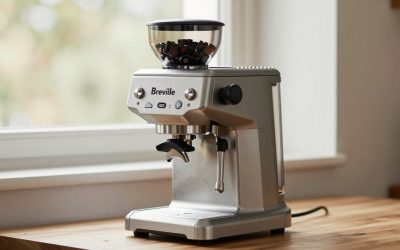
Breville BCG820BTR Smart Grinder Pro, Black Truffle
Included for 'Best Espresso Grinders Under $1,000' because the listing specifies Black Truffle, details this guide uses to compare options.
View on Amazon
Breville BCG820OLT Smart Grinder Pro, Olive Tapenade
Included for 'Best Espresso Grinders Under $1,000' because the listing specifies Olive Tapenade, details this guide uses to compare options.
View on AmazonQuick answer: For most people in 2026, the best espresso grinders under $1,000 is the Niche Zero — our #1 rated choice. See the full ranked comparison, alternatives and buying advice below.
Quick comparison
| Grinder | Burrs | Adjustment | Hopper or dose capacity | Approx. size and weight | Typical market range |
|---|---|---|---|---|---|
| Niche Zero | 63 mm conical steel | Stepless collar | Approx. 58 g hopper | 31 × 12.5 × 21.1 cm; about 4.2 kg | $650–$800 |
| DF64 Gen 2 | 64 mm flat steel; burr options vary | Stepless dial | Single-dose bellows; roughly 40–50 g hopper capacity | About 34 × 13 × 26 cm; roughly 6–7 kg | $400–$600 |
| Eureka Mignon Specialità | 55 mm flat steel | Stepless micrometric collar | Approx. 300 g hopper | About 35 × 12 × 14 cm; roughly 5.6 kg | $600–$800 |
| Baratza Sette 270 | 40 mm conical steel | 30 macro steps plus micro adjustment | Approx. 300 g hopper | About 35 × 13 × 24 cm; roughly 3.2 kg | $400–$550 |
| Fellow Opus | 40 mm conical steel | 41-position outer adjustment plus inner adjustment | Approx. 110 g hopper | About 24 × 10.5 × 24 cm; roughly 1.8 kg | $150–$250 |
Dimensions and capacities are approximate manufacturer specifications and can vary slightly by revision or regional version. Prices are general market ranges rather than fixed current offers.
Best choices by situation
See also: Best Flat Burr Coffee Grinders for Consistent Grounds • Best Conical Burr Coffee Grinders for Consistent Results
| Your situation | Best fit | Why | Main compromise |
|---|---|---|---|
| One or two coffees, frequent bean changes | Niche Zero | Simple single-dose workflow and low retention | Slower adjustment between coffees than a stepped commercial-style grinder |
| Maximum performance per dollar | DF64 Gen 2 | 64 mm flat burr platform and replaceable burr options | Quality control and alignment may require more owner attention |
| Several milk drinks every day | Eureka Mignon Specialità | Quiet operation, large hopper, and consistent timed dosing | Changing beans requires purging or emptying the hopper |
| Frequent espresso adjustment with clear controls | Baratza Sette 270 | Fast macro/micro adjustment and programmable dosing | Noticeably loud and uses a more complex gearbox and chute design |
| Small budget or occasional espresso | Fellow Opus | Compact, inexpensive, and capable of espresso grinding | Dialing in can be less intuitive near the fine end |
Head-to-head: the serious contenders
Niche Zero: easiest single-dose ownership
The Niche Zero remains one of the most approachable choices for home baristas who buy several coffees or alternate between espresso and filter brewing. Its 63 mm conical burrs, top-mounted adjustment collar, dosing cup, and low-retention workflow make the sequence simple: weigh beans, grind, and transfer the dose to the portafilter.
Its stepless collar gives precise control, and the relatively forgiving conical-burr profile suits traditional espresso as well as milk drinks. Shot-to-shot repeatability is strong when the dose is weighed and the grinder is kept clean. The limitation is workflow speed: moving from one coffee to another means finding the new setting manually, and the grinder does not offer the same rapid, programmable hopper dosing as the Eureka.
Choose it when convenience and bean switching matter more than maximum throughput. It is also a sensible option for a beginner who wants a dedicated espresso grinder without learning a complicated menu.
DF64 Gen 2: the value and upgrade platform
The DF64 Gen 2 offers 64 mm flat burrs at a much lower price than many premium flat-burr grinders. Its single-dose design, adjustable grind dial, anti-static improvements, and bellows help keep retention low. Some versions are sold with different burr configurations, so confirm which burrs are included rather than assuming every DF64 produces the same result.
A larger flat-burr platform can provide excellent clarity and consistency, especially when paired with well-aligned burrs. The catch is serviceability in practice: alignment, declumping, seasoning, and occasional chute cleaning may matter more than they do with a polished, premium-priced grinder. That is not necessarily a defect; it is part of the value proposition.
The DF64 Gen 2 is the strongest pick for an enthusiast who wants to experiment with burr geometry or prepare both modern light roasts and traditional espresso. It is less attractive if you want a completely hands-off appliance.
Eureka Mignon Specialità: quiet, repeatable hopper dosing
The Specialità is designed around a conventional hopper workflow. Its 55 mm flat steel burrs, micrometric stepless adjustment, touchscreen timer, and sound-reducing case make it particularly suitable for a household that prepares several drinks without changing beans constantly.
Once dialed in, timed dosing can be very repeatable. A practical calibration method is to grind ten doses, weigh each one, and adjust the timer until the average is close to your target. For example, if ten doses total 180 g, the average is 18.0 g. If the target is 18.0 g and individual doses range from 17.6 to 18.4 g, use the grinder’s timer for convenience but verify it periodically rather than treating the display as a scale.
The compact rectangular footprint is useful on a crowded counter, while the quiet motor is less disruptive than the Sette. However, the stepless collar has no numbered grind positions. If you remove the burrs or make a large adjustment, returning to an earlier setting takes more care.
Baratza Sette 270: fastest adjustment, loudest personality
The Sette 270 uses a distinctive 40 mm conical burr arrangement in which the outer burr rotates around a stationary inner burr. It is fast, has low retained coffee, and provides broad macro adjustment with finer micro adjustment. Three programmable buttons make it convenient for repeat doses.
This is a good fit for a home barista who changes grind settings frequently or wants an affordable grinder with accessible replacement parts. Baratza has also built a reputation for offering service components and repair documentation for many products, though availability depends on region and model revision.
The major compromises are noise and mechanical complexity. The gear drive and high-speed operation are conspicuous in an open kitchen. Owners should also avoid forcing the adjustment mechanism while beans are packed tightly between the burrs; running the grinder briefly while adjusting can reduce unnecessary stress.
What actually determines repeatability?
Burr size matters, but it does not decide the result alone. Repeatability depends on alignment, stable grind adjustment, retention, bean feeding, timer consistency, and operator technique. A smaller burr grinder can make excellent repeatable espresso, while a larger grinder can disappoint if its burrs are misaligned or its chute accumulates old grounds.
- Single dosing: weigh every dose and use a brief bellows pulse or gentle tapping only if the grinder design supports it.
- Timed dosing: keep the hopper at a similar fill level, because bean pressure can affect feed rate on some grinders.
- Stepless adjustment: excellent for tiny changes, but mark your usual settings or record them by bean and dose.
- Stepped adjustment: easier to repeat after cleaning, although one step may occasionally be too large for a precise correction.
Noise, space, and serviceability
For a shared kitchen, the Specialità is the quieter conventional choice. The Niche is also relatively unobtrusive, while the Sette is the least suitable if someone is sleeping nearby. The DF64 sits between those categories depending on its motor and revision.
Measure depth as well as width. A grinder that fits beneath cabinets may still require clearance to remove a hopper or bellows. Also allow room for a dosing cup and for brushing the chute. The lightest grinder is not automatically the easiest to live with: heavier machines often stay planted when you lock in a portafilter, while lighter units are easier to move for cleaning.
Maintenance costs and common mistakes
Grinder burrs are consumable parts. Home espresso users may get years of service, but hard use, oily dark-roast residue, and abrasive contamination accelerate wear. The first symptoms are usually slower grinding, more adjustment needed for the same recipe, inconsistent flow, or a wider spread in particle size—not a sudden failure.
- Empty or reduce the hopper before opening the grinder.
- Brush loose grounds from the upper burr and chute.
- Use a grinder cleaner only according to the manufacturer’s instructions; it does not replace physical brushing.
- After cleaning, grind a small amount of coffee and discard it before dialing in again.
- Record the burr setting, dose, yield, and time for your regular coffee.
Do not rinse steel burrs or use water inside the grinder. Avoid repeatedly changing between very oily beans and light roasts without cleaning, since residue can obstruct the chute and alter dosing. Replacement burrs, adjustment parts, motors, and gearboxes are worth checking before purchase; a slightly less fashionable grinder with available parts can be cheaper to own over five years.
Final recommendation
Buy the Niche Zero if you want the least complicated single-dose espresso routine. Choose the DF64 Gen 2 if you value 64 mm flat burrs, experimentation, and strong value. Pick the Eureka Mignon Specialità for quiet, repeatable hopper dosing, or the Baratza Sette 270 for rapid adjustment and a service-friendly design. If the budget is the deciding factor, the Fellow Opus is a capable entry point, but the more expensive grinders offer a clearer path to long-term espresso refinement.
Ready to decide? Our #1 pick for 2026 is the Niche Zero.
Live price & availability on Amazon.