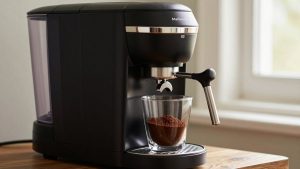
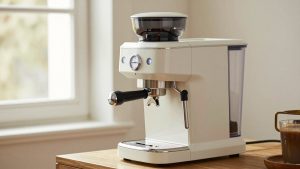
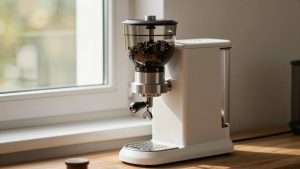
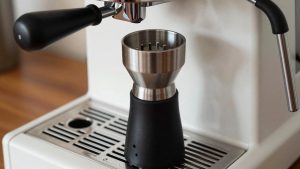
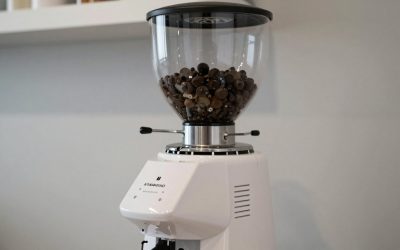
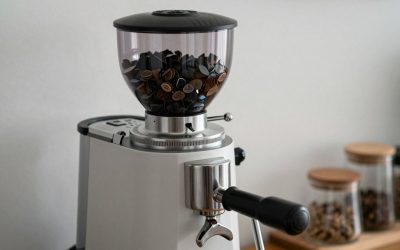
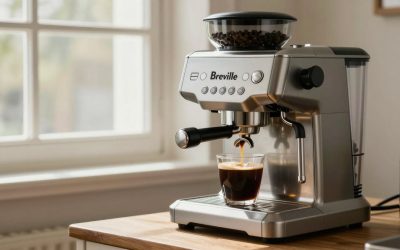
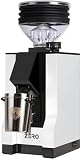
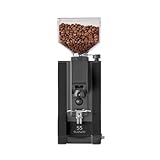
- Top Pick: Eureka Mignon Specialita Espresso Grinder | Silent Technology | Stepless 55mm Burrs | Touchscreen | Black
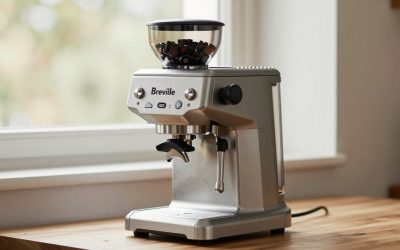
- Best Value: Eureka Mignon Specialita Espresso Grinder | Sound-Insulated | Stepless 55mm Burrs | Touchscreen | Chrome
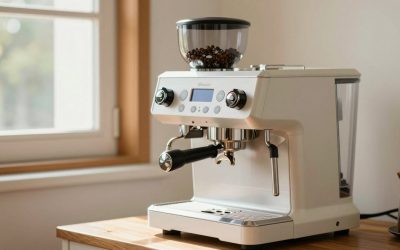
- Premium Choice: Eureka Mignon Specialita Espresso Grinder | Sound-Insulated | Stepless 55mm Burrs | Touchscreen | White
Last updated: October 20, 2026
As an Amazon Associate we earn from qualifying purchases at no extra cost to you.




Disclosure: As an Amazon Associate we earn from qualifying purchases. This page contains affiliate links and we may earn a commission at no extra cost to you.
Florence-based Eureka has been making grinders since 1920, and the Mignon Specialita is the model that turned a century of commercial know-how into the default prosumer home espresso grinder for a generation of buyers. The pitch is simple: flat-burr espresso grinding with genuinely quiet operation, stepless adjustment fine enough to chase a shot by tenths of a second, and a footprint narrow enough to live beside any machine.
That combination — quiet, precise, compact — is why the Specialita shows up on so many counters next to machines costing three times as much. But Eureka’s own catalog is crowded with siblings that undercut it, out-spec it, or out-quiet it, and the budget end of the market keeps creeping upward in quality. This review positions the Specialita against the rest of the Mignon family, the step-up Atom, and two cheap utility grinders that explain, by contrast, exactly what you are paying for.
For the broader market view beyond Eureka’s lineup, our best espresso grinder roundup is the place to start; this review goes deep on one family tree.
Quick Comparison
| Product | Price | Rating |
|---|---|---|
| Eureka Atom (60mm) | $899.00 | 5.0/5 |
| Eureka Mignon Notte | $299.00 | 4.6/5 |
| Eureka Mignon Zero | $349.00 | 4.6/5 |
| Eureka Mignon Silenzio | $499.00 | 4.5/5 |
| SHARDOR 70g Electric Grinder | $26.99 | 4.5/5 |
| KRUPS Electric Blade Grinder | $19.99 | 4.4/5 |
Why Trust This Guide
See also: Best Spice Grinders: Ten Electric Models Compared by Capacity, Bowl Design and Cleanup • 4 Best Flat Burr Coffee Grinders for Consistent Grounds (October 2026) Buying Guide
Every grinder writeup here follows the same checklist: consistency in the espresso range, adjustment precision and repeatability, retention behavior, noise in a real kitchen, and the longevity story — burr replacement, parts, and build. We base conclusions on hands-on use, manufacturer documentation, and the patterns that persist across years of owner feedback, and we say plainly when a cheaper tool is the smarter buy.
Eureka Atom (60mm)
The Atom is what happens when Eureka takes the Mignon formula and scales it for volume: 60mm flat burrs, commercial-grade internals, and the same sound-insulated quiet-grinding philosophy in a larger, faster package. It exists for the home barista whose mornings look like a small café — multiple double shots back to back, often with milk drinks queued behind them.
Against the Specialita, the Atom grinds faster, holds its consistency better across heavy sessions, and feels like the buy-once-cry-once option. The tradeoffs are size, weight, and a price that overlaps with very good espresso machines. If you pull two shots a day, the Atom is overkill in the most literal sense; if you host, entertain, or share the machine with a household of espresso drinkers, it stops being overkill quickly.
Eureka Mignon Notte
The Notte is the entry door into the Mignon family: 50mm steel burrs, the same stepless adjustment concept as the Specialita, and the same compact chassis, at a price that undercuts every prosumer rival. What Eureka removed to hit the number is mostly refinement — the display-based timer and the heavier sound insulation of its upmarket siblings.
Who should buy it? Anyone who wants genuine Eureka grind quality for an entry-level or midrange espresso machine and is happy to time doses by eye or scale. The tradeoff against the Specialita is convenience rather than capability: the coffee in the basket can be effectively the same, but you will work slightly harder for repeatability. As first espresso grinders go, it is one of the most defensible purchases in the hobby — see our entry-level espresso grinder picks for how it compares to the budget field.
Eureka Mignon Zero
The Mignon Zero is Eureka’s answer to the single-dosing movement: the familiar quiet Mignon platform redesigned around low retention, with a blow-up bellows-style workflow and a chamber meant to be run empty. You weigh each dose, grind it through, and almost all of it comes out — which keeps beans in sealed storage and makes switching coffees between shots painless.
It suits the curious home barista who rotates single-origin bags, buys coffee in small quantities, or shares a grinder between decaf and regular. The tradeoff is workflow speed and a small price premium over timed-dosing siblings; weighing every dose adds steps a hopper-fed Specialita skips. If that philosophy appeals, our zero-retention grinder review digs into why retention matters more than most spec lines.
Eureka Mignon Silenzio
The Silenzio sits between Notte and Specialita and leans into the family’s signature trait: it is the quiet one, with Eureka’s sound-insulated case wrapped around timed dosing and stepless adjustment. For apartment dwellers, early risers, and anyone whose espresso ritual happens while the house sleeps, that emphasis is not a gimmick — grinder noise is the loudest part of most morning routines.
Compared with the Specialita you give up some interface convenience while keeping the core grind experience; compared with the Notte you gain the insulation and a more refined feel. The tradeoff story is gentle either way, which is exactly why the middle of the Mignon range confuses shoppers: the differences are real but incremental. Decide how much quiet and convenience are worth, then buy the cheapest sibling that clears your bar.
SHARDOR 70g Electric Grinder
This SHARDOR is not an espresso grinder, and it earns its place in this review precisely because of that. It is a blade-style utility machine with a generous 70g chamber and a visual timing knob — the kind of tool you keep for spices, herbs, and emergency drip coffee, at a price under a tenth of a Mignon.
The contrast is the lesson: blade grinders chop rather than grind, producing a mix of boulders and dust that no espresso machine can extract evenly. As a kitchen utility or a travel fallback it is genuinely useful and well executed. As the grinder beside an espresso machine it would undo everything the machine does well — our burr versus pre-ground comparison shows how much flavor is on the line.
KRUPS Electric Blade Grinder
The KRUPS blade grinder is the other end of the market from the Specialita — a decades-old kitchen staple with a 200-watt motor and a stainless blade that will pulverize three ounces of anything you pour into it. Millions of kitchens have one, and for French press on a camping trip or grinding spices for a curry, it does the job for pocket change.
Its limits are structural, not a matter of quality control: blade chopping cannot produce the uniform particle size espresso extraction depends on, and there is no meaningful grind adjustment. Buy it as a utility tool with a clear conscience. But if espresso is the goal, even the humblest burr grinder in this lineup — the Notte — will transform your shots in a way no blade machine ever could.
What to Look For in a Grinder Like the Eureka Mignon Specialita
The Mignon family is a masterclass in how grinders in the same range differentiate. When you evaluate the Specialita or any rival, these are the factors doing the real work.
- Burr size and geometry — Larger flat burrs grind faster and tend to hold consistency across long sessions; the jump from the Notte’s 50mm to the Atom’s 60mm is felt in speed before anything else. Our burr grinder roundup compares geometries across brands.
- Stepless adjustment — Espresso dialing happens in increments smaller than most stepped grinders allow. Stepless mechanisms like Eureka’s let you land between the steps, which is often exactly where the best shot lives.
- Noise level — Sound insulation is a genuine engineering feature, not marketing. If your kitchen shares a wall with a bedroom, the quiet Mignons justify their premium every single morning.
- Dosing method — Timed dosing favors speed and routine; single-dose workflows favor freshness and flexibility. The Specialita and Zero are the same family answering the question differently.
- Retention behavior — Grounds left in the chamber stale overnight and blur tomorrow’s first shot. Lower is better, and purpose-built designs beat retrofits.
- Build and serviceability — A grinder with replaceable burrs and available parts is a decade-plus tool. Eureka’s commercial heritage shows here; disposable budget machines cannot match it.
Tips for Getting the Most Out of a Eureka Mignon Grinder
Dial in a Mignon with patience the first time and it will repay you for months. Start coarser than you think, work finer in small stepless turns, and change only grind size while holding dose and ratio constant. Once a shot lands where you want it, note the position — the mechanism holds its setting well, and most day-to-day drift comes from the beans aging rather than the grinder moving. Our grind size guide covers the dialing sequence step by step.
Feed it like it matters. Flat burrs reveal bean quality and bean age with uncomfortable honesty: a Specialita fed supermarket beans roasted months ago will faithfully reproduce their dullness. Buy fresh-roasted coffee in quantities you will finish within a few weeks, and the grinder’s precision suddenly becomes audible in the cup.
Finally, clean on a schedule, not on a suspicion. Espresso-fine grounds and oils accumulate in any flat-burr chamber, slowly shifting your effective grind setting and muting flavors. A monthly brush-and-vacuum session, with an occasional pass of grinder-cleaning pellets, keeps the burr set true — and if shots drift bitter despite fresh beans and a clean grinder, our guide to diagnosing bitter espresso walks the machine-side checklist.
Frequently Asked Questions
Is the Eureka Mignon Specialita worth it over the cheaper Mignons?
If you value the quieter operation and the convenience of its timer interface, yes — those are daily-life features. If you are dialing in with a scale anyway and noise is not a constraint, the Notte or Silenzio deliver very similar coffee for less.
Can the Mignon Specialita grind for filter coffee too?
It can be adjusted coarse enough, but its strengths are concentrated in the espresso range, and swinging a stepless espresso grinder back and forth between ranges is tedious. Espresso-first households love it; mixed-method households should consider a dedicated all-rounder.
How loud is a Mignon in practice?
The insulated models are among the quietest espresso grinders sold — conversation-level rather than blender-level, and brief because doses grind in seconds. The difference from a cheap uninsulated grinder is immediately obvious in a quiet morning kitchen.
Should I single-dose a Specialita or buy the Mignon Zero instead?
If single-dosing is your primary workflow, buy the Zero — it was designed for it, and retrofitted hopper grinders never quite match purpose-built low-retention paths. Keep the Specialita hopper-fed with a few days of beans and let each design do what it does best.