Last updated: October 20, 2026
As an Amazon Associate we earn from qualifying purchases at no extra cost to you.




Disclosure: As an Amazon Associate we earn from qualifying purchases. This page contains affiliate links and we may earn a commission at no extra cost to you.
Hotel room coffee is a crime scene, and every traveling coffee lover eventually decides to stop being a victim. The fix is simpler than it sounds: good beans travel beautifully in a sealed bag, hot water exists almost everywhere on earth, and the only real missing link is grinding. Pack a capable travel grinder and suddenly an Airbnb kitchenette, a campsite picnic table, or an office break room can produce coffee that embarrasses most cafés within walking distance.
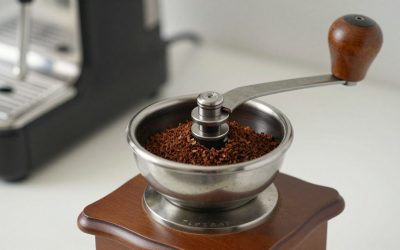
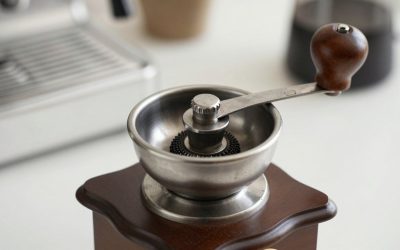
The travel grinder market has quietly become one of the most competitive corners of the coffee world, led by manual hand grinders with machined metal bodies and proper steel conical burrs. Timemore in particular has built a reputation for delivering burr quality at prices that once seemed impossible, which is why four variations of its Chestnut line anchor this roundup. We have also included two electric options for travelers whose version of travel includes an outlet and a full carafe.
Below you will find our six favorite grinders to throw in a bag, from a compact espresso-capable flagship to a featherweight budget pick. If you are choosing your first hand grinder and wondering how grind settings translate to actual brewing, keep our grind size guide open in another tab; it pairs naturally with everything here.
🛒 Best Price Today on Amazon
Prime members get fast, free shipping on everything above, plus member-only deals. New members get a 30-day free trial — cancel anytime.
Quick Comparison
| Product | Price | Rating |
|---|---|---|
| Timemore C5 ESP PRO | $115.00 | 5.0/5 |
| Timemore Chestnut C3S Pro | $95.00 | 4.8/5 |
| Timemore Chestnut C3S | $79.00 | 4.8/5 |
| Timemore Chestnut C2S | $75.00 | 4.7/5 |
| Hamilton Beach Custom Grind | $37.95 | 4.6/5 |
| 60g Large-Capacity Manual Grinder | $29.99 | 4.6/5 |
Why Trust This Guide
See also: Best Spice Grinders: Ten Electric Models Compared by Capacity, Bowl Design and Cleanup • 4 Best Flat Burr Coffee Grinders for Consistent Grounds (October 2026) Buying Guide
Our recommendations rest on the design factors that genuinely matter in a travel grinder: burr quality, adjustment mechanism, body durability, capacity, and packability. We draw on manufacturer specifications and established grinder engineering principles, we never fabricate performance numbers, and we call out weaknesses as plainly as strengths.
Timemore C5 ESP PRO
The C5 ESP PRO is the grinder for travelers who refuse to leave espresso at home. Its 42mm stainless steel burr set and 50 adjustment steps are tuned with the fine end of the spectrum in mind, which is precisely where most hand grinders get vague. Espresso demands tiny, repeatable changes between settings, and the C5’s adjustment resolution delivers them in a body that still slips into a backpack pocket.
It is the most expensive manual grinder here at $115, and grinding espresso-fine by hand is a forearm workout no matter how good the burrs are. But if your travel kit includes a portable espresso maker, or your home setup needs a capable backup, this is the one to buy once. Curious how far hand-ground espresso can go? Our burr grinders for espresso roundup shows how the manual flagships stack up against electric machines several times their price.
Timemore Chestnut C3S Pro
The C3S Pro sits one step below the flagship and represents the sweet spot for most traveling brewers. It carries Timemore’s S2C stainless conical burrs, a spring-loaded, precisely centered axle, and the same confidence-inspiring machined body the Chestnut line is known for. In the cup, it grinds quickly and uniformly across the pour-over and French press range, with enough fine-end capability for moka pot and occasional espresso experiments.
The Pro premium over the standard C3S buys refinements in handle and folding ergonomics rather than fundamentally different burrs. For frequent flyers who grind in cramped spaces, those touches genuinely matter; for occasional travelers they may be optional. Either way it is a grinder you will not outgrow.
Timemore Chestnut C3S
The standard C3S delivers the heart of the Pro’s value at $79: the same S2C burr technology and an all-metal body that shrugs off the abuse of being buried under hiking boots in a duffel bag. This is arguably the rational pick of the entire Chestnut range, because the cup quality per dollar is unmatched and the parts that make the Pro nicer are conveniences rather than performance.
Tradeoffs are modest: the handle does not fold, and the fine-end adjustment is a touch less granular than the C5’s, so dedicated espresso travelers should still look upward. For AeroPress, pour-over, and press brewers, which is to say most travelers, it is close to ideal. If you are still deciding whether fresh grinding justifies the ritual at all, our fresh grind versus pre-ground test settles the question emphatically.
Timemore Chestnut C2S
The C2S is the entry door to the Chestnut family, and it inherits more from its bigger siblings than its $75 price suggests, including the stainless S2C conical burrs that define the line’s grind quality. It is the grinder we recommend to someone assembling their first serious travel kit: light enough to forget in a bag, tough enough to survive years of it, and consistent enough to make hotel-room pour-over genuinely delicious.
Compared with the C3S, the differences are incremental, slightly simpler internals and finish. Compared with the no-name hand grinders that flood the market, the difference is night and day: burr centering, bearing smoothness, and click-step repeatability are exactly where cheap grinders cut corners. Budget-minded espresso learners can see how this class of grinder fits a starter setup in our entry-level espresso grinder guide.
Hamilton Beach Custom Grind
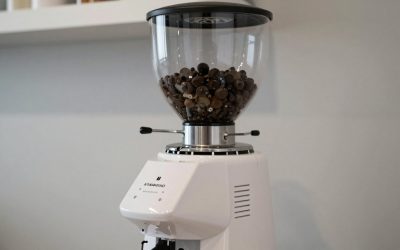
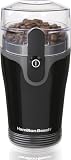
The Hamilton Beach is the outlier here: an electric, one-press grinder built for 4 to 14 cup batches rather than single artisanal doses. So why is it in a travel roundup? Because a huge share of real-world travel is road trips, vacation rentals, and extended family stays where an outlet is guaranteed and you are brewing a full pot for five people every morning. For that mission, hand-cranking fourteen cups’ worth of beans is nobody’s idea of a holiday.
It gives up the precision of the Timemore burr sets, and it is not espresso-capable, but it is cheap, light for an electric, and utterly simple to operate. Think of it as the designated grinder for the beach house rather than the carry-on.
60g Large-Capacity Manual Grinder
This budget manual grinder attacks the most common complaint about hand grinders: capacity. With a 60 gram chamber, it can grind for a full French press or several pour-overs in one session, where most compact rivals force two or three refills. For camp cooks brewing for a group at sunrise, that single feature outweighs a great deal of refinement.
At $29.99 the compromises are predictable: the burr set and adjustment mechanism are serviceable rather than exceptional, and fine espresso work is outside its comfort zone. But as a rugged, affordable, high-volume crank for coarse and medium grinds, it earns its spot in a camping bin. Whatever you choose, keep it clean on the road; the compact tools in our grinder cleaning kit roundup weigh almost nothing and keep stale oils out of your pack.
What to Look For in a Travel Coffee Grinder
A travel grinder lives a harder life than its countertop cousins, so judge it on the qualities that survive a suitcase.
- Burr material and centering — Stainless steel conical burrs on a properly centered, bearing-supported axle are what separate consistent grinders from wobbly bean bruisers.
- Capacity versus packed size — Match the chamber to your travel style: 20 to 25 grams suits solo pour-over, while group campers should hunt for 50 grams or more.
- Adjustment clicks you can trust — Clear, repeatable click steps let you return to a known setting after cleaning or experimenting, with no guesswork at 6 a.m. in a tent.
- Body durability — Machined aluminum or stainless bodies take drops and pressure that crack plastic; a grinder that travels should be metal where it counts.
- Grip and crank ergonomics — A knurled or textured body and a smooth, long-enough crank arm decide whether grinding is a pleasant ritual or a daily wrestling match.
- Easy disassembly — Tool-free teardown means you can knock out old grounds and dry the chamber anywhere, which keeps flavors clean trip after trip.
Tips for Getting the Most Out of a Travel Coffee Grinder
Pre-portion your beans before you leave. Weigh single doses into small zip bags or repurposed spice jars, label them by brew method, and your entire morning routine becomes grind, brew, enjoy, with no scale required on the road. Beans sealed in small portions also stale more slowly than a big bag opened twice a day, so your last cup of the trip tastes as good as the first.
Learn your grinder’s click positions for each method at home, not in the field. Spend one weekend brewing your travel kit on your kitchen counter: find your AeroPress click count, your pour-over click count, your French press click count, and write them on a strip of tape on the grinder body. Pour-over fans comparing brewers should glance at our V60 versus Chemex breakdown, since the two reward slightly different grind targets.
Finally, mind the water side of the equation. The best grind in the world cannot rescue water that tastes like a swimming pool, and travel water varies wildly. A simple immersion method is the most forgiving companion for unpredictable conditions; our French press versus pour-over comparison explains why immersion brewing shrugs off variables that fussier methods punish.
Frequently Asked Questions
Can I take a coffee grinder in carry-on luggage?
Manual hand grinders are generally fine in carry-on bags since they contain no blades in the knife sense, just enclosed burrs, but security officers have discretion and a metal cylinder full of mechanical parts occasionally invites a bag check. Packing it disassembled and clean speeds that conversation along. Electric grinders travel more comfortably in checked luggage.
Are manual grinders as good as electric ones?
At equal price, a manual grinder is usually better, because your arms replace the cost of a motor and that budget goes into burr quality instead. A $95 hand grinder like the C3S Pro carries a burr set comparable to electric machines costing well over twice as much. The tradeoffs are effort and capacity, not cup quality.
How long does hand grinding actually take?
For a typical 18 to 22 gram pour-over dose at medium grind, a quality modern hand grinder takes roughly 30 to 60 seconds of relaxed cranking. Espresso-fine grinding takes noticeably longer and more force, which is why espresso-focused models like the C5 ESP PRO invest so heavily in burr geometry and efficiency.
What grind setting should I use while traveling?
Start from your home reference points and adjust for taste: if the cup is sour and weak, grind finer; if it is bitter and harsh, grind coarser. Click-step grinders make this easy to do methodically, one or two clicks at a time. Altitude, water, and unfamiliar kettles all shift extraction slightly, so expect to nudge a click or two from your home settings.