Last updated: October 20, 2026
Disclosure: As an Amazon Associate we earn from qualifying purchases. This page contains affiliate links and we may earn a commission at no extra cost to you.
Light roasts are where espresso gets genuinely hard — and genuinely interesting. The florals, the stone fruit, the tea-like clarity that make light coffees worth chasing only survive into the cup when extraction goes deep, and deep extraction at espresso pressure demands more from a grinder than any dark roast ever will. Light-roasted beans are physically denser and less brittle, so they resist the burrs, demand finer settings, and punish inconsistency with sour, hollow shots.
That is why the best grinder for light roast is not just any espresso grinder — it is one with fine adjustment resolution, the torque to chew through dense beans, and the consistency to keep a slow extraction even. This guide pairs the gear with the goods: capable grinding hardware alongside light-roasted beans worth the effort, from high-caffeine white coffee to an accessible supermarket classic, because dialing in light espresso is a partnership between burr and bean.
For grinder fundamentals across all roast levels, start with our best espresso grinder roundup; this guide assumes light roast is the mission and tunes every recommendation to it.
- Top Picks at a Glance
- Quick Comparison
- Why Trust This Guide
- More Grinders Built for Light Roast Espresso
- Also Consider
- What to Look For in a Grinder for Light Roast Espresso
- How We Chose
- Light Roast Espresso Grinder Buying Guide: The Numbers That Matter
- Flat vs. Conical Burrs for Light Roast Espresso
- Tips for Getting the Most Out of Light Roast Espresso
- Frequently Asked Questions
- About the Author
Top Picks at a Glance
- Best overall for light roast espresso: DF64 Gen 2 — 64mm flat burrs, stepless dial, single-dose workflow, mid-range price.
- Best premium: Turin DF83 Gen 2 — larger 83mm titanium-coated flat burrs and a 550W motor for the densest light roasts.
- Best for tuning clarity: Timemore Sculptor 064S — 64mm flat burrs with adjustable speed from 800 to 1,200 RPM.
- Best budget flat burr: SHARDOR 64mm Flat Burr Grinder — the lowest-cost route to 64mm flat burrs, with 100 stepped settings.
- Best hand grinder: 1Zpresso J-Ultra — 8 microns per click for very fine espresso adjustment at a lower price than good electrics.
- Best entry-level electric: 60-Setting Touchscreen Burr Grinder — a conical starter for light-roast curious drinkers.
- Beans to practice on: Death Wish Organic Light Roast and Lavazza Gold Selection are forgiving coffees for learning light-roast dialing.
Quick Comparison
See also: Best Spice Grinders: Ten Electric Models Compared by Capacity, Bowl Design and Cleanup • 4 Best Flat Burr Coffee Grinders for Consistent Grounds (October 2026) Buying Guide
| Product | Price | Rating |
|---|---|---|
| Northwest Grind White Coffee | $39.99 | 5.0/5 |
| 60-Setting Touchscreen Burr Grinder | $99.99 | 4.8/5 |
| Hamilton Beach Custom Grind | $37.95 | 4.6/5 |
| Death Wish Organic Light Roast | — | 4.6/5 |
| SHARDOR 70g Electric Grinder | $26.99 | 4.5/5 |
| Lavazza Gold Selection (Light) | $32.99 | 4.5/5 |
Why Trust This Guide
Light roast espresso exposes weaknesses other testing forgives, so our criteria here are stricter: adjustment resolution at the fine end, grind consistency with dense high-grown beans, and how recommendations hold up across the slow, high-yield recipes light coffee demands. We combine hands-on dialing experience, manufacturer documentation, and the consistent findings of the home-barista community working at the light end of the roast spectrum.
Northwest Grind White Coffee
White coffee — beans pulled from the roaster well before first crack territory — is the lightest expression of light roasting, and Northwest Grind’s version has built a following for its nutty, low-acid profile and elevated caffeine retention. Because less roasting means less degradation of the bean’s natural compounds, white coffee carries noticeably more kick per shot.
It earns its spot here as both a destination and a stress test: beans this lightly roasted are extremely dense and hard, which is exactly the challenge this guide’s grinders exist to meet. The tradeoff is that white coffee is its own category — expect nutty and bold rather than the fruit-forward clarity of specialty light roasts, and expect your grinder to earn its keep on every dose.
60-Setting Touchscreen Burr Grinder
This touchscreen conical-burr machine makes the strongest budget case for light-roast duty: 60 grind settings concentrate real resolution at the fine end, anti-static design keeps dense-bean grinding tidy, and the touchscreen timer makes repeat dosing consistent. Resolution is the spec that matters most here — light roasts often live between the settings of coarser-stepped grinders.
It suits the brewer exploring light espresso on an entry or midrange machine without prosumer spending. The honest limits: budget conical burrs work hardest against dense light-roasted beans, so expect slower grinding at the finest settings and a consistency ceiling below specialist grinders. Within those bounds, it is the most light-roast-capable affordable electric we have seen.
Hamilton Beach Custom Grind
The Hamilton Beach Custom Grind is here for the other half of light-roast life: filter brewing. Plenty of light coffees that frustrate at espresso pressure absolutely sing as drip or pour-over, and this one-press machine grinds for 4 to 14 cups with zero ceremony. It is the tool for letting a bright Ethiopian be beautiful in a morning carafe instead of fighting it through a portafilter.
To be clear about its limits: this is not an espresso grinder, and its consistency targets drip coarseness, not the fine precision the rest of this guide chases. But as the inexpensive second grinder that handles the household’s filter duty — while your espresso grinder stays dialed for shots — it is a practical, well-priced division of labor.
Death Wish Organic Light Roast
Death Wish built its brand on intensity, and its organic light roast is the company’s proof that high caffeine and light roasting are natural partners — lighter roasting preserves more of the bean’s punch while keeping acidity bright and the body lively. As an entry point into light roast for drinkers raised on dark, its familiar boldness makes the transition easy.
It is fair-trade and organic certified, widely available, and forgiving across brew methods, which makes it a low-stakes bean to learn light-roast dialing on. The tradeoff against specialty single origins is nuance: this is a crowd-pleasing, energy-forward take on light roasting rather than a delicate terroir showcase. For many households, that is precisely the brief.
SHARDOR 70g Electric Grinder
This SHARDOR blade-style machine with its 70g chamber and visual timing knob is in this guide as the honest boundary marker: it is a fine utility grinder for spices and emergency drip coffee, and it is the wrong tool for light roast espresso — arguably more wrong than for any other coffee task.
The reason is the whole thesis of this guide: light roasts demand even, fine, consistent particles to extract sweetly, and blade chopping produces the opposite — boulders and dust that extract sour and bitter in the same shot. Keep one for the kitchen, by all means. But if light coffee keeps tasting like lemon water or ash, the grinder type is the first suspect, as our guide to fixing bitter espresso explains.
Lavazza Gold Selection (Light)
Lavazza’s Gold Selection whole-bean blend is the accessible classic of this lineup — an Italian-style take on lighter roasting that prioritizes smoothness and balance over the bright acidity of third-wave light roasts. For households meeting light roast halfway, it is an ideal bridge: lighter and sweeter than supermarket dark roasts without demanding specialty-bar technique.
Practically, its 2.2-pound bag and moderate density make it an excellent dialing-in coffee: affordable enough to burn doses on while learning, consistent enough batch to batch that your settings stay meaningful. The tradeoff is ceiling — it will not deliver the jasmine-and-peach fireworks of a single-origin light roast. It will deliver a reliable, pleasant daily cup while you build the skills for those fireworks.
More Grinders Built for Light Roast Espresso
The picks above mix grinders and beans. If your goal is a grinder that can truly handle light roast espresso, these five machines are where most serious home baristas end up. All are burr grinders with espresso-level adjustment; four use flat burrs, which home baristas widely favor for clarity with light coffees.
DF64 Gen 2 — Best for Most Light Roast Drinkers
- Burrs: 64mm flat, compatible with popular aftermarket 64mm burr sets
- Adjustment: stepless dial
- Motor: 250W AC, fixed speed around 1,400 RPM
- Workflow: single dose with bellows, anti-popcorn disc, ionizer in the exit chute
- Retention: the maker states under 0.1 g with the bellows
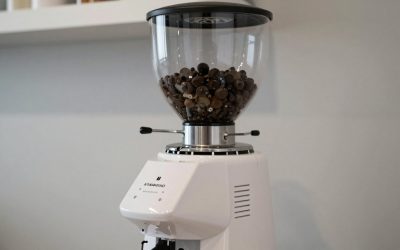
The DF64 Gen 2 is the grinder that made 64mm flat burrs affordable for home espresso, and it remains the best balance of burr size, adjustment and price for light roasts. The stepless dial lets you make the tiny moves that light espresso needs, and single dosing means you can switch between a bright Ethiopian and a house blend without old grounds mixing in. The ionizer and bellows keep static and retention low, which matters with dry, dense light-roast grounds.
The common 64mm burr size is a long-term advantage: if you later want even more clarity, you can swap in a specialty burr set instead of buying a new grinder.
Pros
- 64mm flat burrs at a mid-range price
- Stepless adjustment for fine espresso dialing
- Low retention with ionizer and bellows
- Upgrade path through aftermarket burrs
Cons
- Fixed motor speed, so no RPM tuning
- Heavy and tall for a single-dose grinder
Skip it if… you want to keep beans in a large hopper and grind on demand; it is built for weighing each dose.
Turin DF83 Gen 2 — Best Premium Pick for the Lightest Roasts
- Burrs: 83mm red titanium-coated flat burrs
- Motor: 550W, fixed speed around 1,400 RPM
- Adjustment: stepless collar with removable indicator
- Workflow: single dose, bellows, plasma ionizer, 50 g dosing capacity
- Weight: about 24 lb
The DF83 Gen 2 is the step up for people who drink mostly light, dense, high-grown coffees. Larger flat burrs grind faster and with less stress per bean, and the 550W motor gives plenty of torque, so stalling at fine espresso settings is not a concern. The titanium coating is meant to keep grounds from sticking and to extend burr life.
It shares the single-dose layout of the DF64, so the workflow is the same, just with more burr area. For espresso-only drinkers who already know they like light roasts, it is the upgrade that most clearly targets that taste.
Pros
- Large 83mm burrs for fast, even grinding
- Strong motor handles very dense beans
- Stepless adjustment and low retention design
Cons
- Large and heavy for small counters
- No variable speed on this version
- More grinder than medium- and dark-roast drinkers need
Skip it if… you mostly drink milk drinks with medium or dark roasts; a DF64 or DF54 will serve you just as well for less.
Timemore Sculptor 064S — Best for Fine-Tuning Clarity
- Burrs: 64mm stainless steel flat burrs
- Motor: brushless DC, speed adjustable from 800 to 1,200 RPM
- Adjustment: stepless front dial
- Workflow: single dose, rotary knocker to clear the chute, about 30 g capacity
- Weight: about 9 lb
The 064S is the only pick here that lets you change motor speed. Lower speeds tend to favor clarity and less heat, while higher speeds grind faster and can add body, so you can shift the cup profile without changing burrs. That is a useful extra lever when a light roast tastes thin or a bit harsh at your usual setting.
It is also lighter and more compact than the DF models, and the rotary knocker clears leftover grounds without a bellows. The 30 g capacity covers any espresso dose but is small for batch filter brewing.
Pros
- Variable speed for tuning flavor
- Compact, well-finished build
- Low retention without bellows
Cons
- Small dose capacity
- Pricier than the DF64 for the same burr size
Skip it if… you will never adjust speed; the DF64 offers the same burr size for less.
SHARDOR 64mm Flat Burr Grinder — Best Budget Flat Burr
- Burrs: 64mm flat
- Adjustment: 100 stepped settings
- Motor: 260W, 120V
- Dosing: timer in 0.1-second steps with single and double presets
- Extras: anti-static design, removable magnetic chute for cleaning
This is the cheapest way into 64mm flat burrs, and it is a different class of tool from the SHARDOR blade grinder covered above. Timed presets make it easy to repeat a dose, and the anti-static design keeps light-roast grounds from clinging to the chute.
The trade-offs show at the margins. Settings are stepped rather than stepless, so with some light roasts the ideal grind may fall between two numbers. The maker does not publish the burr steel for this model, and the body is mostly plastic. For a first flat-burr grinder on a tight budget, it is still a big improvement over any conical starter.
Pros
- 64mm flat burrs at a budget price
- Timed single and double doses
- Strong motor for the class
Cons
- Stepped adjustment can miss the ideal light-roast setting
- Burr material not specified; plastic body
- Tall; check clearance under cabinets
Skip it if… you want stepless control or a proven aftermarket burr upgrade path.
1Zpresso J-Ultra — Best Hand Grinder for Light Roast Espresso
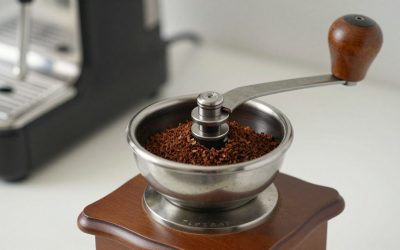
- Burrs: 48mm heptagonal conical, titanium-coated stainless steel
- Adjustment: external dial, 8 microns per click, 100 clicks per rotation
- Capacity: about 35–40 g
- Weight: about 700 g, foldable handle
Hand grinders give the most precision per dollar, and the J-Ultra is built specifically for espresso. Its 8-micron steps are among the finest of any 1Zpresso model, which makes it easy to make the small grind moves light roasts need. The external dial lets you change settings without taking the grinder apart.
The cost is effort. Grinding 18–20 g of a dense light roast at espresso fineness takes real cranking, and the burr design is tuned for espresso rather than pour-over. For one or two shots a day, it delivers much of the precision of a larger electric grinder.
Pros
- Very fine 8-micron adjustment steps
- Portable and quiet
- Strong espresso precision for the price
Cons
- Hard work with dense light roasts
- Less suited to filter brewing
Skip it if… you pull several shots a day or make drinks for a household.
New Picks Compared
| Grinder | Burrs | Adjustment | Motor / speed | Best for | Price tier |
|---|---|---|---|---|---|
| DF64 Gen 2 | 64mm flat | Stepless | 250W, ~1,400 RPM | Most light roast espresso drinkers | Mid-range |
| Turin DF83 Gen 2 | 83mm flat, Ti-coated | Stepless | 550W, ~1,400 RPM | Very light, dense roasts | Upper-mid |
| Timemore Sculptor 064S | 64mm flat | Stepless | Brushless, 800–1,200 RPM | Tuning clarity vs body | Upper-mid |
| SHARDOR 64mm | 64mm flat | 100 steps | 260W | First flat burr on a budget | Budget |
| 1Zpresso J-Ultra | 48mm conical | 8 µm/click | Manual | One or two shots a day | Budget |
Also Consider
DF54 — Best Compact Single-Dose Option
The DF54 brings the DF single-dose layout down to 54mm stainless flat burrs, a 150W motor at about 1,400 RPM, stepless adjustment and an ionizer. It is lighter and smaller than the DF64, and a good fit for espresso-first kitchens. Trade-off: smaller burrs grind more slowly and offer less clarity headroom than 64mm sets with the lightest roasts.
KINGrinder K6 — Best Low-Cost Hand Grinder
The K6 uses 48mm heptagonal stainless burrs with 16-micron steps and 60 clicks per rotation, and its hex shaft accepts a drill if you tire of cranking. It is a strong all-rounder for people who brew both espresso and filter. Trade-off: steps are twice as coarse as the J-Ultra’s, so very light espresso can fall between clicks.
Eureka Mignon Specialità — Best Hopper-Fed Grinder
If you prefer to keep beans in a hopper and grind on demand, the Specialità pairs 55mm hardened steel flat burrs with a stepless worm-gear adjustment, a 300 g hopper and two timed dose presets. It is quiet and made in Italy. Trade-off: it is not built for single dosing, so switching between beans means purging grounds.
What to Look For in a Grinder for Light Roast Espresso
Light roast espresso narrows the field more than any other use case. When evaluating a grinder for the light end of the spectrum, weigh these factors above all.
- Fine-end adjustment resolution — Light roasts need finer settings than dark, and the difference between sour and sweet can be one tiny step. Grinders with concentrated resolution at the fine end win; coarse-stepped dials lose the shot between clicks. Our grind size guide maps this in detail.
- Torque against dense beans — High-grown, lightly roasted beans are hard. Motors and burrs that breeze through oily dark roasts can slow, stall, or heat up against them.
- Particle consistency — Long, slow light-roast extractions amplify the damage of fines and boulders. Burr quality and alignment matter more here than anywhere; our calibration tool review covers verifying it.
- Low retention — Light roasts reward bean rotation and small-batch buying, and a low-retention or single-dose design keeps each coffee distinct — see our zero-retention grinder review.
- Workflow accessories — Bellows, dosing cups, and proper hoppers tame the static that dense, dry light-roast grounds generate; our hopper accessories guide rounds up the kit.
- Machine-side support — Grinders do not work alone: machines with temperature control and gentle pressure ramps flatter light roasts enormously, as our light-roast machine guide details.
How We Chose
This guide is research-based; the grinders were not put through our own trials. We started from the grinders that home-barista forums, specialty coffee retailers and independent reviewers most often recommend for light roast espresso, then checked each one against the maker’s published specifications. To make the main list, a grinder needed burrs and adjustment fine enough for espresso, stepless control or steps of roughly 16 microns or less, a motor or burr size suited to dense beans, and a current model that is easy to buy in the US. We favored low-retention and single-dose designs because light-roast drinkers tend to rotate beans often. Specs such as motor power, RPM and retention come from maker or retailer spec sheets; where sources disagreed, we left the figure out or noted the range. Where a product above is a coffee or a non-espresso grinder, it is there for context, not as a light-roast espresso grinder recommendation.
Light Roast Espresso Grinder Buying Guide: The Numbers That Matter
The short list above covers what to look for. This section puts concrete thresholds on those factors so you can judge any grinder, including ones not on this page.
Burr type: flat or conical?
Both can make good light roast espresso, but they lean in different directions. Flat burrs generally produce a narrower spread of particle sizes, which many home baristas find gives more clarity and separation of flavors in light roasts. Conical burrs usually produce more fines, which adds body and texture and can make shots more forgiving, but can blur the delicate fruit and floral notes that make light coffees worth buying. If light roast is your main coffee, lean flat.
Burr size: 54mm, 64mm, or bigger
- 48mm conical (hand grinders): excellent precision for one or two shots a day; slow with dense beans.
- 54–55mm flat: a solid entry point for espresso; fine for medium-light roasts, less headroom for the lightest.
- 64mm flat: the most popular home size for light roast espresso, with the widest choice of upgrade burrs.
- 78–83mm flat: faster grinding and more burr surface; worth it for daily light roast drinkers who want the top of the home range.
Bigger burrs are not automatically better if the alignment, motor and adjustment do not keep up, but within a well-built design, larger burrs grind faster and with less heat per dose.
Adjustment resolution
Light roast espresso often needs very small changes. Stepless dials are ideal, since you can stop anywhere. For stepped grinders, look at microns per click: around 10 microns or finer is excellent for espresso, about 15–20 is workable, and anything coarser makes it likely the ideal setting falls between two clicks. A grinder that advertises a large number of settings is not necessarily fine enough if most of those settings sit in the filter range.
Motor power and speed
Dense light roasts take more force to grind at espresso fineness. For 64mm flat burrs, motors in the 150–250W range are typical; 80mm-class burrs usually pair with 400W or more. Weak motors slow down, heat the grounds or stall. Variable speed is a useful extra rather than a must; lower RPM is often linked to more clarity, higher RPM to more body.
Retention and single dosing
Retention is the coffee left inside after grinding. Under about 0.3 g is good for a home espresso grinder, and many single-dose designs claim under 0.1 g with a bellows or knocker. Low retention matters more for light roast drinkers because you are likely to switch beans often and to pull a few test shots per bag; stale grounds from the last session will skew your dial-in.
Burr alignment and build
Two grinders with the same burr size can perform very differently if one holds its burrs more precisely parallel. Poor alignment widens the spread of particle sizes, which is exactly what hurts light roasts. Signs of a well-built grinder include a solid metal burr carrier, a rigid adjustment mechanism with no wobble, and a maker or community that documents how to check and correct alignment. Budget models are more variable from unit to unit, so buy from a seller with an easy return policy.
Static and workflow
Light roasts are drier than dark roasts and tend to throw more static, which means grounds cling to the chute and spray around the counter. Look for an ionizer, an anti-static chute, a dosing cup that fits your portafilter, and a bellows or knocker to clear the last grounds. A single spritz of water on the beans before grinding also helps on any grinder.
Size, noise and counter space
Single-dose flat burr grinders are often taller than they look in photos, especially with a bellows fitted, so measure the space under your cabinets. Larger burrs and slower speeds usually mean a lower pitch, but almost every electric espresso grinder is loud for the few seconds it runs. If noise is a concern early in the morning, a hand grinder is the quiet option.
Match the grinder to your machine and budget
- Under about $200: a quality hand grinder such as the 1Zpresso J-Ultra or KINGrinder K6, or a budget 64mm flat burr like the SHARDOR.
- About $250–400: DF54 or DF64-class single-dose grinders, the sweet spot for most home espresso.
- About $500–600: DF83 Gen 2 or Timemore Sculptor 064S for bigger burrs or speed control.
- Above that: larger burrs, variable speed and premium alignment, worth it only if light roast espresso is a serious hobby.
One more rule: if your espresso machine uses pressurized (dual-wall) baskets, a precision grinder will make far less difference, because the basket creates the resistance instead of the coffee. Switch to an unpressurized basket first, or put the money toward the machine.
Flat vs. Conical Burrs for Light Roast Espresso
This is the decision most light-roast buyers face, so here is how the two compare in practice.
| Flat burrs (e.g. DF64, 064S, DF83) | Conical burrs (e.g. J-Ultra, K6, entry electrics) | |
|---|---|---|
| Cup character | More clarity and flavor separation | More body and texture |
| Forgiveness | Less forgiving of poor puck prep | More forgiving; easier to get a decent shot |
| Typical ratio | Suits longer ratios, 1:2.5 to 1:3 | Often shines at classic 1:2 |
| Cost to entry | Budget 64mm models exist; quality ones start mid-range | Good hand grinders are cheaper than good electrics |
Choose flat burrs if you drink light roast espresso straight or in small milk drinks and want to taste origin character. Choose conical if you split time between light and medium roasts, drink mostly milk drinks, or want the most precision for the least money with a hand grinder. Either way, good puck prep, rested beans and a hotter brew temperature matter as much as the burr shape.
Tips for Getting the Most Out of Light Roast Espresso
Change your recipe before you blame your beans. Light roasts generally want a finer grind, a longer ratio — pulling shots toward 1:2.5 or even 1:3 — and hotter water than dark-roast habits suggest. If a light shot tastes sour and thin, resist the instinct to bail; go finer in small steps, stretch the yield, and watch sourness resolve into sweetness. The transformation is the entire reason light espresso has a devoted following.
Let the beans rest, then keep them moving. Lightly roasted coffee typically peaks later after roast day than dark — often comfortably into the second or third week — so do not judge a bag by its first impatient shots. Once open, store it sealed and dark, buy in quantities you finish within weeks, and grind only at brew time; density and freshness are the two levers that make every grinder in this guide perform.
Finally, keep your grinder honest. Dense beans accelerate burr seasoning and buildup, and a drifting grinder sabotages exactly the precision light roasts demand. Brush out the chamber monthly, confirm your zero point hasn’t moved, and re-dial each new bag from your notes rather than memory. Ten minutes of upkeep a month is cheap insurance on the most demanding — and most rewarding — corner of home espresso.
Frequently Asked Questions
Why does light roast espresso need a better grinder than dark roast?
Light-roasted beans are denser and harder, requiring finer settings and more grinding force, and their slow, high-yield extractions amplify any particle inconsistency. A grinder that makes pleasant dark-roast shots can produce genuinely undrinkable light-roast ones.
What grind setting should I use for light roast espresso?
Finer than your dark-roast setting — often several steps finer — paired with a longer ratio in the 1:2.5 range. There is no universal number: dial each bean by taste, moving finer until sourness gives way to sweetness, then stop.
Is white coffee the same as light roast?
White coffee is an extreme form of it — beans roasted far short of a conventional light roast, leaving them very dense, nutty in flavor, and higher in retained caffeine. It brews best with the same hardware this guide recommends, ground fine and extracted patiently.
Can I make good light roast espresso on a budget setup?
Yes, within limits. A budget grinder with genuine fine-end resolution, fresh well-rested beans, and a patient longer-ratio recipe will produce rewarding light shots. The compromises show at the margins — ultimate clarity and shot-to-shot consistency — rather than in basic drinkability.
Is a 64mm flat burr grinder good enough for light roast espresso?
Yes. A well-aligned 64mm flat burr grinder with stepless adjustment is the most common choice among home baristas who drink light roasts. Larger burrs add speed and some clarity headroom, but most people will get more from better beans and puck prep than from going beyond 64mm.
Are hand grinders good for light roast espresso?
Yes, and they are the cheapest route to real precision. Espresso-focused hand grinders with fine steps, such as 8–16 microns per click, can dial light roasts well. The downside is effort: dense light beans take noticeably longer to crank at espresso fineness, so they suit one or two shots a day.
Does grinder RPM matter for light roasts?
It can. On grinders with variable speed, lower RPM is often linked to more clarity and less heat, and higher RPM to more body. It is a fine-tuning tool rather than a requirement; burr size, alignment and adjustment resolution matter more.