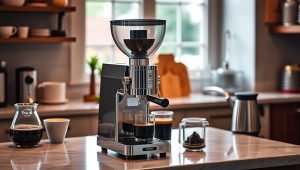
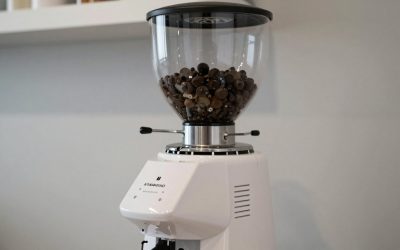
- Top Pick: AAOBOSI Espresso Coffee Grinder, Anti-Static, 45 Grind Settings,40s Timer
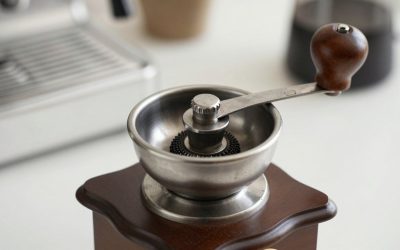
- Best Value: CEVING Mini Manual Coffee Grinder With 40 Adjustable Settings, Black
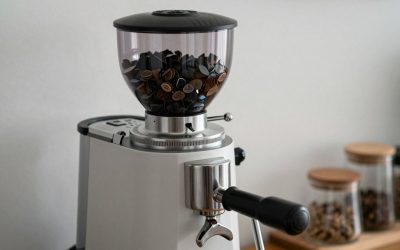
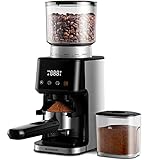
- Premium Choice: SHARDOR Conical Burr Espresso Coffee Grinder Electric with Precision Timer 2.0, Touchscreen Adjustable Burr Mill with 51 Precise Settings for Home Use, Anti-static, Stainless Steel
Last updated: October 20, 2026
As an Amazon Associate we earn from qualifying purchases at no extra cost to you.




Disclosure: As an Amazon Associate we earn from qualifying purchases. This page contains affiliate links and we may earn a commission at no extra cost to you.
Here is the uncomfortable truth every espresso veteran eventually tells every beginner: the grinder matters more than the machine. A thousand-dollar espresso machine fed by a vague, inconsistent grinder will pull sour, channeling shots forever, while a modest machine behind a precise grinder can produce genuinely lovely espresso. The problem is that the conventional advice, spend as much on the grinder as the machine, collides hard with real-world budgets.
The good news is that the budget espresso grinder category has improved beyond recognition in the past few years. Conical burr machines under $120 now offer the two things espresso actually demands: the ability to grind fine enough, and adjustment steps small enough to move between too fine and too coarse in controlled increments. Features once reserved for prosumer gear, anti-static designs, metal grind chambers, even touchscreen controls, have trickled down to price points that would have bought a blade grinder a decade ago.
In this roundup we look at six grinders that deliver espresso-capable performance without prosumer pricing, from $69.99 to a single stretch pick at $169.99. Every one of them can feed a home espresso machine; the differences lie in adjustment resolution, workflow, and how much room they leave you to grow. If you are building a complete first setup, read this alongside our best home espresso machines guide so the budget gets split wisely.
Quick Comparison
| Product | Price | Rating |
|---|---|---|
| Aromaster Conical Burr Grinder | $89.99 | 5.0/5 |
| Touchscreen Conical Burr Grinder (60 settings) | $99.99 | 4.8/5 |
| Tuni G2 Conical Burr | $119.00 | 4.6/5 |
| Tuni G1 Conical Burr | $94.00 | 4.5/5 |
| SHARDOR Conical Burr (48 settings) | $69.99 | 4.5/5 |
| SHARDOR 64mm Pro (100 settings) | $169.99 | 4.5/5 |
Why Trust This Guide
See also: Best Spice Grinders: Ten Electric Models Compared by Capacity, Bowl Design and Cleanup • 4 Best Flat Burr Coffee Grinders for Consistent Grounds (October 2026) Buying Guide
We judge budget grinders the same way we judge expensive ones: by burr type, adjustment resolution, build choices, and honest value, based on manufacturer specifications and established espresso extraction principles. We do not inflate capabilities to make cheap gear sound heroic, and we say clearly where each machine’s limits sit.
Aromaster Conical Burr Grinder
The Aromaster leads this list because it nails the fundamentals at $89.99: conical steel burrs, 48 grind settings spread across the full brewing range, and enough fine-end resolution to dial in a respectable shot on a typical home machine. It is the all-rounder of the group, equally content grinding for your morning espresso and a weekend French press for guests.
Its limits show at the extremes. Stepped adjustment means you occasionally want a setting between two clicks, the classic budget espresso frustration, and ultra-light roasts that demand very fine grinding will test its range. Within the territory most beginners actually occupy, medium roasts on entry to mid-level machines, it performs far above its price. New to dialing in? Our grind size guide will save you a week of guesswork.
Touchscreen Conical Burr Grinder (60 settings)
This machine brings two welcome upgrades to the budget tier: a touchscreen interface with timed dosing and an anti-static design that fights the cling and mess that plague cheap grinders. Sixty settings give it slightly finer steps than the Aromaster, and timed dosing means your morning dose repeats itself without babysitting.
Who is it for? The brewer who values workflow polish, consistent doses, clean counters, repeatable timing, as much as raw grind quality. The tradeoff is the usual one with feature-rich budget machines: some of the price funds the interface rather than the burrs. For pure grind-per-dollar the SHARDOR 48 below wins; for the most pleasant daily routine under $100, this is the pick.
Tuni G2 Conical Burr
The Tuni G2 is the most espresso-serious grinder in the core budget group. Seventy grind settings with an anti-static burr mill put its adjustment resolution closer to enthusiast territory, and finer steps directly translate to better shots, because espresso dial-in is a game of inches. When a single coarse click takes you from a 35 second choke to a 20 second gusher, resolution is everything.
At $119 it asks more than its siblings, and drip-only households will not use what they are paying for. But if your machine has a pressurized basket today and an unpressurized basket in its future, the G2 gives you headroom to improve your technique for years. Pair it with the workflow advice in our single-dose espresso guide and weigh every dose; consistency in equals consistency out.
Tuni G1 Conical Burr
The G1 is the G2’s younger sibling: same design philosophy, anti-static approach, and precision pitch, with 48 settings instead of 70 and a price of $94. That makes it a direct rival to the Aromaster, and choosing between them is genuinely difficult. The G1 leans slightly more espresso-focused in its adjustment spacing, while the Aromaster spreads its range more evenly across brew methods.
For a dedicated espresso corner, where the grinder will never see French press duty, the G1’s focus is a virtue. Its limits mirror every stepped budget grinder: occasionally the perfect setting lives between two clicks, and you compensate with dose or tamp. Learning those compensation tricks is half the fun of budget espresso, and our bitter espresso troubleshooting guide doubles as a free education in reading your shots.
SHARDOR Conical Burr (48 settings)
At $69.99 the SHARDOR is the price floor for genuine espresso-capable grinding, and it is honest about what it is: a straightforward conical burr machine with 48 settings, no touchscreen, no theatrics. The burr set grinds fine enough for pressurized-basket espresso and every brew method coarser than that, which makes it the perfect first burr grinder for someone graduating from pre-ground coffee.
The compromises are texture rather than substance: more static cling than the anti-static designs above, a less granular fine end than the Tuni G2, and a plastic-forward build. None of these stop it from transforming a beginner’s coffee. If you are weighing whether to spend the extra $20 to $50 on its rivals, our entry-level burr grinder roundup maps the upgrade ladder rung by rung.
SHARDOR 64mm Pro (100 settings)
The 64mm Pro is the stretch pick, included because at $169.99 it crosses into a different class of machine while still costing less than many espresso machines’ accessories. Commercial-diameter 64mm burrs grind faster and cooler than the smaller sets above, the all-metal chamber adds rigidity and longevity, and 100 settings finally deliver the near-stepless fine control that espresso obsessives crave.
This is the grinder for the buyer who suspects, correctly, that they will upgrade everything else later and wants a grinder that survives the journey. The case against it is simple: it costs as much as the SHARDOR 48 plus a very nice month of beans. If your espresso ambitions are casual, save the difference. If they are not, buy once and keep your burrs aligned with help from our burr calibration tool review.
What to Look For in a Budget Espresso Grinder
Espresso makes demands that drip brewing never will, so a budget grinder has to spend its limited budget on the right things.
- Genuine fine-range capability — The grinder must reach true espresso fineness with settings to spare, not bottom out exactly at the edge of drinkable. Range headroom is non-negotiable.
- Adjustment step size — More settings across the same range means smaller jumps between clicks; 60 to 100 steps is meaningfully better for espresso than 20 to 40.
- Burr quality over gadgets — A dollar spent on burr steel and alignment improves every shot forever; a dollar spent on a screen improves the unboxing. Choose accordingly at this price tier.
- Anti-static and low-mess design — Fine espresso grounds cling and scatter ferociously; anti-static designs keep the dose in the basket and off your counter.
- Retention behavior — Grounds trapped in chutes go stale and pollute tomorrow’s shot. Low-retention paths or an easy purge routine protect flavor between sessions.
- Serviceability — Removable burrs and accessible chambers mean cleaning is routine rather than surgery, and a cleanable grinder is a grinder that stays consistent.
Tips for Getting the Most Out of a Budget Espresso Grinder
Work with your grinder’s resolution, not against it. When the perfect grind lives between two clicks, adjust the other variables you control: a half-gram more coffee in the basket slows a shot, a half-gram less speeds it up. Budget espresso is a system, and dose is the free fine-adjustment dial that stepped grinders forget to mention. Keep a small notebook or use your phone to log setting, dose, and shot time; after two weeks you will have a personal map no review can give you.
Feed it fresh, consistent beans. Cheap grinders get blamed for problems that stale supermarket beans cause, because weeks-old coffee grinds and extracts differently than fresh roast. Buy from roasters who print roast dates, and store beans sealed and dark. Medium roasts are also kinder to budget burrs and budget machines alike than the very lightest roasts, which demand extremes of fineness and temperature.
Finally, clean monthly and recalibrate after. Espresso-fine particles and oils pack into burr chambers faster than coarse drip grounds ever will, slowly shifting your effective grind setting and muddying flavors. A monthly teardown, brush-out, and a fresh dial-in shot keeps the machine honest. Your future self, staring at a mysteriously sour shot, will thank you, though when mystery strikes anyway, our guide to espresso grinders at every price shows what the next rung up buys.
Frequently Asked Questions
Can a grinder under $100 really make good espresso?
Yes, with honest expectations. Modern budget conical burr grinders reach espresso fineness and hold settings consistently enough for very enjoyable shots, especially on machines with pressurized baskets that forgive small inconsistencies. What you give up versus a $300-plus grinder is adjustment granularity, particle uniformity at the extremes, and long-term workflow niceties, not the basic ability to pull a sweet shot.
Why is the grinder more important than the espresso machine?
Because extraction quality is decided by particle size and uniformity before water ever touches the coffee. An espresso machine mostly supplies hot water at pressure; if the grind is uneven, water finds the easy paths, over-extracting some coffee and under-extracting the rest in the same shot. No machine can fix that after the fact, which is why upgrading the grinder improves shots more than upgrading the machine.
Are stepped grind settings a problem for espresso?
They are a constraint, not a dealbreaker. Stepless grinders allow infinitely small changes, which is ideal, but a stepped grinder with 60 to 100 positions gets close enough for excellent home espresso. When your target lands between clicks, small changes in dose or tamping pressure bridge the gap effectively.
Should I buy a used premium grinder instead of a new budget one?
It can be a smart play, since quality grinders age well and burrs are replaceable. The risks are worn burrs, hidden motor issues, and missing parts, so factor in the cost of a new burr set when comparing prices. For buyers who want zero detective work and a warranty, a new budget machine from this list is the simpler path.