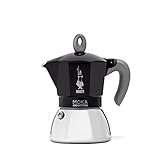
- Top Pick: Bialetti – Moka Induction, Moka Pot, Suitable for all Types of Hobs, 4 Cups Espresso (5.7 Oz), Red
- Best Value: Bialetti – Moka Induction, Moka Pot, Suitable for all Types of Hobs, 2 Cups Espresso (3.4 Oz), Red
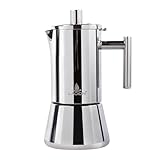
- Premium Choice: WALDWERK Stainless Steel Moka Pot (10oz) – Toxic Free Moka Pot with Oak Wood Handle – Stovetop Espresso Maker – Italian Coffee Maker for Stovetop and Induction
As an Amazon Associate we earn from qualifying purchases at no extra cost to you. Product prices and availability are accurate as of the date shown and are subject to change.





TL;DR: An induction moka pot lets you brew rich, stovetop espresso-style coffee on any heat source — including induction cooktops that standard aluminum moka pots won’t work on. The key differences from traditional models are the stainless steel base, magnetic-compatible construction, and slightly longer brew times. If you have an induction cooktop, this is the only moka pot worth buying.
Induction Moka Pot: Everything You Need to Know Before You Buy
The moka pot is one of the most enduring pieces of coffee equipment ever made. Since Alfonso Bialetti introduced it in 1933, the design has barely changed — because it doesn’t need to. But the rise of induction cooktops created a genuine problem: traditional aluminum moka pots don’t work on induction. The solution is an induction moka pot built with a magnetic stainless steel base.
Here’s what you need to know to choose the right induction-compatible moka pot, brew with it correctly, and get the most out of one of the simplest and most satisfying coffee brewing methods available.
- Quick Comparison
- Top Induction Moka Pots
- How an Induction Moka Pot Works
- Stainless Steel vs. Aluminum: Does Material Affect Flavor?
- Sizing: Getting the Right Cup Count
- Heat Management on Induction
- Spec Comparison Table
- Cleaning and Maintenance
- FAQ: Induction Moka Pot
- About the Author
- Frequently Asked Questions
Quick Comparison
| Product | Brand | Price | Rating |
|---|---|---|---|
| Stainless Steel Moka Pot 4-Cup Espresso Maker | — | $15.23 | — |
| Bialetti Moka Express Iconic Italian Stovetop Espresso … | Bialetti | $54.99 | 4.6/5 |
| Bialetti – New Venus Induction | Bialetti | $69.36 | 4.4/5 |
| GROSCHE Milano Moka Pot | Stovetop Espresso Percolator … | GROSCHE | $44.99 | 4.4/5 |
| Bialetti Stainless Steel Plate | Bialetti | $26.92 | 4.5/5 |
Top Induction Moka Pots
See also: How to Replace Espresso Machine Water Filter (2026): Step-by-Step • How to Adjust Espresso Machine Brew Temperature (2026): Step-by-Step
How an Induction Moka Pot Works
The brewing mechanism is identical to a traditional moka pot: water in the lower chamber heats until pressure builds and forces it upward through a funnel basket packed with ground coffee, then into the upper chamber. What changes in an induction-compatible model is the base material.
Induction cooktops work by generating an alternating magnetic field that induces eddy currents in ferromagnetic materials — materials that respond to magnets. Aluminum, the traditional moka pot material, is not ferromagnetic and won’t heat on induction. Induction moka pots use a stainless steel body or a stainless steel disc bonded to the base, which provides the magnetic response induction requires.
The quick test: hold a refrigerator magnet to the bottom of any pot. If it sticks, the pot works on induction. If it slides off, it doesn’t.
Stainless Steel vs. Aluminum: Does Material Affect Flavor?
This is a genuinely debated topic. Traditionalists argue that aluminum-brewed moka pot coffee has a distinct character — slightly softer, with less metallic edge — that they prefer. Stainless steel enthusiasts counter that stainless is fully flavor-neutral and easier to maintain.
The practical truth: the difference is subtle and largely masked by your coffee choice, grind size, and heat level. New aluminum does require a break-in period of several brews before flavor becomes neutral. Stainless is ready from the first brew. For induction users, this debate is academic — stainless (or aluminum with stainless base) is your only option.
What does matter significantly is grind consistency. Moka pots are forgiving of imprecise grind size compared to espresso machines, but a medium-fine, even grind extracts far better than erratic pre-ground coffee. See our comparison of Italian moka pot brewing techniques for a complete guide to dialing in your grind and brew variables.
Sizing: Getting the Right Cup Count
Moka pot sizing is notoriously misleading. A “6-cup” moka pot produces approximately 240–270ml of brewed coffee — not six 8 oz cups. The “cup” refers to a traditional Italian espresso cup of roughly 40–50ml. Sizing for an induction moka pot works the same way.
For a single person drinking one or two mugs of coffee, a 3-cup model is the practical sweet spot — it produces enough for a generous mug or two smaller cups without leaving excess. A 6-cup is right for two people or one person who wants a larger serving. The critical rule: never brew less than a full basket. Under-filling the grounds basket causes over-extraction and bitter, harsh results.
Heat Management on Induction
Induction provides more precise, instant heat control than gas or electric coil — which is actually an advantage for moka pot brewing, where heat management is the primary variable. Start on medium-low heat (setting 4–5 on a 10-level induction dial), keep the lid open, and watch for the coffee to begin flowing into the upper chamber.
The ideal moka pot brew is slow and steady — coffee should flow in a smooth, dark stream, not sputter or gurgle aggressively. Gurgling means the heat is too high, which forces water up too fast and under-extracts while burning the coffee in contact with the hot basket. When you hear the first hint of gurgling, drop the heat to low immediately to slow the flow.
Remove the pot from the induction surface the moment the upper chamber is full and before the characteristic “pssssh” gurgling sound. That final gurgle is steam pushing through, producing harsh, over-extracted liquid you don’t want in your cup.
Spec Comparison Table
| Feature | Traditional Aluminum | Aluminum + Disc Base | Full Stainless Induction |
|---|---|---|---|
| Induction Compatible | No | Yes | Yes |
| Gas / Electric Compatible | Yes | Yes | Yes |
| Body Material | Aluminum | Aluminum | Stainless steel |
| Weight (3-cup) | ~200g | ~280g | ~350g |
| Break-in Required | Yes (2–3 brews) | Partial | No |
| Dishwasher Safe | No | No | Usually yes |
| Typical Price | $25–$45 | $35–$60 | $45–$90 |
Cleaning and Maintenance
Never put a moka pot in the dishwasher unless the manufacturer explicitly states it’s dishwasher safe — most are not, and the harsh detergents attack gaskets and silicone seals. Hand wash with warm water only after each use, or at most a drop of mild dish soap. Rinse thoroughly and dry all components separately before reassembling for storage. If you use the moka pot alongside an espresso machine, keep both clean with our espresso machine descaler and cleaning guide — scale buildup in the lower chamber affects brew pressure just as much as in a pump machine.
The rubber or silicone gasket between the upper and lower chambers is a wear part. Inspect it every few months for cracking or hardening — a compromised gasket causes pressure leaks and weak brews. Replacement gaskets for most standard moka pot sizes cost under $5 and are widely available.
For the full picture on home coffee brewing tools and how the moka pot fits into a broader setup, see our guide to coffee shop equipment for home that covers every major brew method worth considering.
FAQ: Induction Moka Pot
Why won’t my moka pot work on an induction cooktop?
Induction cooktops heat cookware by generating a magnetic field that induces electrical currents in ferromagnetic materials. Traditional moka pots are made from aluminum, which is not ferromagnetic and won’t respond to the induction field — so no heat is generated. To use a moka pot on induction, you need a model with a magnetic stainless steel base or a full stainless steel body. A quick check: if a refrigerator magnet sticks firmly to the bottom of the pot, it’s induction compatible.
What grind size should I use in an induction moka pot?
Medium-fine is the target — finer than drip coffee, but noticeably coarser than espresso. Espresso-fine grind in a moka pot creates too much resistance, causing pressure to build unevenly and often resulting in the safety valve releasing steam before the brew completes. A grind that looks like coarse sea salt viewed under bright light is approximately right. Err slightly coarser if your brew is coming out bitter or taking too long to flow.
Should I use pre-heated water in a moka pot?
Starting with hot or just-boiled water in the lower chamber is a technique used by many experienced moka pot brewers. It reduces the time the grounds spend in contact with the hot lower chamber while waiting for water to boil, which can prevent bitterness from over-toasting the grounds during heat-up. On induction, where heat-up is faster and more controlled, the benefit is smaller — but pre-heating is still a valid technique, particularly for lighter roast coffees that are more sensitive to heat.
Can I use a moka pot to make espresso?
Moka pot coffee is strong and concentrated — but it is not technically espresso. True espresso is brewed at 9 bars of pressure. Moka pots generate approximately 1.5–2 bars, which produces a different extraction chemistry. The result is a rich, full-bodied brew that works beautifully as an espresso substitute in milk-based drinks, but lacks the emulsified oils and dense crema of machine-pulled espresso. Think of it as stovetop strong coffee rather than true espresso — great in its own right.
How do I stop my induction moka pot from leaking?
Leaking almost always indicates a worn or improperly seated gasket, or the upper and lower chambers aren’t tightened fully. First, check the gasket for cracks, hardening, or deformation — if it’s compromised, replace it. Second, ensure the funnel basket is correctly seated in the lower chamber before screwing the top on. Third, tighten firmly hand-tight (not wrench-tight) before every brew — steam pressure will find any gap. Overtightening damages the gasket faster, so firm hand pressure is the right approach.
Frequently Asked Questions
Why does my Bialetti not work on an induction hob?
Classic Moka Express pots are cast aluminum, which is not ferromagnetic, so an induction hob cannot couple with it and simply shows an error. You need a pot with a stainless steel or steel-bonded base, or an induction interface disk placed under the aluminum pot.
Is an induction interface disk worth using?
It works and costs little, but it heats indirectly, so it is slower, wastes energy and gives less control during the critical final phase of the brew. If you use a moka pot daily on induction, a purpose-built stainless pot is the better long-term purchase.
Which moka pots are induction compatible?
Bialetti’s Venus and Musa lines, plus most Cuisinart, Grosche and Alessi stainless models, work on induction. Also check the hob’s minimum pan diameter, because 1 and 3 cup pots often have bases too small for large induction rings to detect reliably.
What heat setting should I use?
Low to medium, around level four of nine. Induction is aggressive, and running a moka pot hard forces steam through too fast, producing the burnt, bitter cup people usually blame on the pot. Start with hot water in the base and remove it from heat when it gurgles.
What grind size does a moka pot need?
Medium-fine, roughly table salt, coarser than espresso and finer than drip. Fill the basket level without tamping, since tamping raises pressure and can make the safety valve vent. Too fine a grind is the second most common cause of bitter moka coffee after excessive heat.
Ready to decide? Our #1 pick for 2026 is the Stainless Steel Moka Pot 4-Cup Espresso Maker.
Live price & availability on Amazon.