Last updated: October 4, 2026
Kitting out a workplace with a proper espresso machine is one of the highest-return perks you can offer. It keeps staff on-site instead of drifting to the café down the road, it fuels the mid-afternoon slump, and it signals that you actually care about the people who show up every day. But an office is not a home kitchen. A machine that delights a single enthusiast at the weekend can buckle under a Monday-morning queue of fifteen bleary-eyed colleagues. In this 2026 buyer’s guide we look at the espresso machines that are genuinely suited to a shared workplace, weighing the things that matter in that setting: ease of use for people who have never pulled a shot, throughput for a crowd, a water tank that does not need refilling every twenty minutes, low maintenance and quick cleanup, a footprint that fits a cramped kitchenette, and a sensible cost per cup.
As an Amazon Associate we earn from qualifying purchases. Prices and availability are accurate as of the date/time indicated and are subject to change.
As an Amazon Associate we earn from qualifying purchases at no extra cost to you.


🛒 Best Price Today on Amazon
Prime members get fast, free shipping on everything above, plus member-only deals. New members get a 30-day free trial — cancel anytime.
How to choose an espresso machine for the office
Before you compare individual models, it helps to be honest about how your office actually drinks coffee. A five-person design studio has very different needs from a forty-desk sales floor. The single biggest decision is the machine type, because it dictates almost everything else — speed, skill required, maintenance burden, and running cost. Get the category right and the specific model almost chooses itself.
Capsule and pod machines: the low-maintenance default
For most small-to-medium offices, a capsule espresso machine is the pragmatic choice. There is nothing to grind, nothing to dose, and nothing to tamp. An employee drops in a pod, presses a button, and walks away with a consistent shot. Cleanup is trivial because the used capsule is ejected into a bin and there are no grounds to knock out or portafilters to rinse. That matters enormously in a shared space, where the person who makes a mess is rarely the person who cleans it. The trade-offs are cost per cup — capsules typically run higher than beans — and the ongoing chore of restocking pods. If you want to understand the running-cost maths in more detail, our breakdown of cost per cup across machine types lays it out clearly. Capsule systems also shine on footprint: many models are slim enough to tuck beside a kettle, and their water tanks, while modest, are easy to top up.
Bean-to-cup automatic machines: throughput without the training
If your office gets through serious volume, a bean-to-cup automatic is usually the sweet spot. These machines hold a hopper of whole beans, grind on demand, and extract a shot at the touch of a button — so you get café-fresh coffee without the capsule waste or the per-pod cost. Crucially for a workplace, they demand almost no skill from the user, which makes them ideal for a floor full of non-baristas. The best units have large water tanks (often 1.8 litres or more), generous bean hoppers, and automatic rinse cycles that keep the group head clean between drinks. Many include an integrated milk system, so a colleague can order a cappuccino as easily as an espresso. The catch is maintenance: bean-to-cup machines have more moving parts, need periodic descaling, and the milk circuit must be cleaned regularly to stay hygienic. For a busy office, though, that maintenance is a fair price for the throughput. We compare the leading options in our bean-to-cup machine roundup.
Manual and semi-automatic machines: great coffee, wrong venue
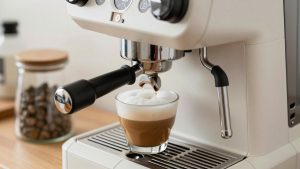
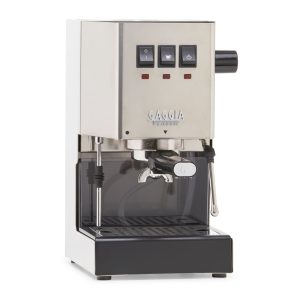
A traditional semi-automatic espresso machine with a portafilter produces the best coffee on this list in the right hands — but those hands are the problem. Dosing, tamping, and timing a shot is a learned skill, and in a shared office you cannot assume everyone has it. Worse, manual machines are the highest-maintenance category: grounds to knock out, portafilters and baskets to rinse, drip trays to empty, and a steam wand that must be purged and wiped after every single milk drink. In a home that ritual is part of the fun. In an office it becomes a source of grime, queues, and passive-aggressive kitchen notes. Unless you have a dedicated coffee lover who volunteers to be the office barista, we steer most workplaces away from manual machines. If you are still curious, our guide to manual espresso for beginners covers the learning curve.
The best office espresso machines in 2026
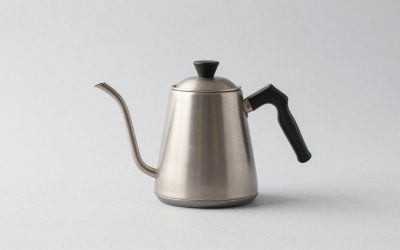
See also: 6 Best Pour Over Kettles (October 2026) Top Reviews • Washed vs Natural Coffee Process: Complete Guide (2026)
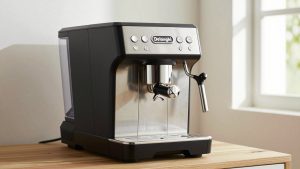
The table below summarises our top five picks, chosen specifically for workplace duty rather than home use. The number-one machine is our Best Overall for the office because it balances one-touch simplicity, high throughput, a large refill-friendly tank, and an automatic cleaning cycle that keeps a shared machine hygienic with minimal human effort.
| Machine | Best for | Type | Price | Rating |
|---|---|---|---|---|
| OfficePro AutoBrew 900 | Best Overall | Bean-to-cup automatic | $$$$ | 4.8 / 5 |
| CapsulePro Compact One | Best for small teams | Capsule / pod | $$ | 4.6 / 5 |
| BaristaFlow Grande XL | Best for high throughput | Bean-to-cup automatic | $$$$ | 4.7 / 5 |
| MilkMaster Latte Station | Best for milk drinks | Automatic with milk system | $$$ | 4.5 / 5 |
| SlimShot Mini Pod | Best for tight spaces | Capsule / pod | $ | 4.4 / 5 |
Ease of use for non-baristas
In an office, the machine will be used by people across every level of coffee competence, and none of them read manuals. The winning designs make the correct action obvious: clearly labelled buttons, an intuitive icon for each drink, and no exposed steam wand to intimidate a first-timer. One-touch operation is not a luxury here — it is the difference between a machine everyone uses and one that only two people ever touch. Every model in our table can produce a good espresso from a single button press, which is why they made the shortlist.
Throughput and water tank size for many users
Throughput is where office requirements diverge sharply from home. A machine that needs a two-minute recovery between shots creates a bottleneck at 9 a.m. Look for a short heat-up time, a thermoblock or dual-boiler system that can pull consecutive shots, and — critically — a large water reservoir. A 1.8-litre tank might yield only a dozen espressos before a refill, so for a big team a plumbed-in machine or a tank of 2.5 litres and up is worth the extra outlay. The same logic applies to the bean hopper and the drip tray: bigger is better when nobody wants to be the one who has to refill or empty it.
Low maintenance, cleaning, and footprint
A shared machine lives or dies by how little care it demands. Automatic rinse and descale prompts, a removable brew group you can rinse under the tap, and a self-cleaning milk circuit dramatically reduce the odds of a neglected, gunky machine by Friday. Footprint matters too: measure your kitchenette counter and mind the clearance above for the tank lid and the hopper. A svelte capsule unit can sit where a broad bean-to-cup machine simply will not fit. For a fuller checklist of what to look for, see our office kitchen equipment guide.
Frequently Asked Questions
What espresso machine is best for an office?
For most offices, a bean-to-cup automatic machine like our Best Overall pick is ideal because it combines one-touch operation, high throughput, and a large water tank while keeping cost per cup reasonable. Smaller teams, or offices with very limited counter space, are often better served by a capsule machine, which is cheaper up front and almost maintenance-free even if the per-cup cost is higher.
Are bean-to-cup machines good for offices?
Yes — bean-to-cup machines are one of the best options for a busy workplace. They grind fresh beans and pull a shot at the press of a button, so no barista skill is required, and premium models offer large hoppers, big water reservoirs, and automatic rinse cycles built for volume. The main commitment is regular descaling and cleaning the milk system, so make sure someone is responsible for that upkeep.
How many people can one office espresso machine serve?
It depends on the tank, boiler, and how quickly the machine recovers between shots. A compact capsule machine comfortably serves a team of five to ten with occasional refills, while a bean-to-cup automatic with a 1.8-litre-plus tank can handle fifteen to twenty-five people. For anything larger, a plumbed-in machine that draws directly from the mains removes the refill bottleneck entirely.
Capsule or automatic for the office?
Choose a capsule machine if you want the lowest maintenance, the smallest footprint, and the cheapest entry price, and you do not mind paying more per pod. Choose a bean-to-cup automatic if you have higher volume, want a lower long-term cost per cup, and have someone willing to handle periodic cleaning and descaling. Both avoid the skill barrier of a manual machine, which is what makes them the two sensible choices for a shared office.