- Top Pick: Primula Classic Stovetop Espresso and Coffee Maker, Moka Pot for Italian and Cuban Café Brewing, Greca Coffee Maker, Cafeteras, 6 Espresso Cups, Silver
- Best Value: Bialetti Moka Express Iconic Italian Stovetop Espresso Maker (Natural Silver, 6 Cups)
- Premium Choice: Primula Classic Stovetop Espresso and Coffee Maker, Moka Pot for Italian and Cuban Café Brewing, Greca Coffee Maker, Cafeteras, 3 Espresso Cups, Silver

The moka pot is one of the most underappreciated brewing methods in the home coffee landscape — dismissed by espresso purists (it doesn’t produce true espresso pressure), overlooked by filter coffee enthusiasts (it’s too concentrated for casual drinking), and misunderstood by beginners who burn their first batch and never try again. Used correctly, a moka pot produces a rich, intensely flavored coffee with a heavier body than any pour-over or AeroPress can achieve — exceptional as a standalone drink over ice, diluted into an Americano-style long coffee, or as the base for milk drinks. Here’s what’s worth buying, and the technique that separates good moka pot coffee from bitter disappointment.
Quick Comparison
| Product | Brand | Price | Rating |
|---|---|---|---|
| GROSCHE Milano Moka Stovetop Espresso Coffee Maker (3 C… | GROSCHE | $34.99 | 4.4/5 |
| GROSCHE Milano Stovetop Espresso Maker Moka Pot 3 espre… | GROSCHE | $34.99 | 4.4/5 |
| GROSCHE Milano Stovetop Espresso Maker Moka Pot 3 espre… | GROSCHE | $34.99 | 4.4/5 |
Quick Picks
See also: How to Descale an Espresso Machine: Citric Acid vs Vinegar • Best Electric Kettles: Ten Glass, Steel and Gooseneck Picks Compared
Bialetti Moka Express 6-Cup
- The original moka pot — designed in 1933, still the standard
- Food-grade aluminum with patented safety valve
- Available in 1 to 12-cup sizes
Bialetti Brikka 4-Cup
- Pressure valve creates richer crema than standard moka
- Closer to espresso texture than any other stovetop brewer
- Weighted valve produces consistent pressure build

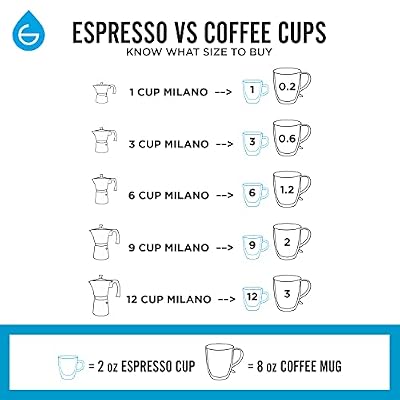
GROSCHE Milano Stovetop Espresso Maker Moka Pot 3 espresso Cup, 5 oz Red | Cuban Coffee Maker And Italian Moka Pot For Stovetop Espresso; For Gas, Electric, And Propane Stoves With A Soft-Touch Handle




As an Amazon Associate we earn from qualifying purchases. Product prices and availability are accurate as of the date/time indicated.
Cuisinox Roma Stainless Moka Pot
- Stainless steel — induction compatible, dishwasher-safe
- More neutral flavor than aluminum (no metallic note)
- Durable enough for daily use over many years

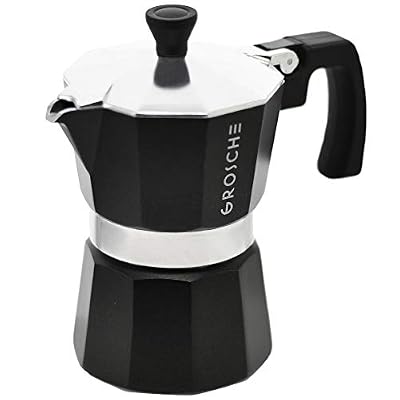
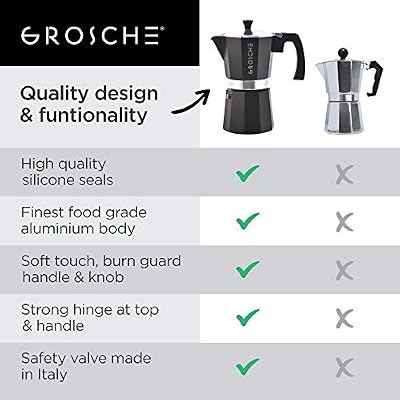
GROSCHE Milano Stovetop Espresso Maker Moka Pot 3 espresso Cup, 5 oz Black | Cuban Coffee Maker And Italian Moka Pot For Stovetop Espresso; For Gas, Electric, And Propane Stoves With A Soft-Touch Handle




As an Amazon Associate we earn from qualifying purchases. Product prices and availability are accurate as of the date/time indicated.
Why Trust Our Picks
We’ve brewed moka pot coffee daily across gas, electric, and induction cooktops — the three surfaces that produce meaningfully different results. We also consulted with Italian home coffee culture perspectives, where the moka pot has been a kitchen fixture for nearly a century.
As an Amazon Associate we earn from qualifying purchases.



Individual Reviews
Bialetti Moka Express 6-Cup — Best Overall
Alfonso Bialetti designed the original Moka Express in 1933, based on the principle of a laundry boiler that circulated soapy water through clothes via steam pressure. The design — an octagonal aluminum body with a patented safety valve and a distinctive mustachioed man logo — has remained essentially unchanged for over 90 years. This is not nostalgia preservation; it’s because the design genuinely works. The thick aluminum walls distribute heat evenly; the gasket and filter plate seal reliably without over-tightening; the 6-cup size (producing roughly 240ml of concentrated coffee, enough for two long drinks or four small Italian-style cups) is the most practical for household use. The Bialetti Moka Express is also the reference standard against which every other moka pot design is measured — which matters when following the extensive recipe community that has grown around it.
- Pros: original proven design, multiple sizes, patented safety valve, widely available parts and gaskets, affordable
- Cons: aluminum requires hand-washing and occasional re-seasoning, not induction compatible, slight metallic taste until broken in
Bialetti Brikka 4-Cup — Runner-Up
The Brikka is Bialetti’s engineering answer to a real limitation of standard moka pots: pressure. A standard moka pot operates at around 1.5 bar — enough to produce concentrated coffee, but well below espresso’s 9 bar. The Brikka adds a weighted pressure valve at the top of the upper chamber, which allows pressure to build higher before coffee begins flowing — producing a denser, more textured coffee with a thin layer of crema on top that no standard moka pot can replicate. It’s genuinely different from a Moka Express, and for anyone who drinks their moka pot coffee straight (rather than diluted), the Brikka’s texture is noticeably more satisfying. Available only in 2-cup and 4-cup sizes; the pressure valve mechanism requires more attention to heat management than the standard pot.
- Pros: higher pressure produces crema, richer texture than standard moka, still Bialetti quality construction
- Cons: limited size options, more heat-sensitive than Moka Express, premium price, not for milk-diluted drinks
Cuisinox Roma Stainless Moka Pot — Best Budget Stainless
Stainless steel moka pots solve the two main practical complaints about aluminum: they’re dishwasher-safe and induction-compatible. The Cuisinox Roma adds a slightly more neutral flavor profile — aluminum moka pots have a subtle metallic character that fades with use but never completely disappears, while stainless produces cleaner-tasting coffee. The Roma is also more durable under rough handling — stainless doesn’t pit or corrode with acidic coffee contact over time the way aluminum can. The trade-off is that stainless heats slightly less evenly than thick aluminum, which makes low-and-slow heat management more important. For induction cooktop users, this is essentially the only practical choice.
- Pros: induction compatible, dishwasher-safe, neutral flavor, durable stainless construction
- Cons: uneven heating requires more careful technique, heavier than aluminum, pricier than comparable aluminum options
Fellow Stovetop Espresso Maker (Monty) — Design-Forward Option
Fellow’s Monty is the moka pot for people who find the Bialetti’s 1930s aesthetics charming but want something that matches a modern kitchen. Beyond the matte finish and pour-spout design, the Monty has a wider base for better heat distribution and a built-in pressure gauge — a legitimately useful feature that takes the guesswork out of heat management. The gauge confirms when pressure is in the optimal range, eliminating the main source of moka pot failure (too-high heat producing bitter over-extracted coffee). The premium price is significant; the brewing results are comparable to the Brikka rather than the standard Moka Express.
- Pros: built-in pressure gauge, wide base for heat distribution, modern aesthetics, pour spout design
- Cons: premium price, pressure gauge adds complexity, smaller community of recipe resources
Buyer’s Guide: Moka Pot Technique and Selection
Size selection determines yield, not serving count. A “6-cup” moka pot produces roughly 240ml of coffee — what Italians call six demitasse servings. For Western-style drinking (larger cups, often diluted with water or milk), a 6-cup makes two generous servings. A 3-cup makes one. The catch: moka pots brew best when filled to capacity — a half-filled 6-cup produces worse coffee than a full 3-cup. Buy the size that matches your typical serving count.
The most common mistake: too much heat. High heat pushes water through the coffee puck too rapidly, producing under-extracted, bitter coffee with a harsh finish. Low to medium heat, with the lid open during brewing, allows you to monitor the flow and remove the pot from heat the moment the gurgling sound begins — before the steam and air produce that characteristic bitter spray. The difference between a good moka pot and a terrible one is often just heat management.
Grind size matters significantly. Coarser than espresso, finer than drip — roughly the texture of fine sand. Too fine a grind clogs the filter plate and produces bitter, slow extraction; too coarse produces watery, under-extracted coffee. Many specialty coffee grinders have a “moka pot” setting as reference.
Pre-heating the water. Starting with hot water (from a kettle, not cold from the tap) reduces the time the lower chamber spends at temperature — which reduces heat transfer to the coffee grounds in the filter basket before extraction begins. This single technique change improves moka pot coffee noticeably and is standard practice among Italian home brewers.
FAQ
Is moka pot coffee actually espresso?
No — espresso requires 9 bars of pressure; a moka pot produces approximately 1.5 bars. The resulting coffee is more concentrated than drip but less dense than espresso, with different flavor chemistry. It’s its own category, best appreciated on its own terms rather than as a cheaper espresso substitute.
How do I stop moka pot coffee from tasting bitter?
The three most common causes of bitterness: too-high heat, too-fine a grind, and letting the pot continue past the point where coffee stops flowing (the steam-sputtering phase adds bitter compounds). Pre-heat water, use medium-low heat, and remove from the burner at the first sign of sputtering.
How often do I need to replace the gasket?
Roughly every 1–2 years with daily use. Signs of gasket failure: coffee leaking from the seam between upper and lower chambers, requiring increasing torque to seal. Replacement gaskets for Bialetti pots are inexpensive and widely available — it’s one of the maintenance advantages of buying from the dominant brand.
Can I use a moka pot on an induction cooktop?
Only if the pot is made from magnetic stainless steel. Standard Bialetti aluminum pots are not induction-compatible. Bialetti makes a stainless Moka Induction line; third-party stainless options like the Cuisinox Roma also work. Always verify before buying.
Should I tamp the coffee in a moka pot like an espresso machine?
No — tamping creates too much resistance for the lower pressure a moka pot generates, resulting in slow extraction and bitter coffee. Fill the basket level (not heaping), give it a gentle settle, and leave it untamped. The water needs to flow through at its natural pace.
Final Verdict
The Bialetti Moka Express 6-Cup remains the right starting point for almost everyone — 90 years of refinement, a thriving parts ecosystem, and a price that makes it a genuinely low-risk purchase. If you drink your moka pot coffee straight and want a richer, creamier texture, upgrade to the Bialetti Brikka — the pressure valve delivers a meaningfully different experience that justifies the premium. Induction cooktop users should look to the Cuisinox Roma as their practical baseline. Whatever pot you choose, the technique matters more than the equipment — master low-heat, pre-heated water brewing and you’ll produce better coffee than anything that comes out of a pod machine at ten times the price.
Frequently Asked Questions
Does a moka pot make real espresso?
Not by the technical definition. A moka pot builds roughly 1 to 2 bar of steam pressure, while espresso is extracted around 9 bar. What you get is a strong, syrupy concentrate somewhere between espresso and very strong filter coffee. It works beautifully in milk drinks and costs a fraction of an espresso machine.
What grind size should I use?
Go finer than filter but noticeably coarser than espresso, roughly like fine sand. Espresso fine grounds choke the low pressure and force water to leak from the safety valve. Fill the basket level and do not tamp; the puck should be loose so water can pass through the whole bed rather than punching one channel.
Why does my moka coffee taste bitter or burnt?
Almost always too much heat for too long. Use a medium or medium low flame, fill the base with preheated water to just below the safety valve, and take the pot off the heat as soon as you hear the gurgle begin. Cooling the base under a tap stops extraction instantly and prevents the last scalded drops.
Aluminium or stainless, and what about induction?
Classic aluminium conducts heat fast and is light and cheap, but it reacts with acidic descalers and should never go in the dishwasher. Stainless is more durable, easier to clean and, crucially, is the only one that works on induction hobs unless you buy an aluminium pot with a bonded steel base or use an induction adapter plate.
How should I clean it?
Rinse all three parts with hot water and dry them thoroughly, especially the base. Avoid detergent on aluminium, which strips the seasoning and leaves a metallic taste. Check the rubber gasket and the funnel filter plate each time, clear the safety valve with a pin occasionally, and replace the gasket roughly once a year or when it stiffens.