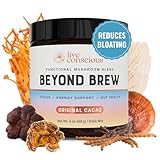
- Top Pick: Live Conscious Beyond Brew – Coffee Alternative – Low Caffeine – Mushroom Complex w/Lion’s Mane, Reishi, Cordyceps & Chaga for Sustained Focus, Energy & Immunity – w/Prebiotics & Probiotics – 30
- Best Value: Earth Superfood Brew Coffee, Erth Mushroom Coffee, 7.05 oz
- Premium Choice: Earth Superfood Brew Coffee – Mushroom Coffee, with Collagen Mushroom Ashwagandha, Smooth Daily Energy and Focus Blend, 8.07 Oz
Last updated: October 21, 2026
Mushroom coffee has moved from a niche wellness trend to a regular fixture on kitchen shelves, and for good reason. By blending ground or instant coffee with extracts of functional mushrooms like lion’s mane, chaga, cordyceps, and reishi, these products promise the ritual and flavor of coffee with a gentler caffeine curve. If you have been curious about which mushroom coffee actually tastes good and brews well at home, this guide compares the brands worth your money.
We focused on widely available, well-reviewed blends that you can brew with equipment you already own, whether that is a drip machine, a French press, or just a mug and a kettle. Below you will find a quick product box, our top picks with honest notes, and a buying guide to help you match a blend to your taste and goals.
As an Amazon Associate we earn from qualifying purchases at no extra cost to you.


Quick Comparison
| Product | Brand | Price | Rating |
|---|---|---|---|
| Four Sigmatic Organic Focus Mushroom Ground Coffee | Da… | — | $16.99 | 4.4/5 |
| RYZE SUPERFOODS Mushroom Medium Roast Coffee USDA Organ… | RYZESUPERFOODS | $44.99 | 4.3/5 |
| Everyday Dose Premium Adaptogenic Mushroom Coffee with … | EverydayDose | $39.99 | 4.5/5 |
| OM MUSHROOM SUPERFOOD Coffee Latte Blend – Functional M… | OmMushroom | $26.22 | 4.2/5 |
| MUDWTR Original Mushroom Coffee Alternative | 2 | MUDWTR | $49.99 | 3.8/5 |
Top Picks
See also: 4 Best Coffee Beans for Iced Coffee (October 2026) Honest Reviews • Instant Espresso Brands Ranked
Four Sigmatic Organic Focus Mushroom Ground Coffee
Four Sigmatic helped launch the entire category, and its Focus ground coffee remains a benchmark. It pairs real organic arabica with lion’s mane and chaga, so it brews exactly like normal coffee in a drip machine or French press. The flavor is closer to a standard medium-dark roast than most rivals, which makes it an easy first step for skeptics.
RYZE Superfoods Mushroom Medium Roast Coffee
RYZE is an instant blend built around six adaptogenic mushrooms, including lion’s mane and turkey tail, plus MCT for a creamier cup. Because it is instant, you simply stir it into hot water, which makes it the most travel-friendly option here. The roast is mild and earthy, and the per-serving caffeine sits comfortably below a strong drip coffee.
Everyday Dose Mushroom Coffee
Everyday Dose leans into the “calm energy” angle by combining a coffee extract with lion’s mane, chaga, collagen, and L-theanine. The added L-theanine is meant to smooth out caffeine jitters, and the collagen gives the cup a fuller body. It is a strong pick if you want reduced caffeine without losing the feeling of a real coffee.
Om Mushroom Superfood Coffee Latte Blend
Om grows and mills its own mushrooms, and its latte blend is designed to be creamy straight from the canister with no separate frothing required. With lion’s mane, cordyceps, reishi, and chaga, it is the most “treat-like” option, closer to a sweetened latte mix than a black coffee. It suits anyone who normally drinks milky coffee drinks.
MUD\WTR :rise Original
MUD\WTR is the outlier: it is technically a coffee alternative built on masala chai, cacao, and adaptogenic mushrooms with only a small amount of caffeine from tea. If your main goal is to cut caffeine dramatically while keeping a warm, spiced morning ritual, this is the boldest choice. The flavor is rich and chai-forward rather than coffee-forward.
What to Look For in Mushroom Coffee
The first decision is format. Ground blends like Four Sigmatic brew in your normal machine and taste most like traditional coffee. Instant blends like RYZE and Everyday Dose dissolve in hot water for speed and portability. Latte-style powders like Om are pre-sweetened and creamy. Match the format to how you actually make coffee each morning.
Next, look at the mushrooms used. Lion’s mane is the most common and is associated with focus, while cordyceps is linked to energy, reishi to relaxation, and chaga to antioxidant support. Most quality blends list both the mushroom and whether they use fruiting-body extracts, which are generally considered more potent than mycelium grown on grain.
How to Choose Based on Caffeine
One of the main reasons people switch is caffeine reduction. A blend like Four Sigmatic Focus uses real coffee, so it carries a normal-ish caffeine load, while Everyday Dose and MUD\WTR are formulated specifically to lower it. If you are weaning down gradually, start with a real-coffee blend and move toward the lower-caffeine alternatives. For more on the research behind these claims, see our overview of mushroom coffee benefits and what the science says.
Taste matters just as much as function. If you usually drink your coffee with milk, a latte-style blend or an oat-milk pairing will feel familiar; our guide to oat milk coffee drinks pairs well with creamier mushroom blends.
Who Mushroom Coffee Is For
Mushroom coffee is a good fit if you love coffee but find that a full cup leaves you jittery or disrupts your sleep, or if you simply want to add functional ingredients to a ritual you already enjoy. It is not a magic bullet, and the functional doses vary widely between brands, so treat it as a pleasant upgrade rather than a supplement. If you enjoy experimenting with coffee at home, you might also like building drinks such as homemade cold foam coffee, a whipped (Dalgona) coffee, or a classic affogato using your favorite blend.
Frequently Asked Questions
Does mushroom coffee taste like mushrooms?
Generally no. The mushrooms used are extracts with mild, earthy notes rather than the savory flavor of cooking mushrooms. Coffee-based blends taste like coffee with a slightly earthier finish, while chai-style alternatives taste spiced rather than fungal.
Does mushroom coffee have caffeine?
It depends on the blend. Real-coffee products contain normal caffeine, instant coffee blends typically contain a moderate amount, and dedicated alternatives can have only a fraction of a regular cup. Always check the label if caffeine sensitivity is your reason for switching.
Can I brew mushroom coffee in my regular coffee maker?
Ground blends like Four Sigmatic brew exactly like standard coffee in a drip machine, French press, or pour-over. Instant and latte-style powders are meant to be stirred into hot water or milk instead, so they do not go through the brewer.
Is mushroom coffee actually good for you?
Functional mushrooms have a body of supporting research, but doses in coffee blends vary and are often smaller than in dedicated supplements. Most people drink it for the lower caffeine and the ritual rather than expecting dramatic health effects.
How much mushroom coffee can I drink per day?
For most people one to two servings a day is reasonable, similar to normal coffee. If a blend contains real coffee, treat its caffeine like any other cup and avoid drinking it too late in the day.