Last updated: October 2, 2026
When people search for “machine a cafe barista,” they usually mean one thing: a home machine that can pull a real espresso and steam milk like a cafe, not just make strong coffee. The term covers everything from entry-level semi-automatics to high-end bean-to-cup automatics, and the right choice depends entirely on how much hands-on work you actually want to do every morning.
Quick answer: Our top pick in 2026 is the Semi-automatic — our #1 rated choice. See the full ranked comparison, alternatives and buying advice below.
What “machine a cafe barista” actually means
In stores, the label is used loosely. It can mean a manual lever machine, a semi-automatic with a portafilter, or a fully automatic machine that grinds, tamps and brews at the push of a button. What they have in common is pressure: a true barista machine brews at around 9 bars to extract espresso, then has a way to texture milk for cappuccino and latte.
That is different from a filter coffee maker, a French press, or a pod machine that uses pressurized capsules. Those can make good coffee, but they do not give you control over grind, dose, and extraction time, which is where barista-style results come from. If your goal is cafe-style espresso at home, you need a machine built for espresso first, with milk steaming second.
The 3 main types of barista machines for home
See also: Breville Bench Saver • Rocket Espresso Coffee Machine
1. Semi-automatic (with portafilter)
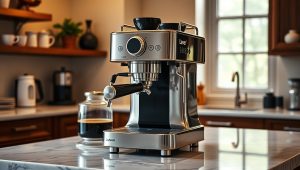
This is the classic barista machine. You grind the beans, dose and tamp the coffee into the portafilter, then start and stop the shot yourself. The machine controls water temperature and pressure. You control everything else.
Trade-off: You get the best control and the best potential shot quality for the money, but you have to learn to dial in. Expect wasted coffee for the first week, and inconsistent shots until your grind and technique are stable. You also need a decent grinder. The built-in grinders on the cheapest machines are usually stepped, inconsistent, and hard to keep dialed in. A separate espresso grinder for home is often a better long-term investment than spending more on the machine itself.
Who it suits: People who enjoy the process and want to improve over time. Not ideal if you need to make 4 milk drinks quickly before work.
2. Automatic bean-to-cup
These grind, tamp, brew and often froth milk automatically. You fill the bean hopper and water tank, press a button for espresso, cappuccino or latte, and the machine does the rest. High-end models remember profiles, adjust dose automatically, and clean themselves.
Trade-off: Convenience is excellent and shot-to-shot consistency is high, but you lose fine control. You cannot easily adjust pre-infusion or experiment with light roasts that need precise extraction. Repairs are more expensive because of the integrated grinder and milk circuit. When the grinder fails, the whole machine is down.
Who it suits: Households where different people want different drinks with no learning curve, or anyone who values speed and repeatability over tinkering.
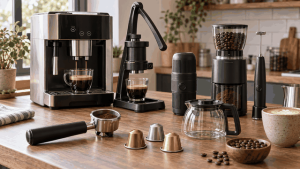
3. Manual lever and prosumer machines
These include manual lever presses and larger prosumer machines with E61 groups, PID temperature control and powerful steam boilers. They offer the most stable temperature and steam power in a home setting.
Trade-off: They take up more counter space, need 15-25 minutes to heat up unless they have a fast-heating thermoblock, and require more cleaning and maintenance. Steam power is excellent, but you need to learn to purge, temperature surf, or manage the PID correctly.
Who it suits: Enthusiasts who already have a good grinder and want cafe-level control at home. Overkill if you drink one flat white in the morning and do not want to maintain a more complex machine.
Comparison: what you actually get
| Type | Hands-on time per drink | Milk quality | Consistency | Main failure modes |
|---|---|---|---|---|
| Semi-automatic | 3-5 minutes | Excellent if you learn to steam, poor if you don’t | Low at first, high once dialed in | Grinder wear, solenoid valve clogging, gasket wear on group head |
| Automatic bean-to-cup | 45-90 seconds | Good and automatic, less microfoam control | High | Milk circuit blockages, grinder jams from oily beans, brew unit scaling |
| Prosumer / Lever | 4-7 minutes incl. heat-up | Cafe-level steam power | Very high with good technique | Scale in boiler, PID sensor failure, lever seals |
If you are deciding between semi-automatic and automatic, ask yourself this: do you want to *make* espresso or *have* espresso? Both are valid. Many buyers choose a semi-automatic thinking they want control, then get frustrated by the routine. Be honest about your morning patience.
What matters when buying a machine a cafe barista
Grinder matters more than the machine. A 300 dollar machine with a good grinder will out-extract a 700 dollar machine with a poor grinder. Look for a burr grinder with fine adjustment, not a blade grinder. If you buy a semi-automatic without a built-in grinder, budget for one separately.
Heating system. Single thermoblock machines heat quickly but often have weak, inconsistent steam. Single boiler machines make better espresso but you have to wait between brewing and steaming. Heat-exchanger and dual-boiler systems let you brew and steam at the same time, but they cost and weigh more. For one or two milk drinks in a row, a good thermoblock is fine. For back-to-back lattes for guests, it will frustrate you.
Portafilter size and availability. 58mm is the standard. It gives you access to cheap, plentiful accessories like precision baskets, tampers and distribution tools. 54mm and smaller systems work, but your upgrade path is narrower.
Water and descaling. Hard water is the number one killer of home espresso machines. No matter which type you buy, use filtered water and descale on schedule. Automatic machines often lock up with a descaling warning you cannot bypass. Semi-automatics will just slowly lose temperature and flow until the boiler is scaled shut. Neither is cheap to fix.
Cleaning effort. Semi-automatics need a quick backflush and wipe after each session and a chemical backflush weekly if you use them daily. Automatics need the brew unit rinsed weekly and the milk system flushed daily or it will smell and clog. If you will not clean a milk tube every day, choose a machine with a simple manual steam wand rather than an auto-frother.
Who should buy what
On a tight budget but curious: A basic entry-level semi-automatic is fine to learn on. You will not get perfect temperature stability, and the included pressurized basket is more forgiving but also limits flavor. That is okay for starting out. Spend the savings on fresh beans and a proper tamper. You can make genuinely good drinks this way and decide later if you want to upgrade.
Busy household, multiple drinkers: An automatic bean-to-cup machine is the pragmatic pick. Look at well-reviewed automatic bean to cup coffee machines with a removable brew unit and a milk carafe you can refrigerate. The cheaper option with fewer drink presets is often fine if you only drink espresso and cappuccino; you are paying mostly for touchscreens and profiles you may not use.
Hobbyist who wants to improve: Choose from the range of semi-automatic espresso machines with a PID, 58mm portafilter, and a separate grinder. This setup holds its value, is easier to repair, and lets you grow into better beans and technique. It is the only path if you want to chase lighter roasts and nuanced extraction.
A common mistake is buying a prosumer dual-boiler as a first machine. It will not fix bad grinding or stale beans. Start where your skills are, not where you hope they will be in a year.
Maintenance and real-world longevity
Most home barista machines last 5-8 years with regular care, less with hard water and no descaling. Check these failure points before you buy:
Gaskets and screens: The group gasket that seals the portafilter hardens and leaks after 12-18 months of daily use. It is a cheap part, but on some compact machines it is fiddly to replace.
Steam wand: Wands with many small holes clog faster if you do not purge and wipe after every use. A single-hole wand is slower but easier to keep clean.
Grinder burrs: On integrated grinders, burrs dull after 300-500 kg of coffee. You will notice you have to grind finer and finer to get the same flow. Replacement burrs are available for good brands, not for the cheapest ones.
Electronics: Automatics have more boards and sensors. A milk temperature sensor or flow meter failure will disable the machine until serviced. Simpler semi-automatics have less to break.
When comparing models, check whether gaskets, shower screens and water filters are readily available. If you cannot buy spares easily, that is a red flag for long-term ownership.
FAQ
Do I need a separate grinder for a machine a cafe barista?
For any semi-automatic or lever machine, yes, if you want consistent espresso. Pre-ground coffee goes stale in minutes for espresso purposes and you cannot adjust grind size to fix a fast or slow shot. For automatic bean-to-cup machines, the built-in grinder is part of the design and no separate grinder is needed.
Why does my espresso taste bitter or sour even on a new machine?
It is almost always grind and dose, not the machine. Sour usually means under-extraction: grind finer or increase dose slightly. Bitter usually means over-extraction: grind coarser or shorten the shot. Water temperature and fresh beans roasted within the last 2-4 weeks matter more than machine price.
Is a cheap barista machine a waste of money?
Not necessarily. A cheap semi-automatic with a pressurized basket can make decent milk drinks and teach you the basics. Where cheap machines fall short is temperature stability, steam power and durability. If you know you will drink espresso daily for years, investing in better temperature control and a better grinder pays off. If you are testing the hobby, the cheaper option is fine.
How important is descaling really?
Very important. Scale insulates the boiler, reduces flow, and eventually blocks valves. Use low-mineral filtered water and follow the manufacturer’s descaling interval. If your water is hard, a simple water hardness test strip can tell you how often you need to act. This matters more than any accessory for keeping the machine alive.
Ready to decide? Our #1 pick for 2026 is the Semi-automatic.
Live price & availability on Amazon.