Last updated: October 2, 2026
Quick answer: Our top pick in 2026 is the Semi-automatic (portafilter + wand) — our #1 rated choice. See the full ranked comparison, alternatives and buying advice below.
What “Barista Style” Actually Means at Home
“Barista style” is marketing shorthand, but it points to a specific set of features: a portafilter, 9+ bars of pressure, the ability to steam milk to microfoam, and enough manual control to pull a real espresso shot. It does not mean the machine will automatically make cafe-quality drinks. It means you get the same tools a barista uses, with the same learning curve.
On home machines, this usually translates to one of three things: a manual/semi-automatic espresso machine with a steam wand, a super-automatic that grinds, tamps and brews at the push of a button, or a high-end pod system that tries to mimic espresso. Only the first two can produce true espresso with crema. The third makes strong coffee that looks similar but lacks the extraction pressure and freshness.
If you want to learn latte art, control dose and yield, or dial in single-origin beans, you want the manual route. If you want a flat white before work with minimal effort, you want automation. Both can be called “barista style” on the box, so ignore the label and look at the mechanism.
The 3 Types Worth Considering
See also: Breville Bench Saver • Rocket Espresso Coffee Machine
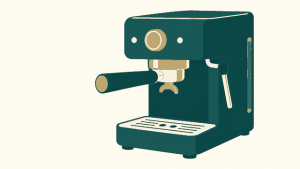
1. Semi-automatic with portafilter and steam wand. This is the classic home barista machine. You grind, dose, tamp, and start/stop the shot. A separate wand steams milk. Entry level is around $150-$300, competent mid-range is $400-$750. This type gives you the most control and the best ceiling for quality, but also the most ways to make a bad shot while you learn.
2. Automatic and super-automatic. These grind, dose, tamp, and brew for you, and many have an automatic milk carafe. You press “latte” and get a latte. The trade-off is less control and more internal parts that can fail. Good ones cost $600-$1,500+ and need regular cleaning cycles. They suit households where two people want milk drinks quickly and no one wants to learn to tamp.
3. Lever and manual press machines. Hand-lever or piston machines generate pressure manually, no pump. They are compact, durable, and can make excellent espresso once you master the technique. They do not steam milk unless paired with a separate frother. Best for purists, small kitchens, or as a second machine.
What you can safely skip: most “barista style” drip machines or pod machines that claim to do espresso and drip coffee in one unit. They compromise on both. A cheaper separate drip brewer plus a dedicated espresso machine will outperform them every time.
What Actually Determines Quality
The machine matters less than people think. Three things matter more than brand:
Grinder. An inconsistent grinder will make even a $1,000 machine pull sour or bitter shots. If your budget is $500 total, spend $200 on a decent burr grinder and $300 on the machine, not the other way around. Built-in grinders on super-automatics are convenient but harder to service and often a step behind a standalone grinder at the same price.
Temperature stability. Cheap thermoblock machines swing 10-15°F during extraction. That is enough to make your shots inconsistent. Look for PID temperature control if you care about repeatability. It is not essential for milk drinks where milk masks flaws, but it matters for straight espresso.
Steam power. A weak wand makes large, soapy bubbles. You want dry steam that can create true microfoam – that wet-paint texture that pours. Single-boiler machines make you wait between brewing and steaming. Heat-exchange or dual-boiler systems let you do both at once, but they cost more and take longer to heat. If you make one latte at a time, waiting 30 seconds is not a real problem. If you make four back-to-back, it is.
Comparison: Which Format Fits You
| Type | Learning Curve | Drink Quality Ceiling | Speed on Busy Mornings | Maintenance / Failure Points |
|---|---|---|---|---|
| Semi-automatic (portafilter + wand) | High – 2-4 weeks to get consistent | Very high if paired with good grinder | Slow – 3-5 min per drink | Group gasket, wand tip, descaling. Few electronics to fail. |
| Super-automatic | Low – dial in by menu | Good, but capped. Less control over shot | Fast – 60-90 seconds, one button | Brew group, grinder, milk circuit. Needs frequent auto-clean and descaling. |
| Manual lever / press | Very high – technique sensitive | Excellent for espresso, no milk without add-on | Slow – manual preheat and press | Very simple. Seals and gaskets only. Lasts years. |
| Pod “espresso” | None | Low – thin crema, stale coffee | Fastest | Pod waste, descaling. Pump failures common on cheap units. |
If you mainly drink cappuccinos and lattes, prioritize steam quality and workflow over absolute shot perfection. If you drink straight espresso or Americanos, prioritize temperature stability and a good grinder.
Who Should Buy What
For the learner who wants to get good: A semi-automatic with a 58mm portafilter, single boiler with PID, and a proper steam wand. You will waste coffee at first and you will need to learn to distribution and tamp. That is normal. This setup rewards you with better drinks than any super-automatic once you are consistent. Look at a semi automatic espresso machine with PID paired with a separate burr grinder rather than a bundle with a pressurized basket.
For the busy household: A super-automatic with a removable brew group and automatic milk system. It will not teach you barista skills, but it will make two lattes without a mess while you pack lunches. Be realistic: milk carafes need daily rinsing or they clog and smell. If you will not clean it, you will hate it in three months. Choose one with a dishwasher-safe milk circuit.
For small budgets or small kitchens: The cheaper option is often fine. A basic manual espresso machine with milk frother in the $150-$250 range can make genuinely good milk drinks if you use fresh beans and a decent hand grinder. Where it cuts corners is temperature control and steam recovery – you will need to temperature surf (run a little water before pulling the shot) and wait between brewing and steaming. If you only make one or two drinks a day, that trade-off saves you hundreds.
For the espresso purist: A manual lever plus a standalone electric milk frother for latte art if you need milk. You get quiet operation, no pump noise, and a machine that will not become obsolete. Workflow is slower and there is no steaming on most models, but extraction quality for the price is hard to beat.
Common Failure Modes to Plan For
Every barista-style machine needs descaling if you have hard water. Skip it and the thermoblock or boiler clogs, pressure drops, and repair costs more than the machine was worth. Use filtered water and descale on schedule, not when the light finally comes on.
On semi-automatics, the first failure is usually the portafilter gasket. Shots start leaking around the edges. It is a $10-$15 part and takes five minutes to replace. Buy a spare when you buy the machine.
On super-automatics, the brew group jams or the grinder blocks if you use oily, dark-roast beans or flavored beans. The manual will warn against them for a reason. The internal grinder is also the most expensive part to replace, and it is not user-serviceable on many models.
Steam wands with auto-frothing sleeves clog if milk is not purged immediately after use. Always purge and wipe. If you want longevity, a classic single-hole tip is easier to clean than a plastic auto-frother.
Finally, grinder wear. Cheap grinders with blade or false-burr designs produce fines and boulders, which leads to channeling and bitter/sour shots no matter what you do. If your shots always taste off and flow too fast or too slow despite adjusting, the grinder is the problem, not the machine.
A Quick Checklist Before You Buy
Check these specs, not the marketing copy: portafilter size (58mm is standard and has more accessories), boiler type (single boiler vs. thermoblock vs. heat exchange), PID or not, steam wand type (panarello/auto vs. pro single-hole), water tank vs. direct plumb, and whether the drip tray and brew group are removable for cleaning. Also measure counter height – many machines with the lid open for refilling do not fit under cabinets.
If you can, budget for accessories: a 0.1g scale, a proper tamper that fits your basket, and a milk jug. They matter more than a fancy tamper mat or distribution tool.
FAQ
Do I need a separate grinder for barista-style coffee?
Yes, if you buy a semi-automatic or lever machine. Pre-ground coffee is too inconsistent and goes stale too fast for real espresso. A good burr grinder is the single biggest upgrade. With a super-automatic, the built-in grinder is part of the system and a separate grinder is not needed.
Is a dual boiler worth it at home?
Only if you make multiple milk drinks back-to-back or you are sensitive to shot consistency. For one or two lattes a day, a single boiler with PID or a good thermoblock is sufficient and heats faster. Dual boilers cost more, use more power, and need more descaling.
Why do my shots taste sour even though the machine is expensive?
Usually grind too coarse, dose too low, or water too cool. Sour means under-extracted. Try a finer grind, a slightly higher dose, and make sure the machine is fully heated – at least 15-20 minutes for most boilers. If you use light roasts, they need hotter water and finer grinding than dark roasts.
Are barista-style machines hard to clean?
Semi-automatics need a quick backflush with water after each session and a detergent backflush every few weeks, plus descaling every 2-3 months depending on water hardness. Super-automatics automate some of this but need you to rinse the brew group weekly and clean the milk circuit daily. Both are manageable if you build it into the routine.
Ready to decide? Our #1 pick for 2026 is the Semi-automatic (portafilter + wand).
Live price & availability on Amazon.