- Top Pick: Keurig SimpleCafe Frother, Rechargeable Handheld Milk Frother for Lattes, Cappuccinos & Iced Coffee, USB Cord Included, Microwave-Safe Frothing Cup, Hot & Cold Foam Maker
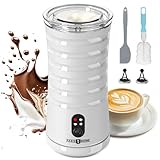
- Best Value: Milk Frother, Paris Rhône 4-in-1 Milk Frother and Steamer, Ergonomic Stylish Design, Hot & Cold Milk Steamer with Temperature Control, Auto Shut-Off Frother for Coffee, Latte, Cappuccino, Macchiato
- Premium Choice: SIMPLETASTE Milk Frother, 4-in-1 Electric Automatic Milk Steamer
Last updated: October 4, 2026
You don’t need a $2,000 espresso setup to pull off café-quality microfoam at home. The right handheld or electric frother can turn ordinary milk into silky foam for lattes, thick dollops for cappuccinos, or airy cold foam for iced drinks in under 60 seconds. The trick is matching the tool to the drink you actually make most often.
Below we break down how milk frothing works, what separates a good frother from a mediocre one, and which features actually matter once you’re standing in your kitchen at 6 a.m. wanting foam that doesn’t collapse by the time it hits your cup.
As an Amazon Associate we earn from qualifying purchases at no extra cost to you.



⚡ Save on Your Next PC — Amazon Prime
Prime members get fast free shipping on the systems above, plus early access to Prime Day & Black Friday PC deals. New members get a 30-day free trial.
- Watch: How to Froth Milk for Lattes and Cappuccinos Without an Espresso Machine — Video Review
- How Milk Frothing Actually Works
- Choosing the Right Milk
- Handheld Frothers vs. Automatic Steamers
- Key Features to Compare
- Getting Café-Style Results at Home
- Tips
- Frequently Asked Questions
- Conclusion
- Related Articles
- Related Guides
Watch: How to Froth Milk for Lattes and Cappuccinos Without an Espresso Machine — Video Review
How Milk Frothing Actually Works
See also: The Best Espresso Subscription Boxes for Coffee Aficionados • 8 Best Espresso Machines for Under $1000: Prosumer Powerhouses
Frothing introduces air into milk’s proteins and fats, creating a stable network of tiny bubbles. Heat helps this process along but isn’t strictly required, which is why cold foam has become so popular. There are two broad approaches at home:
- Handheld whisks: A motorized wand you plunge into a cup of milk, like the Keurig SimpleCafe Frother. Fast and cheap, but foam quality depends on technique.
- Automatic milk steamers: Enclosed pitchers with a built-in whisk disc and heating element, such as the Paris Rhône 4-in-1 or Instant Pot MagicFroth. These heat, froth, and shut off automatically, producing more consistent results with less effort.
Choosing the Right Milk
Milk choice matters more than the equipment in many cases. Whole milk and 2% froth easily because fat stabilizes bubbles, while skim milk froths taller but less creamy. Oat milk barista blends (look for ones with added gums) froth almost as well as dairy; almond milk is the hardest to stabilize.
- Whole milk: dense, creamy microfoam, ideal for lattes
- Skim milk: tallest foam volume, best for cappuccino-style caps
- Oat milk (barista edition): closest plant-based match to dairy
- Cold milk (34-38°F) froths more stably than room-temperature milk
Handheld Frothers vs. Automatic Steamers
Handheld wands like the Keurig SimpleCafe are compact, rechargeable via USB, and typically cost under $20. They’re great for one or two drinks a day but require you to heat the milk separately if you want it hot, usually in a microwave-safe cup or on the stove.
Automatic 4-in-1 or 9-in-1 steamers, including the Paris Rhône, both SIMPLETASTE models, the Instant Pot 4-in-1, and the Instant Pot MagicFroth, handle heating and frothing in one vessel. Most offer four modes: hot froth, cold froth, hot milk (no foam), and a warming-only setting, which covers lattes, cappuccinos, macchiatos, and hot chocolate without extra dishes.
- Handheld: $15-$25, best for singles, needs a separate cup and heat source
- Automatic: $30-$60, best for couples or daily use, one-touch and self-timing
Key Features to Compare
Not all 4-in-1 frothers are built the same. When comparing models like the SIMPLETASTE with LED touch screen versus the standard SIMPLETASTE, or the Instant Pot 4-in-1 versus the 9-in-1 MagicFroth, weigh these specs:
- Capacity: Most pitchers hold 10oz (295ml), enough for 2 lattes; the MagicFroth’s 17oz stainless pitcher handles larger batches or two full cappuccinos at once
- Material: Stainless steel pitchers (MagicFroth) resist staining better than nonstick coatings over years of use
- Controls: Touch screens (SIMPLETASTE LED model) offer precise mode selection versus simple dial or button controls
- Temperature control: The Paris Rhône lets you set exact temperature, useful if you’re sensitive to overly hot milk
- Auto shut-off: Standard on nearly all electric models now, preventing scorched milk if you walk away
Getting Café-Style Results at Home
Technique still matters even with automatic machines. Fill the pitcher to the marked line, not higher, since foam expands significantly as it whisks. For a handheld wand, tilt the cup slightly and keep the whisk head just below the surface for the first 10 seconds to incorporate air, then submerge deeper to heat and refine the texture.
- Use the whisk disc attachment for airy cappuccino foam, and swap to the flat stirrer disc for smooth hot chocolate or lighter latte foam
- Let foam rest 20-30 seconds before pouring so large bubbles collapse into finer microfoam
- Pour from a height of 1-2 inches and swirl the pitcher gently to layer foam on top of espresso or coffee
Tips
- Clean the whisk or disc immediately after use; dried milk protein is far harder to remove once it sets
- For cold foam, use the coldest milk in your fridge and the shortest froth cycle to avoid warming it
- Descale or wipe down heating elements monthly if you use an electric steamer daily
- Store handheld frothers charged; a weak motor produces coarse, uneven bubbles instead of fine foam
Frequently Asked Questions
Can a handheld frother heat milk on its own?
No. Handheld wands like the Keurig SimpleCafe only agitate milk; you need to heat it separately in a microwave or on the stove first if you want warm foam. Automatic steamers heat and froth in the same cycle.
What’s the difference between a 4-in-1 and 9-in-1 frother?
The number refers to preset modes. A 4-in-1 typically covers hot froth, cold froth, hot milk, and warm milk. A 9-in-1, like the Instant Pot MagicFroth, adds extra presets such as different foam densities or specific drink modes, giving more granular control over texture and temperature.
Why does my foam collapse quickly?
Foam collapses fast when milk is too warm before frothing starts, overfilled past the fill line, or low in fat. Start with cold milk, respect capacity markings, and use whole milk or a barista-blend alternative for longer-lasting foam.
Is stainless steel worth it over nonstick pitchers?
For daily use, yes. Stainless steel pitchers, like the one on the Instant Pot MagicFroth, resist scratching and staining over years, while nonstick coatings can wear down and affect frothing performance eventually.
Conclusion
For occasional lattes, a rechargeable handheld frother covers the basics cheaply and takes up almost no counter space. If you’re making multiple drinks daily or want consistent, hands-off results, an automatic 4-in-1 or 9-in-1 milk steamer pays for itself in convenience within a few weeks. Match the capacity and material to how much you actually froth, and the rest is just milk temperature and a little practice.