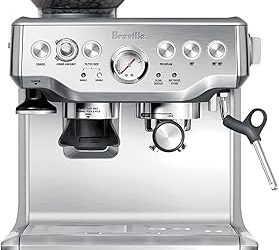
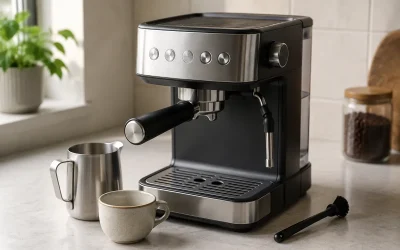
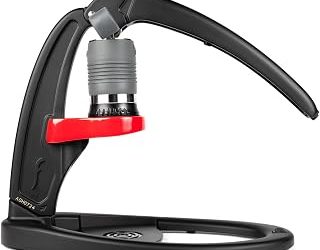
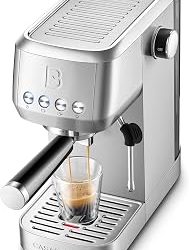
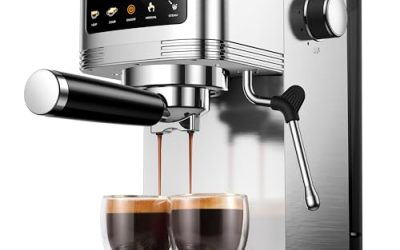
- Top Pick: AMZCHEF 20 Bar Home Espresso Coffee Machine
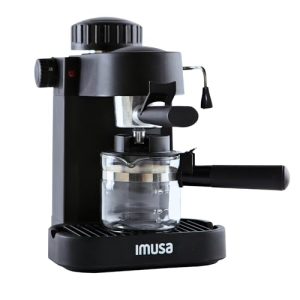
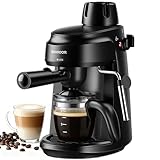
- Best Value: IMUSA 4 Cup Electric Espresso Cappuccino Coffee Maker, Black
- Premium Choice: SHARDOR 3.5 Bar Espresso Machine, Compact Expresso Coffee Machines for Home, 4-Cup Espresso Maker with Milk Frother for Cappuccino & Latte, Fast Heating System, Easy-to-Use, 800W, Black
Last updated: October 4, 2026
True espresso is defined by one thing a stovetop or French press can’t replicate on its own: 9 bars of pressure forcing hot water through finely packed coffee in under 30 seconds. Without that pressure, you can’t pull a textbook shot with thick crema, but you can get remarkably close using tools most kitchens already have, plus a few smart substitutions for the crema and microfoam.
This guide walks through the manual methods that get you 90% of the way to real espresso, then shows you where a compact home machine is worth the upgrade once you’re hooked. Either way, you’ll know exactly what to buy and why.
As an Amazon Associate we earn from qualifying purchases at no extra cost to you.



⚡ Save on Your Next PC — Amazon Prime
Prime members get fast free shipping on the systems above, plus early access to Prime Day & Black Friday PC deals. New members get a 30-day free trial.
- Watch: How to Make Perfect Espresso at Home Without a Machine — Video Review
- What “Espresso at Home” Really Means
- The Moka Pot Method
- The AeroPress Method
- Frothing Milk by Hand for Lattes and Cappuccinos
- When a Manual Method Isn’t Enough: Choosing Your First Machine
- Tips for Better Results Every Time
- Frequently Asked Questions
- Conclusion
- Related Articles
- Related Guides
Watch: How to Make Perfect Espresso at Home Without a Machine — Video Review
What “Espresso at Home” Really Means
See also: The Best Espresso Subscription Boxes for Coffee Aficionados • 8 Best Espresso Machines for Under $1000: Prosumer Powerhouses
Espresso isn’t a bean or a roast, it’s a brewing method: 1 to 2 ounces of water forced through 7-9 grams of finely ground coffee at roughly 195-205°F. Manual methods like the moka pot and AeroPress can’t hit true 9-bar pressure, but they produce a concentrated, syrupy shot that works in lattes, cappuccinos, and Americanos almost as well as the real thing.
- Moka pot: gets closest to authentic espresso flavor, uses steam pressure (about 1-1.5 bar)
- AeroPress: fastest, most forgiving, produces a clean concentrate with light crema
- French press “espresso”: strong but muddier, no crema, best as a backup
The Moka Pot Method
A moka pot (stovetop espresso maker) is the closest you’ll get to espresso without electricity or a pump. Use a fine grind, just coarser than true espresso grind, and fill the basket level without tamping.
- Fill the bottom chamber with hot water just below the safety valve
- Pack the filter basket level, don’t tamp like you would for a machine
- Heat on medium-low and remove from heat the moment coffee starts sputtering
- Expect a 3-4 minute brew time for a 3-cup pot
The AeroPress Method
For a faster, more consistent result, the AeroPress inverted method concentrates flavor almost as well as a moka pot with less bitterness risk. Use an 18g dose to 60ml of water (roughly a 1:3 ratio) for an espresso-style shot.
- Water temp: 195°F, off the boil by about 15 seconds
- Steep 1 minute, stir once at 30 seconds
- Press slowly over 20-30 seconds for maximum extraction
- Use a metal filter if you want more body and a touch of natural crema
Frothing Milk by Hand for Lattes and Cappuccinos
No steam wand doesn’t mean no microfoam. A French press, a handheld frother, or even a mason jar can get you close to café-quality foam for lattes and cappuccinos.
- Heat milk to 150-155°F, no hotter or it scalds and loses sweetness
- French press method: pour in warm milk, pump the plunger 30-40 times
- Handheld frother: 20-30 seconds tilted at an angle to pull in air
- Whole milk or barista-blend oat milk froths most reliably
When a Manual Method Isn’t Enough: Choosing Your First Machine
If you’re pulling shots daily, a manual method starts to feel like a chore, and that’s the point where a compact machine pays for itself in consistency. Entry-level pump machines like the AMZCHEF 20 Bar or the AERCANA Espresso Machine 20 Bar deliver genuine 9-bar extraction with a built-in milk frother, so you skip the hand-frothing step entirely. If budget or counter space is the priority, the IMUSA 4 Cup Electric Espresso Cappuccino Maker or the SHARDOR 3.5 Bar Espresso Machine are simpler, lower-pressure options that still outperform stovetop methods on convenience. For a steam-wand setup that mimics café technique, look at the RIOSKY Compact Espresso Machine, and if you want a heritage brand with dialed-in adjustable frothing, the De’Longhi Classic Signature Espresso Machine is a proven step up.
- Under 4 bar (IMUSA, SHARDOR): good for beginners, easier cleanup, less “true” crema
- 20 bar pump machines (AMZCHEF, AERCANA): closer to café pressure, better crema and body
- Steam wand models (RIOSKY, De’Longhi): best for anyone practicing latte art or microfoam texture
Tips for Better Results Every Time
- Grind fresh and fine, a blade grinder produces uneven particles that lead to sour or bitter shots
- Use filtered water, minerals in hard water affect extraction and can clog moka pots over time
- Preheat your cup, espresso and espresso-style shots cool fast in a cold vessel
- Dial in your ratio before blaming the method, start at 1:2 (coffee to water) and adjust by taste
Frequently Asked Questions
Can a French press really make espresso?
Not true espresso, but a strong, concentrated brew using a 1:5 ratio and a fine-ish grind gets close enough for milk drinks. It won’t produce crema since there’s no pressure involved.
Is a moka pot the same as espresso?
It’s close but technically different. A moka pot uses about 1-1.5 bar of steam pressure versus the 9 bar of a real espresso machine, so the shot is strong and rich but lacks the thick, persistent crema of true espresso.
Do I need a burr grinder for espresso-style brewing?
Yes, if you’re serious about it. Espresso requires a very fine, consistent grind that blade grinders can’t produce reliably. A basic burr grinder with a dedicated espresso setting is one of the best upgrades you can make before buying a machine.
When is it worth buying an actual espresso machine?
If you’re making more than one espresso-based drink a day, a compact machine like the AMZCHEF or AERCANA pays for itself in time and consistency within a few months compared to café visits, and gives you real 9-bar extraction that manual methods can’t match.
Conclusion
You don’t need a machine to enjoy something close to real espresso, a moka pot or AeroPress paired with a good grinder and hand-frothed milk will get you a satisfying daily cup. But once you notice yourself craving more consistency, better crema, or actual microfoam, a compact home machine is the natural next step, and there’s a solid option above for every budget and skill level.