Last updated: October 2, 2026
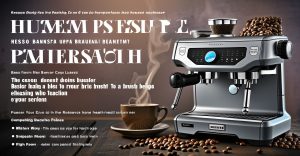
A Breville coffee machine with a built-in grinder is the most common way people step into real espresso at home. One footprint, one power cord, beans in at the top and a shot out the bottom. It works, and for a lot of kitchens it’s the right call. But the “all-in-one” part is also where the trade-offs hide, so it helps to know what you’re actually buying before you pick a model.
Why Breville Puts the Grinder in the Machine
Espresso is unforgiving about grind size and freshness. Pre-ground coffee goes stale in days, and the window between “too coarse” and “choked the pump” is narrow. Breville’s answer since the original Barista Express has been to bolt a conical burr grinder directly onto the machine, dose straight into the portafilter, and let you adjust grind size with a dial.
The practical upside: you learn the whole espresso workflow on one machine, and the grinder is calibrated to produce espresso-range grinds out of the box. The practical downside: you’re locked in. If the grinder dies, the whole unit goes in for service. If you outgrow the grinder, you can’t just upgrade it — you either use the grinder bypass with an external unit or replace the machine entirely.
The Main Options
See also: Best Espresso Grinders for Home: Burr Size, Workflow and Budget Matched • Breville Smart Grinder Espresso
Breville’s grinder-equipped lineup boils down to a few meaningful tiers. Names and specifics shift between regions, but the structure stays the same:
| Barista Express | Barista Pro | Barista Touch | |
|---|---|---|---|
| Heat-up | ~30 seconds (thermocoil) | ~3 seconds (ThermoJet) | ~3 seconds (ThermoJet) |
| Interface | Analog pressure gauge, buttons | LCD screen with shot timer | Touchscreen, saved drink presets |
| Steam wand | Manual, slower | Manual, more powerful | Auto-steam with set temperature/texture |
| Price tier | Lowest | Middle | Highest |
| Best for | Learners on a budget | Regular daily use | Milk-drink households |
The Barista Express is the veteran and still the best value. Its steam wand is slow — expect 45 seconds or more to texture milk — and the pressure gauge is more decorative than diagnostic once you know what you’re doing. But it makes genuinely good espresso, the grinder is adequate for espresso and decent for drip-range grinds, and replacement parts are everywhere because millions of them exist.
The Barista Pro fixes the two biggest Express complaints: heat-up time and shot feedback. The ThermoJet is ready almost instantly, and the screen shows grind time and shot timing, which actually helps you dial in rather than guessing. The steam wand is faster too. If you pull shots every morning, the Pro’s speed compounds into real time saved.
The Barista Touch adds automatic milk steaming with adjustable temperature and texture, plus saved drink profiles. It suits households where several people want different drinks, or where the buyer wants lattes without learning to steam milk. You pay a meaningful premium for that automation, and the touchscreen is one more thing that can fail.
Built-In Grinder vs. Buying Separately
This is the real decision. A machine like the Bambino (no grinder) paired with a standalone grinder often costs about the same as a Barista Express and can outperform it, because a dedicated grinder budget goes further when it’s not sharing space with a boiler and a pump.
The case for separate:
- A better grinder improves flavor more than a better machine at this price level.
- If one component breaks, you replace one component.
- You can upgrade either half independently later.
- Standalone grinders handle multiple brew methods better — pour over, French press, espresso — if you brew more than one way.
The case for all-in-one:
- One footprint. In a small kitchen this is not a minor thing.
- Simpler for beginners — the grind dial and dose funnel are designed to work together.
- Faster workflow: grind straight into the portafilter, no weighing and transferring.
- Often cheaper than a machine-plus-quality-grinder combo at the entry level.
If you go the separate route, a compact machine like the Bambino paired with something from the dedicated espresso grinder category is a combination that ages better than most all-in-ones. If you want the single-box solution, the Breville Barista Express remains the sensible starting point, and the Pro is worth the step up if speed matters to you.
What Actually Breaks
Knowing the common failure modes changes how you buy. On Breville’s grinder-equipped machines, the usual suspects are:
- Grinder jams. Oily dark-roast beans gum up the burrs and the chute. Running the grinder on a coarser setting occasionally and cleaning the burrs monthly prevents most of it. Very oily beans are genuinely bad for these machines — buy medium roasts or lighter.
- Scale buildup. The internal water paths scale up like any espresso machine. The machines prompt you to descale; ignore it long enough and you’re looking at a solenoid or thermoblock problem. Filtered water stretches the interval.
- Steam wand tip clogs. Milk residue in the tip holes. Purge after every use, every time.
- Wear on the water pump and seals. O-rings and gaskets are consumables. A group head gasket is a cheap part; learn to change it yourself.
Breville’s warranty is typically one year, and out-of-warranty repair on an all-in-one can approach half the cost of a new machine — one more argument for buying at the Express/Pro level rather than the top of the line, where repair economics get worse.
Who Each Setup Suits
Buy the Barista Express if you’re new to espresso, want to learn properly, and don’t want to overthink it. You’ll outgrow the grinder eventually if you get serious — but “eventually” is often three or four years, and by then you’ll know exactly what you want.
Buy the Barista Pro if you’re making coffee every day and the morning routine matters. The instant heat-up and shot timer are quality-of-life upgrades you feel daily.
Buy the Touch if milk drinks are the point and multiple people will use it. If you mostly drink straight espresso or Americanos, you’re paying for automation you won’t use.
Buy a separate machine and grinder if you already know you care about the coffee itself, you brew methods besides espresso, or counter space isn’t tight. It’s more fiddly upfront and a better platform long-term.
Skip all of this if you mostly want push-button lattes with zero learning. At that point a super-automatic espresso machine is the honest answer — different product, different person.
FAQ
Is the built-in grinder good enough for real espresso?
Yes, for medium roasts and typical home use. Where it struggles is very light roasts, which need finer and more consistent grinds than the internal burr set produces comfortably. If light-roast espresso is your goal, plan on a standalone grinder sooner rather than later.
Can I use oily or flavored beans?
You can, but you shouldn’t regularly. Oily beans coat the burrs and clog the dosing chute, which leads to jams and stale residue. Medium roasts with a dry surface are the safest bet for longevity.
How long does a Barista Express last?
With monthly cleaning and descaling, five to eight years of daily use is common. The grinder and pump usually outlive the electronics; scale damage from ignored descaling kills more of these machines than anything else.
Is it cheaper to buy the machine and grinder separately?
At the entry level, no — the all-in-one wins on price. Once your total budget passes roughly the cost of a Barista Pro, separate components start to win on quality and upgradability.