Last updated: October 2, 2026
A Breville espresso machine without a built-in grinder is often the better buy than an all-in-one machine. It separates the two jobs that matter most: grinding coffee and brewing it. You can upgrade the grinder later, replace one component if it fails, and keep the coffee setup more flexible.
The trade-off is that you need a separate grinder, and the total cost can exceed a machine with an integrated grinder. The right choice depends on whether you already own a suitable grinder, how quickly you want to make coffee, and how much control you want over espresso quality.
Why buy a Breville machine without a grinder?
Espresso is unusually sensitive to grind size. A small adjustment can change a shot from thin and sour to slow and bitter. A dedicated grinder usually offers better adjustment, more consistent grinding, and easier replacement than the grinder built into an espresso machine.
A separate setup also lets you choose the grinder for your coffee style. You might use a proper espresso grinder for daily shots and a hand grinder for travel or pour-over. With an integrated machine, you are largely locked into the grinder’s adjustment range and dosing system.
There are practical advantages, too. A machine without a grinder takes up less counter space vertically and is often easier to clean around the bean hopper. If the grinder breaks, you can still use the espresso machine with another grinder. If the pump or heating system fails, your separate grinder remains useful.
The main disadvantage is workflow. You must grind into a portafilter or dosing cup, weigh the coffee if you want repeatable results, and manage two appliances. For one or two coffees a day, this is a minor inconvenience. For a busy household, it can become the reason the machine stays unused.
Which Breville machine without a grinder?
See also: Best Espresso Grinders for Home: Burr Size, Workflow and Budget Matched • Breville Smart Grinder Espresso
For most buyers, the Breville Bambino espresso machine is the compact, sensible starting point. It heats quickly, uses a standard 54mm portafilter, and includes automatic milk steaming. It is a good fit for someone who wants real espresso equipment without waiting through a long warm-up.
The Breville Bambino Plus adds more convenient milk steaming and a slightly more polished workflow. Its automatic steaming is useful for beginners and households making several milk drinks. You give up some manual control compared with a traditional steam wand, though you can still learn to texture milk yourself.
If you find a Breville Infuser at a reasonable price, it can make sense for someone who wants more manual control and does not mind a slower heat-up. It is an older design, so check the seller, included accessories, warranty, and parts availability carefully. A discounted used machine is only a bargain if the savings cover the risk of worn seals, a weak pump, or scale damage.
| Option | Best for | Main advantage | Main drawback |
|---|---|---|---|
| Bambino | Most home users | Fast, compact, capable espresso brewing | Less forgiving of a poor grinder |
| Bambino Plus | Milk-drink households | Convenient automatic milk steaming | Costs more and offers less manual steaming control |
| Infuser | Manual espresso learners | More traditional control and programming | Older, slower, and dependent on condition |
The grinder matters more than most buyers expect
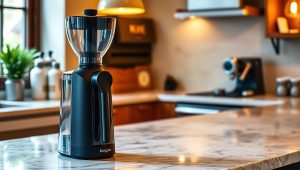
A Breville machine can only brew the coffee the grinder gives it. A cheap blade grinder is not an acceptable partner for espresso: it produces a mixture of powder and large fragments, causing uneven extraction. The machine may build pressure, but the cup can still taste harsh, hollow, or watery.
Look for a dedicated espresso coffee grinder with burrs, fine adjustment, and a stable dosing method. A grinder does not have to be expensive to be usable, but ultra-cheap models often create too many fines, retain old coffee, or lack the adjustment range needed for different beans.
A hand grinder can be a good budget solution if you make one or two drinks at a time and do not mind the effort. An electric grinder is more suitable for multiple shots, light-roast coffee, or anyone with limited patience in the morning. The grinder is often the component worth upgrading first when espresso tastes inconsistent.
Budget for a separate 54mm espresso portafilter accessory only after the basics are working. A bottomless portafilter can reveal channeling, but it does not fix it. It may also spray coffee if the grind, distribution, or tamping is poor.
What does the complete setup cost?
Do not compare the price of a grinder-free machine with the price of an all-in-one machine without adding the grinder. A realistic setup includes the machine, grinder, coffee, a scale, and possibly a better tamper or dosing funnel.
The cheaper option is fine when you drink medium or dark-roast coffee, make milk drinks, and are willing to use a basic but competent burr grinder. Milk, sugar, and darker roasts can make small differences in extraction less obvious. You do not need a premium grinder to enjoy a cappuccino.
Spend more on the grinder if you drink straight espresso, buy light-roast specialty coffee, or want to change beans frequently. These uses expose inconsistency quickly. A machine upgrade will not compensate for grind clumps, poor alignment, or an adjustment system that cannot move in small enough steps.
Common problems and how to avoid them
Fast, sour shots: The grind is often too coarse, the dose is too low, or the puck is channeling. Adjust the grinder finer in small steps and distribute the coffee evenly before tamping.
Slow, bitter shots: The grind may be too fine, the dose too high, or the machine may need cleaning. Do not keep grinding finer simply because the machine has pressure. Taste matters more than the gauge.
Weak milk drinks: The espresso may be diluted by too much milk, or the coffee dose may be too low. A better grinder helps, but changing the drink ratio may be the cheaper fix.
Messy spraying: Uneven grounds and channeling are common causes, especially with a bottomless portafilter. Return to the standard spouted portafilter while learning, and focus on even distribution.
Scale buildup: Hard water can shorten the life of any espresso machine. Follow Breville’s cleaning instructions, empty the drip tray, backflush when required, and use water that suits the manufacturer’s guidance. Descaling too aggressively or too often is not a substitute for routine cleaning.
Who should buy one?
Choose a grinder-free Breville if you already own a capable espresso grinder, want a compact machine, prefer replaceable components, or care about improving espresso over time. It is also a strong choice for someone who wants automatic milk steaming without committing to a large prosumer machine.
Choose an integrated grinder machine if counter space is extremely limited, you value a single-appliance workflow, or you mostly make quick milk drinks and do not want to learn separate grinding and dosing. It is less flexible, but convenience is a real feature. The best setup is the one you will use every day.
FAQ
Can I use pre-ground coffee in a Breville machine without a grinder?
Yes. Use fresh pre-ground coffee intended for espresso, but expect less flavor and consistency as it ages. The machine does not require a built-in grinder.
Is the Bambino or Bambino Plus better?
Choose the Bambino for lower cost and a simpler manual workflow. Choose the Bambino Plus if automatic milk steaming and faster milk-drink preparation are worth the extra price.
How much should I spend on the grinder?
Spend enough for a burr grinder with genuine espresso adjustment and consistent dosing. For many buyers, a moderate grinder is a better investment than moving from a basic Breville machine to a more expensive one.
Do I need a bottomless portafilter?
No. The included portafilter is easier for beginners. A bottomless model is mainly a diagnostic tool for seeing channeling after your grinding and puck preparation are already reasonably consistent.