Last updated: October 2, 2026
A barista coffee machine with grinder combines two jobs: grinding whole beans and brewing espresso. It can save counter space and make the morning routine simpler, but it is not automatically better than buying a separate grinder and espresso machine. The right choice depends on how much control you want, how often you make coffee, and whether convenience matters more than maximum grind performance.
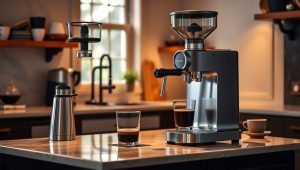
Most machines in this category are semi-automatic espresso machines with a built-in burr grinder. You choose the grind setting and dose, distribute the grounds in the portafilter, tamp them, and start the shot. Some are almost fully automatic, grinding and brewing at the press of a button. Those are easier to use, but they give you less control over extraction.
What You Are Actually Buying
An integrated machine usually includes a hopper, burr grinder, portafilter, espresso pump, boiler or thermoblock, and steam wand. The grinder feeds ground coffee into the portafilter or brew group. This is convenient, particularly for a small kitchen, but the grinder and espresso hardware share one chassis. If either part becomes unreliable, the whole machine may be inconvenient to repair or replace.
Before shopping, decide whether you want a manual steam wand or an automatic milk system. A manual wand takes practice but gives you better control over milk texture. Automatic systems are quicker and more consistent for basic cappuccinos, though they need frequent cleaning and can be harder to service.
For a manual workflow, compare espresso machines with built-in grinders by grinder adjustment range, dosing controls, portafilter size, steam performance, and cleaning access—not just by pump pressure printed on the box.
Integrated Grinder or Separate Grinder?
See also: Best Espresso Grinders for Home: Burr Size, Workflow and Budget Matched • Breville Smart Grinder Espresso
| Setup | Advantages | Trade-offs | Best for |
|---|---|---|---|
| Entry-level integrated machine | One appliance, lower cost, simple workflow | Limited grind adjustment, more retention, weaker steam on some models | New espresso drinkers and occasional users |
| Premium integrated machine | Better controls, stronger construction, more repeatable dosing | Higher price; grinder and machine cannot be upgraded independently | Daily users who value a tidy setup |
| Separate grinder and espresso machine | Usually better grind quality and easier upgrades or repairs | More counter space, more dialing in, higher combined cost | Enthusiasts who care about shot quality |
| Superautomatic machine | Press-button brewing, integrated milk options, minimal technique | Less control, more internal cleaning, often weaker espresso texture | Households prioritizing speed and convenience |
The cheaper integrated option is fine when you mainly drink milk-based beverages, use the same beans regularly, or make only one or two drinks a day. Milk, sugar, and flavorings can mask small differences in extraction. It is also a sensible choice when buying two separate appliances would put espresso outside your budget.
A separate grinder becomes worthwhile when you drink straight espresso, switch between beans, or want to improve gradually. A better grinder can produce a more even particle distribution, making it easier to adjust shot time and flavor. You can also replace the grinder without discarding a working espresso machine.
The Grinder Is the Critical Part
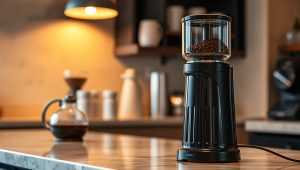
Look for a burr grinder rather than a blade grinder. Burrs crush coffee more consistently, while blades chop it unevenly and create heat and dust. Within burr grinders, a wider adjustment range is useful because espresso requires fine control. The exact number of settings matters less than whether the steps are small enough to correct a shot that runs too fast or too slowly.
Integrated grinders commonly have three problems. First, they may retain grounds inside the chute, so the dose you select is not exactly the dose that reaches the portafilter. Second, changing from a coarse setting to espresso—or the reverse—can leave old coffee between the burrs. Third, some hoppers expose beans to heat and light for days, which is not ideal for freshness.
To reduce these problems, buy only enough beans for a week or two, purge a small amount after a major grind adjustment, and brush or vacuum the grinder according to the manual. Do not put water into the grinder unless the manufacturer specifically permits it.
If grinder performance is your main concern, consider a dedicated espresso burr grinder alongside a simpler machine. This costs more in space, but it avoids making one integrated grinder handle every compromise.
Features That Matter at the Counter
Dosing control: A timed dose or adjustable grind duration is more useful than a long list of preset drink buttons. You want to repeat a dose and make small changes when the coffee calls for them.
Portafilter size: Common sizes include 54 mm and 58 mm. A 58 mm portafilter has broad accessory compatibility, while a 54 mm system may be perfectly capable but gives you fewer choices for baskets and tampers.
Temperature stability: A machine that holds brewing temperature steadily is easier to use than one that swings significantly between shots. A single thermoblock can be fast, but it may require a pause between brewing and steaming. Dual-heater designs handle both jobs more smoothly and generally cost more.
Steam wand: A strong manual wand should create a fine, glossy microfoam rather than large bubbles. Weak wands can still make hot milk, but latte art and smooth cappuccino foam take longer and require more technique.
Water tank and access: A removable tank is easier to fill and clean. Check whether you can remove it without moving the machine, and whether the drip tray has enough capacity for your routine.
Common Failure Modes
A shot that gushes despite the finest setting may indicate stale beans, an under-dosed basket, poor distribution, or a grinder that cannot go fine enough. A shot that chokes can result from an overly fine setting, excessive coffee, or clumped grounds. Do not assume the pump is faulty until you have checked dose, grind, and tamping.
Clogged grinder chutes are another frequent issue, especially with oily dark-roast beans. The machine may sound normal while delivering little coffee. Regular brushing helps, but very oily beans can make an integrated grinder a poor fit. Choose a less oily roast or use a grinder designed for easier access.
Milk systems fail through neglect more often than through complicated faults. Dried milk can block the steam tip, sour the internal tubing, and reduce pressure. Purge the wand immediately after steaming and wipe it while the milk is still wet. Automatic milk containers need their own rinse cycle and regular disassembly.
Who Should Buy One?
Buy an integrated machine if you want fresh-ground espresso without managing two appliances, have limited counter space, and are willing to learn basic dosing and tamping. It suits a couple or small household that makes a few drinks daily and values a neat setup.
Choose a separate grinder and espresso machine if you expect to experiment with beans, drink espresso without milk, or want the option to upgrade one component at a time. It is also the safer long-term purchase for someone who already enjoys adjusting grind size and extraction.
Choose a superautomatic machine if pressing a button matters more than manual control. For that use case, browse superautomatic espresso machines with grinders, but budget time for cleaning the brew group, milk system, and waste container.
Buying Checklist
- Confirm that it uses a burr grinder.
- Check how many grind adjustments are available and whether the grinder is easy to clean.
- Look for adjustable dose control rather than fixed one-touch dosing alone.
- Choose a manual wand if milk texture and control matter to you.
- Make sure the water tank and drip tray are removable.
- Read the cleaning instructions before buying; difficult maintenance becomes ignored maintenance.
- Leave room in the budget for a scale, suitable tamper, and fresh beans.
FAQ
Are coffee machines with built-in grinders worth it?
They are worth it for convenience, compactness, and a simpler workflow. They are less attractive if you want the best grinder performance or independent upgrade options.
Can an integrated grinder make good espresso?
Yes. A capable burr grinder, fresh beans, an accurate dose, and careful adjustment can produce very good espresso. The grinder’s consistency and adjustment range matter more than the machine’s maximum advertised pressure.
Are built-in grinders difficult to clean?
They require more attention than a standalone machine because grounds can collect in the burr chamber and chute. Brush the grinder regularly, empty old beans when changing coffees, and follow the manufacturer’s cleaning schedule.
Should beginners buy a manual or automatic milk system?
Buy a manual wand if you are willing to practice and want better control. Choose an automatic system if speed and repeatability matter more than learning milk texturing.