- Top Pick: 2-Pack Latte Art Pen Set, Stainless Steel Coffee Drawing Tool with Wood Handle, Double-Ended Barista Accessories for Creating Professional Espresso Tools, Home & Travel & Cafe Use
- Best Value: AKOAK Stainless Steel Coffee Art Pen,Coffee Fancy Stitch Barista Tool for Cappuccino Latte Espresso Decorating,2 Pieces
- Premium Choice: 2 PCS Latte Art Pen Cinnamon Pen for Coffee,Barista Espresso Coffee Latte Art Tools Accessories for Coffee Bar Barista Make Creative Coffee Designs Decors,Stainless Steel Wood,LXLVOUEG, Silver&Wood
Last updated: September 4, 2026
As an Amazon Associate we earn from qualifying purchases at no extra cost to you. Product prices and availability are accurate as of the date shown and are subject to change.


Disclosure: As an Amazon Associate we earn from qualifying purchases. This page contains affiliate links and we may earn a commission at no extra cost to you.
Free-pour latte art — hearts, tulips, rosettas — gets all the glory, but there is a whole second discipline of etched art that most home baristas never explore. A latte art pen is the tool that unlocks it: a slim stainless stylus you drag through crema and microfoam to sharpen leaf tips, draw spirals, sketch faces, or rescue a pour that came out as a lopsided blob. Professional competitions even have categories built around this kind of detail work.
The technique is far more forgiving than free pouring. Where a rosetta demands perfectly textured milk and a confident wrist, etching only needs reasonably stable foam and a steady hand. That makes a pen one of the best confidence-builders for newer baristas — you get satisfying, photogenic results while your pitcher technique catches up. It is also the cheapest possible experiment in the entire espresso hobby: the most expensive pen in this roundup costs less than a single bag of good beans, and the skills transfer directly to better free pouring later, since both disciplines train you to read foam density at a glance.
Below are six latte art pens and pen sets worth owning, from budget multi-packs to a weighted professional stylus with its own metal stand. All of them cost less than two café lattes, so the real question is which format suits your bench.
Quick Comparison
| Product | Price | Rating |
|---|---|---|
| SynHHergyx 3-Pack Latte Art Pen Set | $3.99 | 5.0/5 |
| 4-Pc Latte Art Pen Set, Wood Handle | $6.99 | 5.0/5 |
| 2-Pack Double-Ended Latte Art Pen | $4.99 | 5.0/5 |
| Professional-Grade Latte Art Pen, Metal Base | $18.99 | 5.0/5 |
| Latte Art Pen with Box, Double-Ended | $3.39 | 5.0/5 |
| 3PCS Dual-Ended Latte Art Pen | $3.78 | 5.0/5 |
Why Trust This Guide
See also: Best milk for frothing lattes in 2026 • How to steam milk for a latte at home?
Our recommendations are grounded in how these tools are actually used at the milk station: tip geometry, handle material, and how each format holds up to daily rinsing. Prices and ratings come straight from current product listings — we do not estimate numbers or pad specifications beyond what the makers publish.
The Best Latte Art Pens
SynHHergyx 3-Pack Latte Art Pen Set
A three-pen set at this price is essentially free insurance against the most common latte art pen problem: losing them. These slim stainless styluses disappear into drawers, roll behind canisters, and get borrowed by family members for craft projects. Having three means one always lives next to your machine.
The stainless steel tips are easy to wipe clean between drinks, which matters more than it sounds — dragging yesterday’s dried milk through today’s crema ruins lines. For anyone curious about etching, this set is the lowest-risk possible entry point.
4-Pc Latte Art Pen Set with Wood Handles
This four-piece set steps up the feel with wooden handles, which give the stylus a bit of warmth and grip compared with bare steel. Etching is fine-motor work; a handle that does not slip when your fingers are damp from the steam wand genuinely improves line control.
Four pens also means you can dedicate tips to jobs: one for fine detail, one for dragging wider strokes through foam, and spares for the dishwasher cycle. Pair it with well-textured milk from a good pouring jug and you have a complete art station for around ten dollars.
2-Pack Double-Ended Latte Art Pen
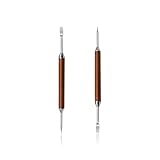
Double-ended pens put two tip profiles on one tool — typically a fine needle point on one side and a broader spatula-style end on the other. The fine end pulls crisp lines through crema; the wide end drags and places foam for filled shapes. Flipping the pen mid-design is faster than swapping tools while your foam slowly coarsens.
The wood-handled build keeps the pen comfortable, and the two-pack format covers you when one inevitably wanders off. This is the format we would suggest to most home baristas who want one do-everything etching tool.
Professional-Grade Latte Art Pen with Metal Base
At $18.99 this black-wood stylus costs several times what the multi-packs do, and the difference is presentation and feel. It sits in its own weighted metal stand next to your machine like a proper instrument, and the turned wooden handle has the balance of a calligraphy pen rather than a throwaway gadget.
Does it draw better hearts than a $4 pen? Marginally, through better balance — but mostly it makes you want to practice, which is what actually improves your art. If your espresso corner is a small ritual space, this is the version that belongs in it. It also makes a genuinely good gift for the barista who already owns every pitcher under the sun.
Latte Art Pen with Box, Double-Ended
The cheapest option in this roundup is also one of the most giftable, arriving in a presentation box with a double-ended stainless tip and wood handle. The boxed format keeps the pen protected in a drawer between uses, and at $3.39 it is an easy add-on to round out a coffee gear order.
Functionally it covers the same ground as the other double-ended designs: fine point for lines, broad end for moving foam. There is no real downside at this price beyond having only one — and the box at least makes it harder to lose.
3PCS Dual-Ended Latte Art Pen Set
This three-pack combines the multi-pen redundancy of the budget sets with dual-ended tips, which is arguably the best of both worlds. Three double-ended pens means six working surfaces in your drawer for under four dollars.
The wood handles are comfortable enough for longer etching sessions — say, decorating a tray of cappuccinos for guests served in your best double-wall glasses. For households where more than one person likes to draw on the coffee, this set settles arguments cheaply.
What to Look For in Latte Art Pens
Latte art pens are simple tools, but a few details separate the ones you will use daily from the ones that end up in the junk drawer.
- Tip fineness — a needle-fine point is what produces crisp, dark lines through crema; blunt tips smear instead of draw.
- Double-ended design — a second, broader end lets you drag and place foam for filled designs without grabbing a spoon.
- Stainless steel construction — the tip lives in hot, acidic liquid; food-grade stainless wipes clean and never rusts or taints flavor.
- Handle material and grip — wood or textured handles resist slipping with damp fingers, which directly improves line stability.
- Multi-pack value — these tools are small and easy to misplace; sets of two to four cost barely more than singles.
- Storage solution — a stand or box keeps the tip clean and protected; a bare pen rattling in a drawer collects grime you will drag through your foam.
Tips for Getting the Most Out of Latte Art Pens
Work fast and in order. Crema starts dissipating the moment the shot finishes, and microfoam coarsens within a minute or two, so plan your design before you pour. The classic workflow is: pour your base (even a simple white circle of foam works), then etch immediately, starting with the strokes that need the most contrast. A clean wipe of the tip between strokes keeps lines sharp — keep a damp cloth at the machine just like you do for the steam wand, and while you are at it check that your wand tip is clean too, since milk texture is still the foundation everything sits on.
Use contrast as your ink. The pen does not add color — it moves it. Dragging from a white foam area into brown crema pulls a light line; dragging from crema into foam pulls a dark one. Drizzling a little chocolate or caramel sauce on the surface gives you bolder material to work with, which is how cafés produce those dramatic spiderweb and zigzag patterns.
Finally, practice on drinks you were making anyway. Etching needs stable foam more than perfect foam, so even a quick cappuccino made with oat milk is a usable canvas. Two weeks of casual daily practice will take you from wobbly spirals to confident rosetta touch-ups.
Frequently Asked Questions
What is a latte art pen actually for?
It is an etching stylus: you drag the fine stainless tip through the crema and milk foam on top of a drink to draw patterns, sharpen free-poured designs, or create detailed pictures. It is the tool behind the intricate etched art you see in competition photos and café social feeds.
Do I need good milk texturing skills to use one?
Far less than for free pouring. Etching only requires foam stable enough to hold a line for a minute or so, which most home setups can produce. That said, finer microfoam holds crisper lines for longer, so your etching will improve alongside your steaming.
Is a double-ended pen worth it over a single tip?
Yes, for most people. The fine end draws lines while the broad end moves and places foam — two distinct jobs in etched designs. Since double-ended pens cost essentially the same as single-tip ones, there is little reason not to get the extra versatility.
How do I clean a latte art pen?
Wipe the tip on a damp cloth between strokes and rinse the whole pen under warm water after each session. For wood-handled pens, avoid long soaks and the dishwasher — water swells the wood and loosens the tip over time. A ten-second hand wash is all they need.
Ready to decide? Our #1 pick for 2026 is the SynHHergyx 3-Pack Latte Art Pen Set.
Live price & availability on Amazon.