Last updated: October 2, 2026
- What the Lattissima Touch Actually Is
- How It Works Day to Day
- The Milk System Is the Whole Point — and the Main Trade-Off
- Espresso Quality: Consistent, Not Exceptional
- Cleaning and Descaling
- Reliability and Common Failure Modes
- How It Compares to Other Nespresso Milk Machines
- Who Should (and Shouldn’t) Buy It
- FAQ
What the Lattissima Touch Actually Is
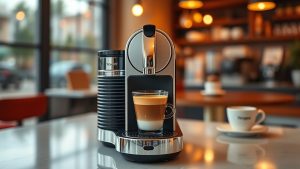
The Nespresso Lattissima Touch is a capsule machine built for one thing: one-touch milk drinks without a separate frother or steam wand. It’s made by De’Longhi (in North America, Breville sells the identical machine under its own badge) for Nespresso’s OriginalLine system. You get Nespresso’s standard 19-bar pump and thermoblock heater, plus an integrated milk carafe that plugs into the front and automatically textures milk for lattes, cappuccinos, and latte macchiatos at the press of a button.
This is not a semi-automatic espresso machine and it’s not trying to be. There’s no portafilter, no grinder, no tamping. You insert an OriginalLine capsule, fill the milk jug, press a recipe button, and it dispenses. That simplicity is the whole value proposition. If you want to learn espresso, look elsewhere. If you want a fast, repeatable latte in the morning with minimal cleanup, this is the category leader.
Street price usually sits between $350 and $480 depending on sales. Like all Nespresso machines, the real ongoing cost is the capsules, which run $0.80 to $1.00 each for Nespresso-branded pods. Compatible capsules are cheaper but quality varies widely.
How It Works Day to Day
See also: Breville Bench Saver • Rocket Espresso Coffee Machine
Operation is straightforward. The water tank holds 30 oz (900 ml), enough for 4-5 milk drinks. The milk carafe holds 12 oz (350 ml). On top you have six one-touch buttons: Ristretto (0.5 oz), Espresso (1.35 oz), Lungo (5 oz), Cappuccino, Latte Macchiato, and Warm Milk Froth. For the three milk drinks, the machine first froths milk directly into your cup, then brews the coffee through it.
You can reprogram every button. Hold the button down until you have the volume you want, then release. The machine remembers it. This matters because the factory settings are on the small side, especially for lattes. Most people end up lengthening the milk pour for a 12-14 oz latte and shortening the lungo.
Heat-up is about 25 seconds from cold thanks to the thermoblock. There’s an auto-off after 9 minutes by default, adjustable to 30 minutes or 8 hours. No app, no Bluetooth, no firmware updates to worry about.
The Milk System Is the Whole Point — and the Main Trade-Off
The detachable milk carafe is what separates the Lattissima Touch from cheaper Nespresso models like the Essenza or Pixie. Inside the lid is an auto-frothing system that siphons milk, heats it with steam, and dispenses foam. You can adjust the foam knob on the lid from dense, spoonable foam for cappuccino to looser, silkier foam for latte.
When it works, it works well. The foam is consistent, hot (around 150-160°F), and far better than what you get from a handheld whisk. You don’t have to purge a steam wand or learn to texture milk.
The trade-off is maintenance and milk hygiene. Nespresso built in an auto-rinse cycle: after every milk drink, the machine prompts you to turn the dial to the clean position and it flushes hot water through the milk circuit for about 10 seconds. You need to do this every time. If you don’t, milk bakes onto the internal tube and blocks flow. The carafe itself has to be disassembled every 2-3 days if you use it daily — all six pieces of the lid come apart for washing. You can store the carafe in the fridge with milk in it, which helps if you have a second drink later, but you shouldn’t leave milk in it at room temperature.
For households that make one milk drink a day, it’s painless. For a family making 4-5 back-to-back lattes, the small carafe becomes annoying — you’ll refill it constantly, and the machine needs about 30-40 seconds between drinks to reheat.
Espresso Quality: Consistent, Not Exceptional
The coffee side is identical to any OriginalLine Nespresso machine. It uses the same pump, same thermoblock, same capsule extraction. That means you get consistent, crema-topped shots with no skill required, but also a ceiling on quality. It’s clean, fairly strong, but lacks the body, aroma, and sweetness of freshly ground specialty coffee from a good home espresso machine with grinder.
Where capsule quality matters most is the coffee itself. Nespresso’s own capsules are roasted for this extraction style and tend to taste balanced. Third-party OriginalLine compatibles can be hit-or-miss — some under-extract and taste thin, others choke the machine. If you buy the Lattissima Touch, budget for Nespresso OriginalLine capsules directly; the savings from cheap compatibles rarely outweigh the dud rate.
Temperature is on the low side for American tastes. Black espresso comes out around 160-165°F in the cup. Milk drinks are hotter because the milk is steamed, but if you like scalding-hot coffee, you’ll want to preheat your cup with hot water first.
Cleaning and Descaling
Daily cleaning is two things: rinse the milk circuit after each use, and dump the capsule container (holds 10 used pods) and drip tray. Weekly, wash the milk carafe properly with warm soapy water. The machine will alert you to descale after about 300-400 capsules or when flow slows. Descaling takes about 15 minutes and requires Nespresso’s descaling solution — vinegar will damage the thermoblock seals.
Keep a proper Nespresso descaling kit on hand, especially if you have hard water. The Lattissima’s milk circuit has narrow silicone tubes that scale up faster than a plain Essenza. In hard-water areas, use filtered or bottled water to double the interval between descales.
Reliability and Common Failure Modes
The Lattissima Touch has been on the market since 2015 with few changes, so failure patterns are well known.
1. Milk frother stops frothing or just sputters. In 90% of cases this is dried milk in the lid’s siphon tube or the frothing nozzle. A full disassembly and soak in hot water fixes it. If ignored, the tube hardens and needs replacement.
2. Leaking from the milk carafe connector. The rubber gasket where the carafe plugs into the machine wears and can weep milk. Replacement carafe lids are available but cost $40-60.
3. No coffee or very short pour. Usually scale in the thermoblock or a piercer needle clogged with coffee fines. Run a descale and clean the capsule chamber with a damp cloth.
4. Pump gets loud and thin. If the machine sat unused for weeks, air locks in the pump. Lift the water tank, run a lungo without a capsule to prime it.
Build quality is plastic-heavy but decent. It’s not a 10-year machine like a brass-boiler E61. Expect 4-6 years of daily use with proper descaling. De’Longhi and Breville both service it, but out-of-warranty repair often costs more than replacement.
How It Compares to Other Nespresso Milk Machines
Choosing within the Lattissima family is mostly about carafe size and automation level. Don’t pay for features you won’t use.
| Model | Milk System | Best For | Downside |
|---|---|---|---|
| Lattissima One | Single-serve milk jug, fresh milk per drink | Solo drinkers, small kitchens. Cheapest one-touch option. | Makes only one milk drink before refilling. No adjustable foam texture. |
| Lattissima Touch | 350 ml carafe with adjustable foam knob | Couples or 2-3 drinks in a row. Store leftover milk in fridge. | More parts to clean. Carafe takes fridge space. |
| Lattissima Pro | Larger carafe, touchscreen, commercial look | Small office or heavy use. Faster back-to-back drinks. | Bulky, expensive, discontinued in many markets — parts harder to find. |
| Vertuo Lattissima | Similar carafe but for Vertuo capsules | People who want big 8 oz coffees and milk drinks from one machine. | Uses Vertuo capsules (different, more expensive pods). Not compatible with OriginalLine. |
| Creatista Uno / Plus | Automatic steam wand you place a jug under | Those who want to learn latte art, control texture manually. | More skill needed. Milk not auto-dispensed. Higher price. |
If you already own a good standalone Nespresso machine like an Essenza Mini and just want occasional milk drinks, skip the Lattissima entirely and buy a separate electric frother. It’s $40-70, easier to clean, and you don’t tie up your whole machine when the milk system clogs. The Lattissima only makes sense if you make milk drinks at least 4-5 times a week and want a single button to do it.
Breville vs De’Longhi: same internals. De’Longhi version is usually $30-50 cheaper and has slightly better parts availability in the US. Breville’s has a 1-year warranty vs De’Longhi’s 2-year in some retailers — check the seller.
Who Should (and Shouldn’t) Buy It
Buy it if you want the fastest path to a decent latte without learning espresso. It’s ideal for a busy couple where one person drinks lattes and the other drinks espresso or lungo, for a home office where you want coffee shop drinks without leaving, or as a second machine for entertaining.
Don’t buy it if you care about single-origin flavor, want to dial in grind and dose, or drink only black coffee. A $200 manual machine with a grinder will out-taste it. Also skip it if you hate cleaning milk equipment — the auto-rinse is not optional, and if you won’t do it, buy a machine without an integrated carafe.
The cheaper Lattissima One is fine if you live alone and never make two lattes at once. You lose the adjustable foam and the fridge-storage carafe, but you save $80-120 and cut cleaning time. Don’t pay extra for the Touch if that describes you.
FAQ
Does the Lattissima Touch work with Vertuo capsules?
No. It only uses OriginalLine capsules — the small, dome-shaped ones. Vertuo capsules are larger and barcode-brewed for a different system. The Vertuo Lattissima is the Vertuo equivalent, but pods are not interchangeable.
Can I use oat or almond milk?
Yes, but foam quality drops. Barista-blend oat milk froths reasonably well; almond milk makes thin, bubbly foam that collapses fast. Dairy whole milk gives the best texture and the most stable foam. Whatever milk you use, you still need to run the cleaning cycle after each drink.
How often do I really need to descale?
When the orange descaling light comes on, usually every 3-6 months depending on water hardness and use. With hard water, every 2-3 months is normal. Use Nespresso’s descaling liquid and follow the manual — about 15 minutes. Skipping descaling is the fastest way to kill the thermoblock.
Is the milk carafe dishwasher safe?
The carafe body is, but the lid with the frothing mechanism is not. Hand-wash the lid in warm soapy water after disassembling it. The internal milk tubes and foam regulator need soaking, not just a rinse, to prevent clogs.