Last updated: October 20, 2026
The most common frustration among home baristas shopping for a rocket espresso machine is the gap between what the spec sheet promises and what the daily experience delivers. A machine can advertise a heat exchanger boiler and 1.8 liters of capacity, yet still feel sluggish to steam or require a cooling flush ritual that adds a minute of fumbling before every shot. The difference between a good purchase and a disappointing one usually comes down to how well the group head temperature stays stable under back-to-back use, how forgiving the machine is with grind adjustments, and whether the build quality justifies the four-figure price tag over five years of daily pull.
This roundup compares eight configurations across the Rocket line—from the entry-level Appartamento 2.0 in three colorways to the dual-boiler flagship R58 Tune. We evaluated published specifications, street prices, and recurring themes in owner feedback to separate machines that genuinely earn their reputation from those that are simply wearing the same badge in a different finish. Color options matter less than boiler architecture, but they do change pricing, so we treated each distinct SKU on its own merits.
As an Amazon Associate we earn from qualifying purchases at no extra cost to you.





Quick Picks
| Product | Best for | Price |
|---|---|---|
| Appartamento 2.0 (Black) | First serious home machine | Check on Amazon |
| Appartamento 2.0 (Copper) | Statement kitchen counter | Check on Amazon |
| Appartamento 2.0 (White) | Minimalist setups | Check on Amazon |
| Appartamento TCA Black (Copper) | Dual PID temperature control | Check on Amazon |
| Appartamento TCA Stainless (White) | Corrosion resistance with style | Check on Amazon |
| Appartamento TCA & Grinder Bundle | Complete setup in one order | Check on Amazon |
| R58 Tune (Black) | Competitive pour or high volume | Check on Amazon |
| Appartamento TCA Black (Black) | All-black aesthetic consistency | Check on Amazon |
How We Compared
See also: How to Descale an Espresso Machine: Citric Acid vs Vinegar • Best Electric Kettles: Ten Glass, Steel and Gooseneck Picks Compared
We narrowed this field using four criteria that owner discussions consistently flag as dealbreakers. First, thermal stability: machines with temperature compensation or dual PID control draw fewer complaints about shot-to-shot drift. Second, steam power adequacy for milk-heavy drinks, since heat exchanger units vary widely in how quickly they recover. Third, long-term parts availability and service network, which separates Rocket from boutique competitors. Fourth, price-to-build-value—whether the machine uses E61 or equivalent group hardware that survives heavy use, rather than thinner proprietary components that limit resale.
The 8 Best Rocket Espresso Machine in 2026
Rocket Espresso Appartamento 2.0 (Black)
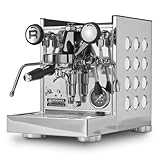
This is the entry point into the Rocket ecosystem and the configuration most frequently recommended to someone graduating from a single-boiler machine. The heat exchanger design paired with 1.8 liters of capacity handles a morning routine of two or three drinks without a wait between pulling shots and steaming milk. Owners praise the E61 group head for its inherent thermal mass, which reduces the temperature swings that plague cheaper HX designs. The black finish resists fingerprint visibility better than copper on this particular panel layout.
- Pro: E61 group head provides consistent extraction without active temperature control.
- Pro: Lower price than TCA variants while sharing the same boiler architecture.
- Con: Cooling flush required between shot and steam use, adding a workflow step.
Skip this if you pull more than six shots daily or compete in latte art where simultaneous brew-and-steam matters.
Rocket Espresso Appartamento 2.0 (Copper)
Identical internally to the black and white Appartamento 2.0, the copper finish is the configuration that generates the most aesthetic discussion in home-barista forums. The polished copper panel develops a patina over time that owners either love or regret, making it a long-term visual commitment rather than a neutral choice. It suits kitchens where the machine is a visible centerpiece rather than tucked beside a wall.
- Pro: Distinctive look that stands apart from the stainless steel default of most prosumer machines.
- Pro: Same thermal performance as other 2.0 variants at the same price.
- Con: Copper panel requires periodic polishing to avoid oxidation spots if you prefer a shiny look.
Skip if you plan to keep the machine at peak visual condition without maintenance beyond a wipe-down.
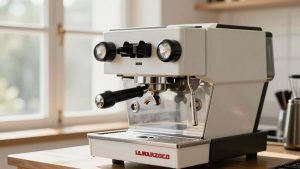
Rocket Espresso Appartamento 2.0 (White)
The white Appartamento 2.0 appeals to buyers who want a machine that disappears into a bright or Scandinavian-style kitchen rather than commanding attention. Internally it is indistinguishable from its siblings, so the performance argument rests entirely on finish preference and how the machine integrates with counter surfaces.
- Pro: White enamel resists showing coffee stains and milk splatter more visibly than dark finishes.
- Pro: Matches light-colored countertops without creating a harsh contrast line.
- Con: White surfaces show scratches and chips more readily than black, which can age the machine visually.
Skip if your kitchen sees heavy use around the espresso station and you cannot tolerate visible wear on the casing.
Rocket Espresso Appartamento TCA, Black (Copper)
The TCA designation introduces a thermocompensator that stabilizes brew temperature without relying on the cooling flush dance of the standard 2.0. This version pairs the black chassis with a copper panel, giving the functional upgrade while retaining the visual character owners seek from the copper line. For anyone whose workflow involves alternating between espresso and milk frequently, the TCA system reduces the temperature overshoot that makes the first shot after a steam cycle taste sharp.
- Pro: Thermocompensator eliminates most cooling-flush steps, streamlining a two-drink morning routine.
- Pro: Copper accent on black body is the most popular aesthetic combination in the TCA line.
Skip if you make one drink at a time and do not mind the flush routine—the standard 2.0 delivers identical shot quality with fewer components to service.
Rocket Espresso Appartamento TCA, Stainless Steel (White)
This configuration substitutes a stainless steel body for the painted or copper panels, combining the thermocompensator benefit with maximum surface durability. The white accent panel gives it a clean look without the fingerprint sensitivity of full-stainless machines. It is the practical choice for kitchens where the machine gets bumped, splashed, or touched with wet hands regularly.
- Pro: Stainless body resists dents, chips, and corrosion far better than painted enamel panels.
- Pro: TCA system still reduces cooling-flush dependency for stable back-to-back shots.
- Con: Stainless shows water spots and requires more frequent wiping to maintain a streak-free look.
Skip if you prefer a warm or bold visual statement over neutral metal, as this configuration reads as more commercial than domestic.
Rocket Appartamento TCA & Grinder Bundle, Copper/Black
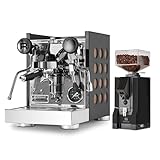
The bundle packages the TCA machine with a compatible grinder at a combined price that is marginally below buying each piece separately at full retail. For a buyer starting from zero equipment, this removes the research step of matching grinder burr size and hopper capacity to the machine’s basket. The copper and black finish scheme matches the standalone TCA aesthetic.
- Pro: Single delivery and unified warranty administration simplify the setup process.
- Pro: Bundle pricing is competitive versus sourcing the grinder independently at street prices.
- Con: You cannot choose the grinder model—if the included unit lacks stepless adjustment, upgrading later means selling a nearly new grinder.
Skip if you already own a grinder you trust, as paying for a duplicate burr set wastes budget that belongs on accessories.
Rocket Espresso R58 Tune (Black)
The R58 Tune represents a different engineering philosophy: dual boilers with independent PID control let you brew and steam simultaneously with zero compromise. Owner feedback highlights the near-instant recovery and the ability to run 40-plus shots before temperature drift becomes audible.
- Pro: True simultaneous brew and steam with no waiting, no flushing, no compromise.
- Pro: PID-adjustable steam pressure lets you match microfoam texture to specific drink styles.
- Con: Large footprint and weight limit counter placement options; many kitchens cannot accommodate it without dedicated cabinetry.
Skip if your daily volume is under six drinks—the TCA machines handle that load with identical shot quality at nearly half the price.
Rocket Espresso Appartamento TCA, Black (Black)
The all-black TCA configuration delivers the same thermocompensator upgrade in a finish that stays visually neutral and hides wear. Owners who prefer a low-profile machine that blends into dark cabinetry choose this variant specifically because neither copper nor stainless would integrate as cleanly. Performance is identical to other TCA units, so the decision here is purely aesthetic placement.
- Pro: Matte black finish conceals water marks, coffee oils, and light scratches better than any other colorway.
- Pro: TCA system provides stable back-to-back brewing without cooling flush.
- Con: Can look flat or generic under certain lighting compared to the visual depth of copper or stainless variants.
Skip if you want the machine to serve as a decorative object rather than a background appliance in your kitchen.
Buying Guide
Heat Exchanger vs. Dual Boiler
The entire Appartamento line uses a single heat exchanger boiler. You steam and brew from the same vessel, which means workflow sequencing matters. The TCA thermocompensator mitigates but does not eliminate this limitation. If your household pulls espresso while simultaneously steaming milk for two people, a dual boiler like the R58 Tune removes the bottleneck entirely. If you make drinks sequentially, the HX architecture saves substantial money without a perceptible shot-quality penalty.
E61 Group Head and Temperature Stability
All eight machines use either an E61 or equivalent brass group head, which provides thermal mass that passive PID systems cannot replicate. This is the single most important spec for espresso quality at the home level. A stable group head means your shot tastes the same whether the boiler is at peak pressure or recovering from a steam cycle. When comparing any rocket espresso machine, confirm the group head material before weighing secondary features.
Boiler Size and Steam Recovery
The 1.8-liter boiler on the Appartamento handles two to three lattes per session before steam pressure drops noticeably. The R58 Tune’s dual 0.3-liter brew and 0.8-liter steam boilers recover faster but require a three-liter combined footprint. Match boiler capacity to your typical session length, not your maximum theoretical output, since oversizing adds cost and energy draw you never recover.
Our Verdict
The condition under which the R58 Tune wins is simple: if more than two people in your household drink milk-based espresso daily, the dual-boiler architecture pays for itself in saved time and reduced frustration within a year.
FAQ
Do all Rocket machines require a cooling flush?
The standard Appartamento 2.0 requires a brief cooling flush before each shot after the machine has been steaming, because the heat exchanger sits at steam temperature. The TCA variants include a thermocompensator that automates most of this stabilization, reducing or eliminating the need depending on ambient conditions and session length.
Is the R58 Tune worth the price over a TCA?
Only if you brew and steam simultaneously more than twice daily or need PID-level control over both brew and steam independently. For a single household making four to six drinks per morning in sequence, the TCA delivers the same cup quality at nearly half the cost.
How long do Rocket espresso machines typically last?
Owner reports and service center data consistently show 10 to 15 years of daily use with periodic gasket and seal replacements. The brass group head and copper or stainless boiler construction outlast the average prosumer machine by several years, assuming water is filtered to avoid scale damage.
Can I upgrade from the 2.0 to a TCA later?
No. The thermocompensator is integrated into the group head assembly and cannot be retrofitted onto the standard 2.0 plumbing. If TCA-level workflow convenience matters to you, it is worth buying that configuration initially rather than planning a future swap.