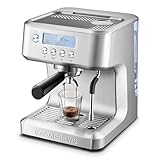
- Top Pick: Chefman Crema Deluxe Espresso Machine with Double Boiler, Use Milk Frother and Brew Espresso Simultaneously, Professional Coffee Maker with Coffee Grinder and Steam Wand, 30 Grind Settings
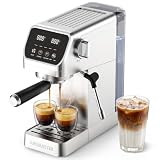
- Best Value: JustSmart Deluxe Espresso Machine with Double Boiler, Built-in Burr Grinder
- Premium Choice: Breville BES920XL Dual Boiler Espresso Machine, Brushed Stainless Steel
Last updated: September 18, 2026
Choosing an espresso machine boiler type is less about buying the machine with the most impressive specification and more about matching the heating system to the way you make coffee. A common mistake is to focus on pressure numbers, built-in grinders, or the number of accessories while overlooking temperature stability, warm-up time, counter space, and the practical difference between steaming milk and brewing espresso.
Another mistake is assuming every “dual boiler” machine offers the same experience. A compact appliance with two small heating systems may be convenient, while a large prosumer machine may provide more powerful steam, better controls, and heavier-duty construction. Prices can range from roughly $150 for a basic integrated machine to more than $1,500 for a premium dual-boiler model.
As an Amazon Associate we earn from qualifying purchases at no extra cost to you. Product prices and availability are accurate as of the date shown and are subject to change.


This guide explains how to choose espresso machine boiler type in 2026, with concrete numbers to help you compare machines without treating a specification sheet as a substitute for everyday usability.
- Decide These 3 Things First
- Size: Measure More Than the Counter Footprint
- Material and Thermal Design
- Construction: Understand the Boiler Layout
- Comfort and Performance: Look Beyond Pressure
- Price Tiers: Pay for the Workflow You Need
- Warranty and Serviceability
- Delivery and Assembly
- Spec Checklist
- Red Flags
- FAQ
Decide These 3 Things First
- Do you steam milk? If you mostly drink espresso, americanos, or iced coffee, a single-boiler or thermoblock machine may be sufficient. If you regularly make cappuccinos or lattes, prioritize a thermoblock with a dedicated steam system, a heat exchanger, or a dual boiler.
- How many drinks do you make in a session? One or two drinks per morning place modest demands on a machine. A household making six to 10 milk drinks needs faster recovery, a larger water reservoir, and a steam system that does not force long pauses.
- How much control do you want? Entry-level machines typically emphasize convenience. Midrange models may add a grinder, adjustable temperature, or better controls. Premium machines often give you independent brew and steam settings, pressure gauges, pre-infusion controls, and more repairable construction.
These three answers usually narrow the field faster than comparing every feature on a product page.
Size: Measure More Than the Counter Footprint
See also: How to Replace Espresso Machine Water Filter (2026): Step-by-Step • How to Adjust Espresso Machine Brew Temperature (2026): Step-by-Step
Boiler type affects the machine’s size. A compact thermoblock machine may occupy about 8 to 10 inches of width, 12 to 14 inches of depth, and 11 to 13 inches of height. Machines with a built-in grinder commonly need about 10 to 12 inches of width and 16 to 19 inches of depth. Larger dual-boiler machines can approach 12 to 16 inches wide, 18 to 22 inches deep, and 15 to 17 inches tall.
Measure the counter, but also measure the space above it. Leave at least 3 inches above a machine if you need to remove a water tank or fill a hopper. You should also have 4 to 6 inches of working space beside the portafilter for grinding, dosing, and tamping.
Weight matters when the machine moves during tamping. Budget machines may weigh 8 to 15 pounds. Midrange grinder-and-machine combinations often fall near 20 to 30 pounds, while metal-bodied dual-boiler machines can weigh 40 to 60 pounds or more. A heavy chassis is not automatically better, but it can make workflow feel more stable.
Material and Thermal Design
Boiler material affects heat retention, corrosion resistance, and maintenance. Aluminum boilers are light and common in lower-priced machines, but they can have less thermal mass than stainless steel or brass systems. Stainless steel is widely used because it resists corrosion and is relatively easy to maintain. Brass and copper retain heat well, although the rest of the machine’s design still determines actual temperature consistency.
Look for the boiler’s stated capacity, not just its material. A small brew boiler around 0.3 to 0.6 liters can work well for occasional espresso. A steam boiler around 0.8 to 1.5 liters is more useful for several milk drinks in succession. Premium dual-boiler machines may use a brew boiler of about 0.5 to 1.0 liter and a steam boiler around 1.0 to 2.0 liters.
Thermoblock systems heat water as it passes through a heated metal block rather than storing all brewing water in a traditional boiler. They can warm up quickly and conserve energy, but the steam experience depends heavily on the size and power of the separate steam circuit. A “dual thermoblock” design is not exactly the same as a traditional dual-boiler machine, so read the manufacturer’s description carefully.
Construction: Understand the Boiler Layout
Single boiler: One boiler handles brewing and steaming, so you generally brew first and then switch to steam mode. This can be economical and reliable, but the machine may need 30 to 90 seconds to change temperatures between tasks. It is best for espresso-focused users who steam only occasionally.
Single thermoblock: Water heats quickly and the chassis is often compact. It can suit a beginner making one drink at a time, although steam power and temperature stability vary widely.
Heat exchanger: A steam boiler supplies hot water through a separate tube for brewing. This allows brewing and steaming at the same time, but machines often require a specific flush routine and may take more practice to operate consistently.
Dual boiler: Separate brew and steam boilers let you extract espresso and steam milk simultaneously. This is the most flexible design for frequent milk drinks, but it usually costs more, weighs more, and may use more counter space and electricity.
Examples in the market range from compact double-boiler machines around $150 to $400 to premium models near $1,600. The label alone does not guarantee better coffee: pump quality, temperature control, group-head design, and user-adjustable settings matter too.
Comfort and Performance: Look Beyond Pressure
A pump rated at 15 or 20 bar does not mean espresso should be extracted at that pressure. Espresso is commonly brewed near 9 bar at the coffee puck, and a machine’s pressure-management system matters more than the maximum number printed on the box.
For practical performance, check whether the machine offers:
- Adjustable brew temperature: A useful range is roughly 195°F to 205°F, although the ideal setting depends on the coffee.
- Temperature control: PID control or a similarly precise electronic system can make repeatability easier, particularly on dual-boiler machines.
- Steam control: A dedicated steam boiler, strong heating element, and a two- or four-hole steam tip can make milk texturing faster.
- Portafilter size: A 58-millimeter portafilter is common on prosumer machines; smaller 51- or 54-millimeter sizes are common on compact appliances.
- Water capacity: A 1.2- to 1.8-liter tank is adequate for many small households. Heavy use is more comfortable with 2 liters or more.
Built-in grinders add convenience but also add width, noise, cleaning requirements, and another component that can require service. A grinder with at least 20 grind settings offers basic flexibility; 30 or more can make dialing in different coffees easier, but the number of settings does not reveal burr quality by itself.
Price Tiers: Pay for the Workflow You Need
Budget: $150 to $300. This range includes many single-boiler, thermoblock, and compact dual-boiler-style machines. Some include a burr grinder and milk wand. They can be sensible for one or two drinks a day, but expect more plastic, smaller boilers, fewer repair options, and less precise control. Products such as the JustSmart Deluxe and Chefman Crema Deluxe illustrate how integrated features can be offered in this range, but confirm the actual boiler arrangement and included accessories before buying.
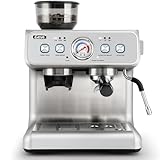
Midrange: $300 to $800. Machines in this tier may offer sturdier metal panels, better grinders, improved temperature controls, larger reservoirs, and more capable steam systems. A machine priced around $400, such as a Gevi dual-boiler model, may offer an appealing feature set, but compare warranty coverage and replacement-part availability with the specifications.
Premium: $900 to $1,800 or more. This is where traditional dual-boiler machines, PID controls, rotary pumps, commercial-style group heads, and heavier stainless-steel construction become common. A machine such as the Breville BES920XL sits in this category. You are paying for control, capacity, simultaneous brewing and steaming, and a potentially longer service life—not necessarily a shortcut to better technique.
Warranty and Serviceability
Look for at least a one-year limited warranty, and treat a two-year warranty as a meaningful advantage when prices are otherwise similar. Confirm whether the warranty covers the pump, boiler, grinder, electronics, and labor. Some warranties cover parts but require the owner to pay shipping or service charges.
Before buying, search the manufacturer’s support pages for water filters, gaskets, steam valves, portafilter baskets, burrs, and replacement tanks. A machine that uses a proprietary part can become difficult or expensive to maintain. Also check whether the warranty becomes void if you use filtered water, descaling products, or a non-brand filter; policies vary.
Delivery and Assembly
Most countertop machines arrive largely assembled, but a built-in grinder may require installing a hopper, and some models require attaching the portafilter, drip tray, water tank, and steam tip. Allow 20 to 45 minutes for setup, calibration, rinsing, and reading the instructions.
Check the shipping carton dimensions and the machine’s packed weight if delivery access is tight. A 50-pound machine may be manageable on a counter but awkward on stairs. Inspect the box before signing for delivery, photograph visible damage, and run the machine’s initial water-only cycles before grinding coffee.
Spec Checklist
| Spec | Budget | Mid | Premium |
|---|---|---|---|
| Typical price | $150–$300 | $300–$800 | $900–$1,800+ |
| Boiler or heating design | Single boiler, thermoblock, or compact dual system | Improved thermoblock, heat exchanger, or dual boiler | Traditional dual boiler or advanced heat exchanger |
| Approximate width | 8–12 inches | 10–14 inches | 12–16 inches |
| Approximate weight | 8–20 pounds | 20–35 pounds | 40–60+ pounds |
| Water reservoir | 1.0–1.5 liters | 1.5–2.0 liters | 2.0–3.5 liters |
| Temperature control | Basic thermostat or preset | Digital settings or basic PID | PID, independent boiler controls, or advanced programming |
| Best for | One or two drinks daily | Regular espresso and milk drinks | Frequent entertaining and enthusiast use |
Red Flags
- A listing calls a machine “dual boiler” without identifying the brew and steam boiler capacities.
- The product page advertises 15 or 20 bar pressure but says nothing about brew-pressure control.
- There is no information about replacement gaskets, baskets, burrs, filters, or service centers.
- The machine has a large built-in grinder but no stated grind range, burr size, or adjustment method.
- Dimensions exclude the portafilter handle, hopper, steam wand clearance, or rear water-tank access.
- The warranty is shorter than one year or excludes the grinder, pump, boiler, or electronics.
- Reviews repeatedly mention leaking tanks, inconsistent heating, stalled grinders, or difficult cleaning.
FAQ
Is a dual-boiler espresso machine worth it?
It is worth considering if you regularly make milk drinks, serve several people, or want independent control over brewing and steaming. For one espresso each morning, a well-designed thermoblock or single-boiler machine can deliver better value and take up less space.
What is the best boiler type for lattes?
A dual boiler offers the most convenient workflow because it can brew and steam simultaneously. A heat exchanger can also work well, while a single boiler requires waiting between brewing and steaming. Steam power, boiler size, and wand design matter as much as the category name.
How large should an espresso machine boiler be?
For occasional espresso, a brew system around 0.3 to 0.6 liter can be adequate. Frequent milk-drink users should look for a steam boiler around 1.0 to 1.5 liters or a comparably capable dedicated thermoblock. Larger capacity helps recovery but increases warm-up time, weight, and energy use.
Should I buy a machine with a built-in grinder?
Choose one if saving counter space and simplifying the workflow matters more than upgrade flexibility. A separate grinder is easier to replace and may offer better grind adjustment for the same total budget. With either option, plan to clean the grinder regularly and verify that replacement burrs are available.
Ready to decide? Our #1 pick for 2026 is the Typical price.
Live price & availability on Amazon.