Last updated: October 2, 2026
Quick answer: Our top pick in 2026 is the De’Longhi Stilosa — our #1 rated choice. See the full ranked comparison, alternatives and buying advice below.
What the De’Longhi Stilosa is
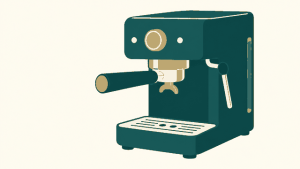
The De’Longhi Stilosa is a compact, entry-level manual espresso machine for people who want to make espresso drinks at home without spending much on the machine itself. It uses a portafilter and a pressurized basket, plus a manual steam wand for heating and foaming milk. You control the dose, tamp, shot timing and milk steaming; the machine does not grind beans or automate those steps.
That combination makes the Stilosa a reasonable first machine, but not a shortcut to café-quality drinks. Its pressurized basket is forgiving of pre-ground coffee and inconsistent grinding, while limiting how much control you have over extraction. If you later want to dial in fresh beans with a capable grinder, you may find the basket—and the machine’s basic temperature and pressure controls—becomes the limiting factor.
What using it is like
See also: Breville Bench Saver • Rocket Espresso Coffee Machine
The Stilosa heats water for brewing and steaming, but it is not a dual-boiler machine. You generally pull the espresso first, then switch to steam for milk. There is a pause between those tasks, and you need to manage the wand yourself. Expect a learning curve: milk texture depends on wand position, pitcher size and how long you steam, not just on the machine.
The portafilter and drip tray are small, which helps keep the machine’s footprint down but can feel cramped when handling grounds or larger cups. The removable water tank makes refilling easier, though you still need to keep an eye on water level. Like other manual machines, it needs regular rinsing and occasional descaling, especially if your water is hard.
For best results, use fresh coffee and a grinder that can produce a fine, consistent espresso grind. A pressurized basket makes supermarket pre-ground coffee more workable than it would be in a traditional non-pressurized setup, but stale grounds still tend to taste flat. If you buy whole beans, budget for a suitable grinder; a blade grinder is not a good substitute.
Stilosa compared with other ways to start
| Option | What you gain | Main trade-off | Best fit |
|---|---|---|---|
| De’Longhi Stilosa | Low-cost manual espresso and a steam wand | More hands-on work; basic control and small working area | Beginners who want occasional espresso drinks and accept a learning curve |
| Entry-level automatic espresso machine | Fewer manual steps and more repeatable button-operated drinks | Costs more; less control over the process and still requires cleaning | People who value convenience over learning espresso technique |
| More capable manual espresso setup | More scope to adjust extraction and improve with a good grinder | Higher total cost and a steeper learning curve | Enthusiasts who expect to experiment and upgrade beans or equipment |
If you want the simplest path to a milk drink before work, an automatic machine may suit you better. If you want to learn the manual routine but are not ready to spend much, the Stilosa’s lower price is a real advantage. Shoppers comparing this kind of setup can browse manual espresso machines and compare the machine cost with the price of a grinder and accessories.
Who should buy it—and who should skip it
The Stilosa suits a beginner who makes one or two espresso drinks at a time, has room to practice, and is comfortable doing the grinding, tamping, brewing and milk steaming by hand. It can also make sense for someone who mostly drinks milk-based coffee and does not need to pull several drinks quickly for a group.
Skip it if you expect café-level espresso straight out of the box, need fast back-to-back drinks, or do not want to learn how to steam milk. It is also a poor match if you already own a strong espresso grinder and want precise control over extraction. In that case, consider spending more on a machine with better temperature stability and a non-pressurized basket, rather than paying twice to replace an entry-level setup later. For a broader comparison, look at espresso machines with steam wands.
Common frustrations and how to avoid them
Weak or watery espresso: Check that the basket is filled and locked in correctly, and use coffee that has not been sitting open for weeks. With a pressurized basket, avoid tamping excessively hard; a level, consistent tamp is more useful than force.
Little or no crema: Crema is not a reliable quality score on its own. Older coffee often produces less, and the pressurized basket can create a foamy-looking result that does not necessarily mean the espresso is well extracted. Focus on taste.
Milk with large bubbles: Keep the wand tip near the surface briefly to introduce air, then lower it to create a rolling motion. If you leave the tip high for too long, the milk can become foamy rather than smooth. Wipe and purge the wand after each use so milk residue does not harden inside it.
Slow setup or messy workflow: A small knock box, a suitable tamper and a milk pitcher make daily use easier, but they add to the total cost. Check what accessories are included and measure your counter space before buying. A grinder is the more important upgrade if you plan to use whole beans.
FAQ
Does the De’Longhi Stilosa come with a grinder?
No. You can use pre-ground coffee with its pressurized basket, or buy a separate grinder for whole beans.
Can it make cappuccinos and lattes?
Yes. The manual steam wand can heat and foam milk, but you have to control the steaming yourself.
Is the Stilosa good for a complete beginner?
It can be, if you are willing to practice and want a low-cost manual machine. Choose an automatic model instead if convenience and repeatable results matter more than hands-on control.
Do I need to descale it?
Yes. Follow De’Longhi’s care instructions and adjust the schedule to your water hardness and how often you use the machine.
Ready to decide? Our #1 pick for 2026 is the De’Longhi Stilosa.
Live price & availability on Amazon.