Last updated: October 2, 2026
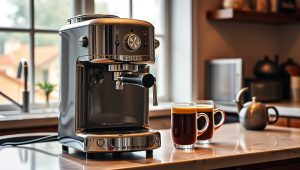
Quick answer: Our top pick in 2026 is the Anna PL41TEM — our #1 rated choice. See the full ranked comparison, alternatives and buying advice below.
Why Lelit Stands Out for Home Espresso
Lelit is one of the few brands that builds everything from true entry-level single-boiler machines to dual-boiler flagships with paddle control, all in a compact footprint. If you want an Italian-made machine that fits on a kitchen counter and can actually make cafe-quality espresso without taking over the kitchen, Lelit is hard to beat.
The brand’s strength is consistency and features for the price. Even the smallest Lelits include a PID controller, a proper brass group, and a 58mm commercial-style portafilter (57mm on the narrowest models). That matters because you get stable temperature and standard accessories, rather than paying extra to fix temperature swings or hunting for odd-sized baskets and tampers. The downside is that Lelit packs a lot into small cases, which has implications for service access and steam power that you should understand before you buy.
What to Know Before You Buy a Lelit
See also: Breville Bench Saver • Rocket Espresso Coffee Machine
Every Lelit uses the same core brewing philosophy: a saturated-style group with PID temperature control. Where they differ is how they handle steam and workflow.
Single boiler with PID (Anna, Glenda, Victoria): You make espresso, then you wait 30-60 seconds for the boiler to reach steam temperature. Great espresso, slow milk drinks. If you make one or two milk drinks in a row, it’s manageable. If you make four lattes back-to-back for guests, you will feel the wait.
Heat exchanger (Mara X): One boiler does both jobs. You can brew and steam with almost no delay, but temperature is managed by flushing and by the machine’s logic. The Mara X is unusually clever here — it has different modes (brew priority vs. steam priority) that change boiler temperature — but you still need to learn its rhythm.
Dual boiler (Elizabeth, Bianca): Separate boilers for brew and steam. Brew temperature stays flat while you steam at full pressure. This is the best workflow for milk drinks and for entertaining. It also costs more, takes more counter space, and uses more energy.
Counter space is a real Lelit advantage. A Victoria is about 9 inches wide, a Bianca under 16 inches. Compare that to many E61 dual boilers that are 18+ inches wide and much deeper. If your kitchen is small, that size difference decides the purchase.
The Lelit Lineup: From Entry to Prosumer
Lelit’s naming is confusing, so it helps to group by boiler type rather than by name alone.
| Model Range | Boiler System | PID Control | Brew + Steam Workflow | Best For |
|---|---|---|---|---|
| Anna PL41TEM | Single boiler, brass | Yes (PID) | Sequential, ~45 sec switch | Tight budgets, tight counters, mostly straight espresso or one cappuccino |
| Victoria PL91T / Glenda PL62T | Single boiler, larger brass boiler | Yes (PID, LCC display on Victoria) | Sequential, faster recovery | Single boiler users who want better steam and shot control than Anna |
| Mara X PL62X | Heat exchanger E61 | Yes (X-mode logic) | Near-simultaneous | Want E61 feel and simultaneous milk without dual-boiler price/size |
| Elizabeth PL92T | Dual boiler, compact | Yes (dual PID, LCC) | Simultaneous | Milk drinks daily, small kitchen, want dual boiler convenience |
| Bianca PL162T | Dual boiler E61 with paddle | Yes (dual PID, LCC + flow paddle) | Simultaneous with flow profiling | Enthusiasts who want to experiment with preinfusion and pressure |
If you are just getting into home espresso and want to see pricing and current availability, check the current Lelit lineup on Amazon — stock and bundles change often, especially for Mara X and Bianca.
Which Lelit Is Right for You?
Buy Anna if you want the cheapest path to real espresso. The Anna PL41TEM makes excellent espresso for the price and is one of the smallest machines you can buy. The 57mm group is the main compromise — accessories are less common than 58mm, and the small boiler means weaker steam that takes longer to texture milk. It suits drinkers who primarily want espresso or Americano and only steam occasionally. If you know you will make two lattes every morning, spend more.
Buy Victoria if you want a single boiler you won’t outgrow quickly. The Victoria keeps the compact case but adds a 58mm group, a larger brass boiler, the LCC display for shot timing and temperature, and noticeably better steam than Anna. You still wait between brew and steam, but the wait is shorter and the steam is drier. For one person making milk drinks, this is often the sweet spot. The cheaper Glenda is similar but without the LCC — fine if you prefer a cleaner look and manual timing.
Buy Mara X if you love the E61 ritual but need efficiency. The E61 group gives that heavy, hands-on lever feel and stays hot for stable shots. Unlike a traditional heat exchanger, you don’t have to do a long cooling flush. In Brew Priority mode, the machine holds brew temperature very steadily and you accept slightly lower steam pressure. In Steam Priority, it prioritizes steam. For households making 2-4 milk drinks in a row, the Mara X is faster than any single boiler and smaller than a dual boiler. Trade-off: it is taller, heavier, and needs more warm-up time (about 20-24 minutes to be fully stable).
Buy Elizabeth if milk workflow matters most. Elizabeth is the most practical dual boiler Lelit makes. It heats in about 10 minutes, both boilers are PID controlled, and you can pull a shot while steaming with no compromise. It is not an E61, so it feels less “traditional” but it is far more convenient and easier to keep clean. For couples who both drink flat whites or for anyone who entertains, this saves real time every day.
Buy Bianca if you want flow control. The Lelit Bianca adds a manual paddle that lets you control water flow during the shot — low-flow preinfusion, ramping pressure, declining pressure. That lets you tame very light roasts or experiment with extraction. It also has a rotary pump option (PL162T V3) that can run from a reservoir or be plumbed in, and it’s quieter than vibration pumps. Only buy this if you will actually use the paddle; otherwise an Elizabeth makes the same drinks for less money and less counter space.
Trade-offs and Real-World Failure Modes
Lelits are well built, but small Italian machines have predictable weak points. Knowing them helps you budget and avoid frustration.
Steam power vs. size: Anna and Victoria will never steam like a cafe machine. Expect 45-75 seconds to texture 6oz of milk, and the steam will be wetter than a dual boiler. Technique matters more here — keep the tip just under the surface and don’t stretch too fast.
Warm-up time: Single boilers are ready in 10-15 minutes. E61 groups (Mara X, Bianca) need 20-30 minutes for the massive brass group to saturate. Buying a smart plug timer helps a lot; don’t judge an E61 on a 5-minute warm-up.
LCC and electronics: The LCC display on Victoria, Elizabeth and Bianca is useful, but it’s another board that can fail from steam or scale. Use filtered water and descale only as the manual describes. Over-descaling or using aggressive descaler is a common cause of solenoid and sensor issues.
Vibration pump noise: Anna, Victoria, Glenda and Mara X use vibration pumps. They are loud and have a sharper pressure pulse than rotary pumps. This is normal, not a defect. If quiet operation matters, Bianca’s rotary pump is significantly softer.
Scale and water: This is the number one killer of all home espresso machines. Lelit boilers are brass and stainless, but hard water will still scale sensors, valves, and the steam wand tip. If your tap water is hard (over ~100 ppm), use a proper filter or bottled water with moderate mineral content. Distilled or zero-mineral water is not ideal either — the level probes need some mineral to sense water.
Service access: Because Lelits are compact, working inside is tight. Gaskets, shower screens, and anti-vacuum valves are easy DIY; anything involving the steam boiler on Elizabeth/Bianca is better left to a tech if you are not comfortable.
How Lelit Compares to Alternatives
Against Rancilio Silvia, Lelit Anna/Victoria wins on PID and included features. Silvia is a tank with huge community support, but stock it has no PID and more temperature surfing. Silvia Pro X is a closer match to Elizabeth but larger and more expensive.
Against Breville/Sage Dual Boiler, Elizabeth and Bianca offer more metal, less plastic, and Italian E61 parts. Breville wins on fast heat-up, built-in volumetric dosing, and local warranty support. If you value push-button convenience and fast service, Breville is often easier to live with.
Against ECM and Profitec E61s, Mara X and Bianca are smaller and lighter. ECM/Profitec feel more substantial and often have slightly better fit and finish, but you pay for it in size and price. For a small kitchen, Lelit’s compact dual boilers are a decisive advantage.
If you are not sure which boiler type you need, compare the price gap honestly. For many homes, a Lelit Victoria on Amazon plus a good grinder will make better coffee than a Bianca paired with a mediocre grinder. The grinder budget matters at least as much as the machine.
Tips for Buying a Lelit Without Overpaying
Don’t buy more boiler than you need. If you drink straight espresso six days a week and make one cappuccino on Sunday, a single boiler is fine and the money is better spent on a grinder and water filtration. Be honest about that split before you stretch to a dual boiler.
Bundle smart. Lelit often sells with a basic tamper and plastic tamper mat. Plan to add a proper tamper that fits your basket, a scale that reads to 0.1g, and a backflush basket. Those three items improve shots more than any machine upgrade.
Check version numbers. Bianca V3, Mara X V2 — Lelit iterates quietly. The difference can be wood handles, a new LCC, or low-flow fixes. Ask the seller which version you are buying so you don’t pay V3 pricing for V2 stock.
Think about where you will get service. Lelit parts are widely available in Europe and increasingly in the US, but local service varies. Buying from a dealer who does in-house repair is worth a small premium over the cheapest online listing, especially for dual boilers.
FAQ
Is a Lelit good for a beginner?
Yes, especially Anna and Victoria. They include a PID so you don’t have to temperature surf, and they use standard baskets so tutorials and accessories apply directly. You still need a capable grinder — a weak grinder will make any Lelit frustrating.
Do I need to plumb in a Lelit?
No, except Bianca models that offer an optional plumb-in kit. Anna, Victoria, Glenda, Mara X, and Elizabeth all run from an internal reservoir. Plumbing is only useful if you want to avoid refilling the tank and want rotary-pump quietness on Bianca.
How long do Lelit machines last?
With filtered water and regular group cleaning, 8-12 years is common. Gaskets and shower screens are wear items every 1-2 years, and pumps or solenoids may need replacement after 5+ years. Hard water without filtration is the fastest way to shorten that life.
Is the Bianca worth it over the Elizabeth?
Only if you will use flow profiling. Both make identical milk drinks at the same speed, but Bianca lets you manually control preinfusion and pressure to shape light roasts. If you mostly drink medium and dark roasts at standard pressure, Elizabeth gives you the same dual-boiler workflow for less money and less space.
Ready to decide? Our #1 pick for 2026 is the Anna PL41TEM.
Live price & availability on Amazon.