Last updated: October 2, 2026
A high-end coffee machine should make better coffee, but that is not its only job. It should also give you control where it matters, recover quickly between drinks, and fit the way you actually make coffee. A $3,000 machine can be a poor purchase if you want one button before work; a well-chosen $700 machine may be more satisfying if you enjoy learning espresso.
The main decision is not simply how much to spend. It is whether you want espresso made by hand, espresso made automatically, or brewed coffee from a machine that prioritizes volume and consistency.
What “high-end” means in a home coffee machine
In this category, higher prices usually buy better temperature management, stronger construction, more powerful steam performance, easier adjustment, and a more polished ownership experience. They do not automatically buy better beans, better technique, or better coffee.
Look for features that affect daily use rather than a long specification list. A proper portafilter, a stable brew temperature, a grinder with useful adjustment steps, and parts that are easy to clean matter more than decorative metal panels. For a manual setup, a separate grinder is often more important than moving from a midrange espresso machine to an extravagant one.
If you want to explore this route, start with a prosumer home espresso machine and budget for a capable espresso grinder. Buying an expensive machine and pairing it with a weak grinder is a common failure mode: the machine has plenty of capability, but the coffee remains inconsistent because the grounds are uneven or poorly adjusted.
The main types to consider
See also: Breville Bench Saver • Rocket Espresso Coffee Machine
| Machine type | Best for | Main advantage | Main drawback |
|---|---|---|---|
| Manual espresso machine | People who enjoy making coffee | Maximum control and upgrade flexibility | Requires dialing in, cleaning, and technique |
| Superautomatic espresso machine | Fast milk drinks and shared households | Convenient, repeatable drinks at the press of a button | Less control and more complicated cleaning |
| Dual-boiler or heat-exchanger machine | Frequent espresso and steaming | Better workflow for making several milk drinks | Large, expensive, and often slow to heat |
| High-end drip coffee maker | Multiple cups of black coffee | Fast, practical brewing for a group | Does not make espresso or textured milk |
Manual espresso machines: best for control
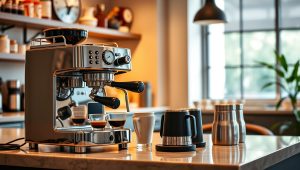
A serious manual espresso machine suits someone who likes the process. You grind, dose, tamp, lock in the portafilter, start the shot, and steam milk separately. That work is part of the appeal, but it is also the reason not to buy one as an impulse purchase.
Spend more here if you make several drinks in succession, care about milk texture, or want the machine to remain useful as your skills improve. A dual-boiler design is especially helpful when you make espresso and steam milk at the same time. A heat-exchanger machine can also offer a strong workflow, often at a lower price, but brew-temperature management may be less intuitive depending on the design.
The drawbacks are practical. High-end manual machines can take 20 to 45 minutes to heat fully, occupy substantial counter space, and require backflushing, wiping, descaling, and occasional gasket replacement. If you make one cappuccino every few days, a large dual-boiler machine may be unnecessary. A compact single-boiler espresso machine can be the cheaper and more sensible option, particularly if you do not steam milk often.
Superautomatic machines: best for convenience
A superautomatic machine grinds beans, doses coffee, brews espresso, and may dispense milk with minimal intervention. It is the right choice for a household where several people want coffee quickly, or where the owner values consistency more than hands-on control.
Premium versions generally offer more drink customization, quieter grinders, better screens, larger water tanks, and more effective milk systems. Still, the result is not identical to a carefully prepared manual espresso. The grinder and brew group are compact, and the machine has to handle many jobs inside a small enclosure.
Cleaning is the point many buyers underestimate. Milk tubes, carafes, drip trays, grounds containers, and internal brew components need regular attention. If cleaning is neglected, stale coffee oils and milk residue can affect flavor and reliability. A simple black-coffee setup may be easier to live with than a machine offering a dozen milk recipes.
Choose a premium superautomatic espresso machine when speed and repeatability are non-negotiable. Choose a less expensive automatic model if you mostly drink long coffee or use milk occasionally; the extra screens and recipes may not justify the price.
High-end drip coffee makers: the overlooked option
If your household drinks several mugs at a time, a premium drip coffee maker may be a better purchase than any espresso machine. Good models control water temperature and flow more consistently than inexpensive brewers, and some are certified by the Specialty Coffee Association for meeting brewing standards.
The trade-off is obvious: you get excellent brewed coffee, not espresso. These machines are also less useful if everyone wants a different milk drink. However, they are usually faster to set up, easier to clean, and cheaper to operate than a complex espresso station. If you want a durable brewer for a family or home office, compare SCA-certified coffee makers rather than shopping by stainless-steel appearance alone.
What to check before spending more
Counter space: Measure width, depth, height, and the clearance needed to fill the water tank. A machine that fits only when cabinets are moved is not a good daily purchase.
Water quality: Hard water can increase scale and maintenance. Use the filtration or water-treatment method recommended by the manufacturer. Do not assume bottled water is automatically suitable; some low-mineral waters can be inappropriate for certain machines.
Grinder compatibility: For manual espresso, reserve part of the budget for a grinder designed for espresso adjustment. A high-end machine cannot correct inconsistent grinding.
Repair access: Check whether replacement gaskets, filters, brew parts, and service are available in your region. Electronics, pumps, valves, and grinders can eventually need repair, especially in machines used several times a day.
Heating time: Fast heat-up is useful, but it may come with compromises in steam power or simultaneous brewing. Decide whether you need café-style workflow or simply want the first cup quickly.
FAQ
Is an expensive espresso machine worth it for one person?
Sometimes. It is worthwhile if you make espresso often and enjoy the process. If you want speed, a compact automatic machine or a good pod system may suit you better.
Should I buy the machine or grinder first?
For manual espresso, prioritize the grinder. A capable grinder paired with a midrange machine usually produces better results than an expensive machine paired with an unsuitable grinder.
Are superautomatic machines as good as café espresso?
They can make convenient, enjoyable drinks, but they offer less control over dose, extraction, and milk texture. They are best judged by convenience and consistency rather than by manual-barista standards.
How much maintenance does a high-end coffee machine need?
Expect daily rinsing and wiping, regular cleaning cycles, and periodic descaling or filter changes. Milk systems need especially prompt cleaning. Follow the manual rather than waiting for flavor or performance to deteriorate.