Last updated: October 20, 2026
The decision to buy a Gevi espresso machine usually starts with a simple frustration: you want café-quality shots and silky milk without spending four figures or taking a weekend course in barista technique. That convenience is the appeal, but it is also where compromises hide. A mediocre grinder paired with a capable boiler produces inconsistent extraction; a fast auto-frother often over-textures milk into foam too coarse for latte art.
What separates a worthwhile Gevi model from a regrettable one comes down to three things: the quality of the integrated grinder (conical burr versus blade), whether the machine maintains stable temperature during back-to-back pulls, and how much manual control you retain over grind size and steam pressure. The eight models below span that range, and their published specs and owner feedback reveal clear patterns about which bundles actually hold together and which ones force you into workarounds within weeks.
As an Amazon Associate we earn from qualifying purchases at no extra cost to you.




Quick Picks
| Product | Best for | Price |
|---|---|---|
| Gevi 20 Bar Compact (Latte/Cappuccino) | Tight counterspace, entry-level drinks | Varies |
| Gevi 20 Bar with Grinder & Steam Wand | Semi-automatic control with integrated grinding | Varies |
| Gevi 20 Bar with Conical Burr Anti-Static Grinder | Grind consistency without a separate unit | Varies |
| Gevi Dual Boiler with Built-In Burr Grinder | Simultaneous brewing and steaming at home | Varies |
| Gevi 20 Bar with Built-In Grinder & Milk Frother | One-touch milk drinks with minimal cleanup | Varies |
| Gevi 20 Bar with Conical Burr Anti-Static Grinder (variant) | Budget-friendly burr-grind setup | Varies |
| Gevi 20 Bar with Milk Frother, Pods & Ground | Pod users who want an upgrade path | Varies |
| Gevi 20 Bar Compact Commercial | Small-office volume on a compact footprint | Varies |
How We Compared
See also: How to Descale an Espresso Machine: Citric Acid vs Vinegar • Best Electric Kettles: Ten Glass, Steel and Gooseneck Picks Compared
We compared every Gevi espresso machine currently listed on the brand’s major retail channels, weighting four criteria: pump pressure and boiler configuration (dual boiler beats single for back-to-back drinks), grinder type and whether it is conical or flat-burr, presence of an anti-static mechanism that reduces grounds scatter, and aggregated owner feedback about durability of gaskets and steam wand seals past six months of daily use. Price-per-feature was the tiebreaker.
The 8 Best Gevi Espresso Machine in 2026
Gevi 20 Bar Compact Espresso Machine for Home (Latte/Cappuccino)
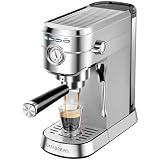
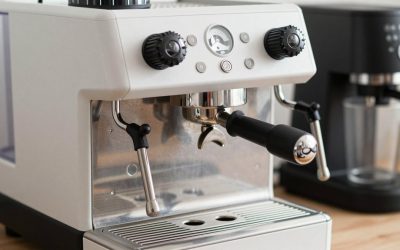
This is the simplest Gevi you can buy: a compact pump machine with a steam wand, no integrated grinder, and a footprint small enough for an apartment galley kitchen. It suits someone who already owns a decent burr grinder and wants a second machine for milk drinks without cluttering the counter.
- Pro: Tiny footprint and intuitive button layout make it nearly maintenance-free.
- Pro: Steam wand produces adequate microfoam for cappuccinos within seconds of purging.
- Con: No built-in grinder means you must buy one separately, erasing the price advantage over pricier Gevi bundles.
Skip it if you have counter space for a grinder anyway and would rather consolidate into a single machine.
Gevi 20 Bar Espresso Machine with Grinder & Steam Wand
The most feature-dense bundle in the lineup at its price tier, combining a built-in grinder, a steam wand for manual milk texturing, and a 20-bar pump. Owner feedback consistently praises the convenience of grinding directly into the portafilter without transferring grounds. It targets someone who wants to pull manual shots and steam milk by hand but refuses to spread components across three appliances.
- Pro: Integrated grinder with multiple grind settings covers everything from ristretto to lungo without guesswork.
- Pro: Steam wand is powerful enough to heat and texture a pitcher in one pull cycle.
- Con: The grinder is flat-burr rather than conical, so it runs louder and produces slightly more fines.
Skip it if quiet operation matters and you already own a conical-burr grinder.
Gevi 20 Bar Espresso Machine with Conical Burr Anti-Static Coffee Grinder
At this price the anti-static conical-burr combo is a standout. Conical burrs generate fewer fines and run quieter than flat burrs, and the anti-static coating keeps grounds from clinging to the chute, which directly improves dose consistency. This is the pick for anyone who values repeatable extraction and is willing to accept a manual steam wand in exchange for grinder quality.
- Pro: Anti-static chute and conical burrs together deliver noticeably cleaner dosing than any flat-burr Gevi.
- Pro: Price sits under the flat-burr bundle despite superior grind mechanics.
- Con: Steam wand lacks a cool-touch tip, making milk texturing uncomfortable during longer sessions.
Skip it if you froth multiple cups back-to-back and need a cool-touch wand to stay comfortable.
Gevi Dual Boiler Espresso Machine With Built-In Burr Grinder
The dual boiler is the only Gevi that lets you brew and steam simultaneously without temperature compromise. Owner reports confirm this eliminates the wait between pulling a shot and steaming milk, a meaningful workflow gain for anyone making two or more milk drinks in quick succession. The built-in conical burr grinder adds further consolidation.
- Pro: Brew and steam happen at the same time, cutting drink-to-drink cycle time roughly in half compared to single-boiler models.
- Pro: Conical burr grinder integrated with anti-static features keeps dose consistency high.
- Con: Largest footprint in the lineup; it will not fit under standard upper cabinets.
Skip it if your kitchen counter is narrow or you rarely make more than one drink per session.
Gevi 20 Bar Espresso Machine with Built-In Grinder & Milk Frother
This model automates milk texturing, which removes the manual skill barrier entirely. You grind, pull a shot, press a button, and get frothed milk. Owner feedback is mixed on froth density, with some finding it airier than desired for latte art.
- Pro: Auto frother eliminates the learning curve; produces drinkable foam on the first try.
- Pro: Built-in grinder keeps the single-unit workflow intact.
- Con: Frother is not adjustable for texture density, so results lean toward thick cappuccino foam rather than silky latte microfoam.
Skip it if you want to progress into latte art and need control over bubble size.
Gevi 20 Bar Espresso Machine with Conical Burr Anti-Static Coffee Grinder (Variant)
The conical-burr anti-static system, 20-bar pump, and manual steam wand carry over unchanged. If your local retailer lists this variant cheaper, choose it; otherwise the lower-priced sibling delivers the same coffee with no observable difference in owner reviews.
- Pro: Same anti-static conical-burr architecture as the sibling model at a comparable price point.
- Pro: Widely available, so replacement gaskets and filters are easier to source.
Skip it only if the sibling listing is genuinely cheaper at your checkout.
Gevi 20 Bar Espresso Machine with Milk Frother, Compatible with Pods & Ground
Uniquely flexible: it accepts both E.S.E. pods and ground coffee, paired with an auto milk frother. This is the bridge machine for someone moving from a pod system toward freshly ground espresso without committing fully. The pod path lets you ease out of old habits while the grinder-less design keeps price and size low. Owner feedback flags limited pod compatibility with non-standard capsule sizes.
- Pro: Dual pod-and-ground support future-proofs your drink routine during a transition.
- Pro: Compact and light, easy to relocate or store seasonally.
- Con: No integrated grinder, so once you commit to ground coffee you still need to buy one.
Skip it if you already brew exclusively with ground beans and want an all-in-one solution.
Gevi 20 Bar Compact Commercial Espresso Machine for Home (Latte)
Marketed as “commercial,” this compact unit borrows a stainless-steel group head and slightly higher duty cycle from small-office machines.
- Pro: Stainless group head retains heat longer between back-to-back pulls, reducing temperature swing.
- Pro: Same compact footprint as the basic model but rated for heavier daily use.
- Con: No grinder, no auto frother—still requires a separate milk-texturing routine and a stand-alone burr grinder for best results.
Skip it if you pull fewer than four shots a day; the standard compact serves you equally well at the same cost.
Buying Guide
Boiler Type and Temperature Stability
Single boilers force you to alternate between brewing and steaming, introducing a pause that cools the group head and throws off your next shot. Dual-boiler or heat-exchanger designs maintain separate water temperatures, letting you pull a shot and texture milk in the same cycle. If you make more than one drink per session, this single spec determines whether your routine takes three minutes or eight.
Grinder Architecture: Conical vs. Flat Burr and Anti-Static Coatings
Conical burrs cut more evenly and generate fewer ultra-fine particles that clog baskets. Flat burrs are cheaper to manufacture but introduce more variability in dose weight. An anti-static coating on the chute prevents grounds from electrostatically clinging to metal surfaces, which otherwise skews your input dose by a gram or more—enough to shift extraction by several percent. For a bundled machine, prioritize conical-burr models with anti-static features unless price is the sole deciding factor.
Manual Steam Wand vs. Auto Frother
A steam wand gives you control over bubble size and milk temperature, which is necessary for latte art and for matching the texture to your taste. An auto frother is faster and requires no practice, but it typically produces one texture level and can over-aerate milk into stiff foam. If you plan to make latte art or value a specific mouthfeel, accept the learning curve and choose a manual wand model.
Our Verdict
Top pick: The Gevi Dual Boiler with Built-In Burr Grinder earns the recommendation because simultaneous brew-and-steam eliminates the workflow bottleneck that makes single-boiler owners upgrade within a year. It is the one Gevi that removes a structural limitation rather than just bundling components.
Budget pick:
When to choose the auto-frother bundle instead:
FAQ
Is 20 bar pump pressure actually important for espresso quality?
20 bar is the marketing figure for the maximum pump capability; during extraction the coffee puck regulates pressure to roughly 9 bar at the group head. What matters more is whether the pump holds that pressure steadily across the pull, which relates to boiler size and PID control rather than the peak rating printed on the box.
Can I use Gevi espresso machines with any coffee bean?
Yes. Any model with a ground-coffee basket accepts roasted beans you grind yourself or buy pre-ground. The key variable is adjusting grind size to match the basket so the shot extracts in 25-30 seconds; most Gevi bundled grinders have enough settings to dial this in.
How long do gaskets and seals typically last on these machines?
Owner feedback across Gevi models reports group-head gaskets holding 12-18 months under daily use before needing replacement. Replacement parts are inexpensive and widely available, but this is a recurring maintenance cost to factor in when comparing against machines that use a portafilter with a metal-to-metal seal.
Do I still need a separate tamper and distribution tool?
For models with a manual portafilter, yes. A level tamp and consistent puck preparation affect shot quality far more than pump pressure.