Last updated: October 2, 2026
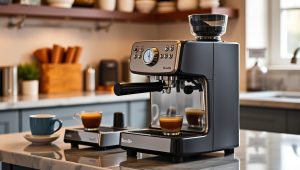
The De’Longhi Stilosa 15 Bar Pump Espresso Machine is a compact, inexpensive way to make espresso-style drinks at home. It is a manual machine, not a one-touch appliance: you grind coffee, fill and tamp the portafilter, start the shot, and steam milk yourself. That extra work is also the reason it can cost far less than an automatic espresso maker.
The Stilosa makes the most sense for a beginner who wants cappuccinos, lattes, and occasional espresso without spending much or giving up much counter space. It is less suitable for someone who wants café-level control, fast back-to-back drinks, or an appliance that does everything with one button.
What you get for the money
The machine uses a 15-bar pump, a manual steam wand, and a small water reservoir. The pump’s maximum pressure is not a quality guarantee; espresso is normally extracted at roughly 9 bars at the coffee puck. The important point is that the Stilosa has enough pump capacity for its intended use, while the included setup is designed to be approachable rather than highly adjustable.
Like many machines in this price range, it commonly comes with pressurized filter baskets. These baskets create resistance for you, so they can produce drinkable results with pre-ground coffee or a basic grinder. That is useful when you are starting out, but it limits control over extraction. A better grinder and non-pressurized baskets can produce more nuanced espresso, though upgrading the grinder may cost as much as—or more than—the machine.
The portafilter is smaller than the 58mm equipment used on many commercial machines. That is not automatically a problem, but accessories are less universal. Check the exact Stilosa model before buying a tamper, dosing funnel, or replacement basket.
How it performs in daily use
See also: Breville Bench Saver • Rocket Espresso Coffee Machine
For milk drinks, the Stilosa can be satisfying. Use a reasonably fresh roast, dose the basket consistently, and you can make a strong base for a latte or cappuccino. Its simple controls are easy to understand, and the compact body fits kitchens where a larger machine would be intrusive.
Espresso-only performance is more dependent on your coffee and technique. With supermarket pre-ground coffee, shots may taste thin, bitter, or flat. That is not necessarily a machine failure: coffee that is stale or ground incorrectly is difficult for any espresso machine to rescue. A basic burr grinder is a meaningful improvement, although the cheapest grinders often do not grind finely or consistently enough for serious espresso.
The steam wand is best viewed as an entry-level tool. It can heat and texture milk, but it is not as powerful or precise as the wand on a higher-priced prosumer machine. Expect a learning curve. Common mistakes include overheating the milk, creating large bubbles instead of smooth foam, and leaving dried milk on the wand. Wipe and purge the wand immediately after every use.
| Option | Strengths | Trade-offs | Best for |
|---|---|---|---|
| De’Longhi Stilosa | Low price, small footprint, manual milk steaming | More hands-on work; limited control; modest steam performance | Beginners and occasional milk drinks |
| Entry-level automatic espresso machine | Convenience and repeatability at the press of a button | Higher purchase price; less control; more cleaning inside the machine | People who prioritize speed and convenience |
| Higher-end semi-automatic machine | Better temperature and steaming capability; more adjustment | Costs more and requires a capable grinder and more practice | Enthusiasts who want to improve technique |
What you need to budget for
The Stilosa is inexpensive as a machine, but espresso is a system. You will need coffee, a way to measure it, and a tamper or other basic accessories. If you already buy pre-ground coffee, the included pressurized setup is the cheaper route. If you are buying everything from scratch, consider a burr grinder for espresso rather than spending the entire budget on a fancier machine while using an inconsistent grinder.
A kitchen scale helps you repeat a recipe, but it is not essential on day one. A small milk pitcher is useful if you plan to steam milk regularly. Avoid assuming that every inexpensive espresso accessory will fit: verify the portafilter diameter and basket style first.
If your main drinks are lattes and cappuccinos, the Stilosa can be a sensible cheaper option. Milk, sugar, and flavorings cover some flaws in the espresso, and the manual process is still engaging without demanding advanced technique. If you drink straight espresso every day and care about flavor differences between coffees, the machine may become limiting sooner. In that case, put more of the budget into the grinder and consider a more capable semi-automatic espresso machine.
Common problems and their fixes
Weak or watery coffee: The coffee may be too coarse, the dose may be low, or the shot may be running too quickly. Use a finer grind if possible, level the coffee, and tamp evenly. With pre-ground coffee, the available adjustment may be limited.
Bitter coffee: The grind may be too fine, the shot may be running too long, or the coffee may be stale or darkly roasted. Shorten the shot and change one variable at a time rather than tamping harder and harder.
Little or no steam: The machine needs time to switch from brewing to steaming. Make sure the steam control is fully engaged and purge condensation before texturing milk. A partly blocked wand tip can also reduce performance.
Leaking around the portafilter: The basket may be overfilled, the portafilter may not be locked in fully, or the group-head seal may need cleaning or replacement. Wipe coffee residue from the sealing area regularly.
Clogging and poor flow: Coffee oils and mineral buildup accumulate over time. Follow the manual’s cleaning and descaling instructions, empty the drip tray, and do not leave used coffee sitting in the portafilter.
Who should buy the Stilosa?
Buy it if you want an affordable introduction to manual espresso, have room for a small machine, and do not mind preparing each drink yourself. It is particularly reasonable for occasional users, students, renters, and households that mostly make milk-based drinks.
Choose a super-automatic espresso machine instead if pressing a button matters more than learning technique. Choose a more advanced semi-automatic setup if you want strong steam, precise shot control, and room to grow. The Stilosa is not a shortcut to professional espresso, but at its price it does not need to be. Its value is providing a real manual workflow and acceptable café-style drinks without a large financial commitment.
FAQ
Is the De’Longhi Stilosa good for beginners?
Yes. The controls are simple and pressurized baskets reduce the need for precise grinding. You still need to learn dosing, tamping, and milk steaming.
Can it make a latte or cappuccino?
Yes. The manual steam wand can heat and foam milk, but it takes practice to produce fine, smooth microfoam consistently.
Does “15 bar” mean better espresso?
No. Fifteen bars is the pump’s maximum rating, not the ideal pressure at the coffee puck. Coffee freshness, grind consistency, dose, and extraction time matter more.
Do I need an espresso grinder?
No, not to start. The pressurized baskets can work with pre-ground coffee. A consistent burr grinder becomes worthwhile if you want better flavor and more control.