Last updated: October 2, 2026
Under $200 is the most crowded price band in coffee gear, and it’s where the compromises get interesting. You won’t get a machine that does everything well — but you can get one that does one thing very well, as long as you pick the right category for how you actually drink coffee.
The short version: drip brewers under $200 can be genuinely excellent. Espresso machines under $200 can be good, but only if you understand what you’re giving up. Pod machines are the easiest to live with and the most expensive to run. Here’s how to think it through.
Drip coffee makers: where the money goes furthest
This is the honest answer for most buyers. At this price, you can get a drip machine that brews at the correct temperature (195–205°F), saturates the grounds evenly, and holds coffee on a thermal carafe without cooking it. Those three things are what separate a good cup from diner coffee, and sub-$200 brewers can deliver all of them.
What to look for: a showerhead that wets all the grounds rather than dripping on one spot, a thermal carafe instead of a hot plate (hot plates scorch coffee within 30 minutes), and ideally SCA certification, which means the brewer passed independent temperature and extraction testing.
The failure modes at this price are mostly about build longevity. Heating elements and pumps in $80–$150 machines typically last three to five years of daily use — sometimes less in hard-water areas if you skip descaling. That’s fine. A $120 brewer replaced every four years still costs less per year than a $300 machine you’d expect to last a decade. If most of your household drinks drip coffee, start by browsing SCA certified coffee makers — the certification filter alone weeds out most of the junk.
Espresso machines: possible, but know the trade-offs
See also: Breville Bench Saver • Rocket Espresso Coffee Machine
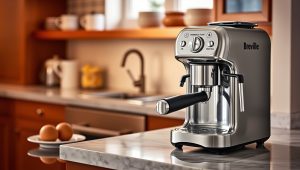
You can pull real espresso under $200, but the ceiling matters. Machines in this range use 15-bar pump marketing that means little — what matters is pressure stability at the puck and temperature consistency, and entry-level machines compromise on both.
The two real sub-categories:
- Pressurized (dual-wall) basket machines — around $100–$180. The basket itself creates the pressure, so they’re forgiving of uneven grind and tamping. You’ll get a decent, crema-topped shot from pre-ground supermarket coffee. The catch: the crema is aerated rather than true emulsification, and the flavor ceiling is lower. Great for latte drinkers who want convenience.
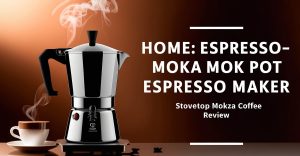
- Manual lever machines — handheld or countertop lever devices, often under $150. No pump, no boiler electronics to fail. Paired with a good grinder, they can outperform machines three times the price. But they demand technique, preheated everything, and patience. Wrong choice if you want coffee fast on a workday morning.
The big hidden cost in budget espresso is the grinder. A machine with a pressurized basket tolerates cheap pre-ground coffee; a non-pressurized setup needs a grinder capable of fine, consistent adjustment — and that’s often another $100+ on its own. If espresso is the goal, browsing espresso machines under $200 is a reasonable start, but budget the grinder into your total.
Common failure modes here: steam wands that produce wet, weak steam (expect thin foam, not microfoam), plastic portafilters that loosen over time, and thermoblocks that drift in temperature shot to shot. None of these are dealbreakers for milk drinks made casually — they are dealbreakers if you’re chasing café-quality straight shots.
Pod machines: the convenience play
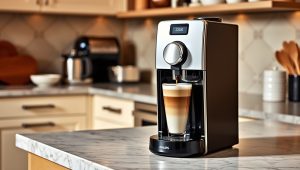
Single-serve machines sit comfortably under $200 — often well under — and nothing else matches them for speed and zero cleanup. The trade-off is cost per cup (roughly 50¢–$1 per pod versus 20–30¢ for brewed coffee) and waste, though refillable pods and recycling programs soften both.
They suit: one-coffee-a-day drinkers, households where everyone wants something different, offices, and anyone who values never thinking about coffee. They do not suit anyone drinking three-plus cups daily — the pod costs will overtake a mid-range drip setup within a year. If that’s your situation, look at single-serve coffee makers and compare pod prices before committing to a system, because the machine is cheap and the pods are the subscription.
Quick comparison
| Type | Typical price | Cost per cup | Best for | Main weakness |
|---|---|---|---|---|
| Drip brewer | $80–$200 | ~$0.20–0.35 | Households, multiple cups daily | Element/pump wear after ~4 yrs |
| Budget espresso (pressurized) | $100–$180 | ~$0.30–0.50 | Casual lattes, beginners | Weak steam, lower flavor ceiling |
| Manual lever espresso | $80–$150 | ~$0.25–0.40 | Hobbyists with a good grinder | Learning curve, slow workflow |
| Pod machine | $60–$180 | ~$0.50–1.00 | Speed, variety, minimal effort | Highest long-term cost, waste |
Who should buy what
Buy the drip brewer if two or more people drink coffee daily, if you drink more than two cups, or if you just want good coffee without a ritual. It’s the best cup-per-dollar at this price, full stop.
Buy the budget espresso machine if you drink mostly milk drinks, already have (or will buy) a decent grinder, and accept that you’re learning the craft on training wheels. Skip it if you want set-and-forget mornings.
Buy the pod machine if convenience is genuinely the priority and you drink one or two cups a day. The math stops working beyond that.
Buy the manual lever only if the process is part of the appeal — it rewards effort and punishes rushing.
One honest note: if your budget is truly capped at $200 including accessories, the drip brewer is the only category where $200 buys the best version of the thing, rather than the entry-level version.
FAQ
Can a machine under $200 make real espresso?
Yes, but with caveats. Pressurized-basket machines produce espresso-style shots that work well in milk drinks. For classic straight espresso, you’d want a non-pressurized setup plus a capable grinder — which typically pushes total spend past $200.
Is a thermal carafe worth it over a glass one?
Yes. Glass carafes sit on a hot plate that keeps cooking the coffee, turning it bitter within half an hour. A thermal carafe holds temperature without added heat — it’s one of the most meaningful upgrades in this price range.
How long will a sub-$200 machine last?
Expect three to five years from drip brewers and pod machines with regular descaling. Budget espresso machines vary more — pumps and seals are the usual failure points. Hard water shortens everything, so descale monthly if your tap water is mineral-heavy.
Should I spend $200 on a machine or split it with a grinder?
If you want espresso, split it — a $120 machine with a $80 grinder beats a $200 machine with pre-ground coffee. If you want drip, spend it all on the brewer and buy pre-ground or a basic blade grinder; the brewer matters more.