As an Amazon Associate we earn from qualifying purchases at no extra cost to you. Product prices and availability are accurate as of the date shown and are subject to change.
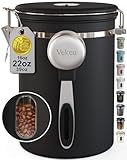


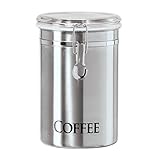


TL;DR: An airtight coffee storage container with a one-way CO2 valve is the single cheapest upgrade for cup quality after a burr grinder. Oxygen kills fresh coffee in days; a good container extends peak flavor by 1-2 weeks. Buying guide + spec table below.
Best Airtight Coffee Storage Container: Buyer’s Guide 2026
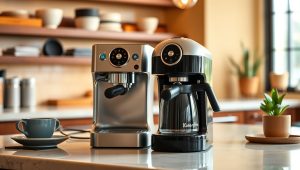
You spent $25 on single origin beans, pulled a dialed shot on your see best espresso machine home, and it tasted flat. The problem almost certainly wasn’t your technique — it was stale coffee stored in a paper bag on the counter. An airtight coffee storage container is a $15-50 fix that most home baristas skip until they’ve wasted far more on premium beans stored poorly.
- Quick Comparison
- Top Picks at a Glance
- Why Coffee Goes Stale: The Four Enemies
- The One-Way Valve: Why It Matters
- Container Types: Spec Comparison
- Whole Bean vs. Ground: Different Storage Needs
- Size Considerations: Match Container to Consumption
- Freezer Storage: When and How
- Frequently Asked Questions
- About the Author
Quick Comparison
| Product | Brand | Price | Rating |
|---|---|---|---|
| OXO Good Grips POP Container – Airtight 1.7 Qt for Coff… | — | $15.95 | 4.6/5 |
| Veken Coffee Canister with Window | Veken | $24.99 | 4.8/5 |
| Veken Coffee Canister with Window | Veken | $21.99 | 4.8/5 |
| Veken Coffee Canister with Window | Veken | $24.99 | 4.8/5 |
| Coffee Gator Coffee Canister | CoffeeGator | $16.99 | 4.7/5 |
Top Picks at a Glance
See also: How to Season a New Coffee Grinder (2026): Step-by-Step • How to Clean a Moka Pot Safely (2026): Step-by-Step
Why Coffee Goes Stale: The Four Enemies
Coffee staling is driven by four environmental factors, roughly in order of impact:
- Oxygen: Primary driver. Oxidation degrades aromatic compounds and turns oils rancid. A freshly opened bag exposed to air loses noticeable flavor within 24-48 hours.
- Moisture: Accelerates oxidation and can introduce mold in humid environments. Coffee is hygroscopic — it absorbs ambient moisture readily.
- Light: UV and visible light degrade chlorogenic acids and volatile aromatics. Transparent glass jars on countertops are a trap — convenient but damaging.
- Heat: Speeds up all chemical degradation reactions. Storing near a stove, oven, or direct sunlight compounds every other factor.
A quality airtight container solves factors 1, 2, and 3 simultaneously. Factor 4 is solved by placement — keep any container in a cool cabinet, not on a sunny counter.
The One-Way Valve: Why It Matters
Fresh-roasted coffee off-gasses CO2 for days to weeks after roasting. A fully sealed container with no valve builds pressure from CO2 and eventually forces air back in when opened, or deforms the lid seal over time. A one-way valve (also called a degassing valve) allows CO2 to escape while blocking oxygen from entering — the same valve you see on specialty coffee bags.
Containers without valves are fine for beans older than 2 weeks post-roast (most off-gassing has completed). For beans purchased directly from roasters or online specialty retailers and used within days of roast date, a valve extends optimal storage significantly. If you’re buying single origin coffee beans fresh from the roaster, the valve matters.
Container Types: Spec Comparison
| Type | Airtight Seal | CO2 Valve | Light Protection | Best For | Price Range |
|---|---|---|---|---|---|
| Opaque plastic canister | Good | Some models | Excellent | Budget daily use | $10-20 |
| Ceramic with clamp lid | Very good | Rare | Excellent | Countertop aesthetics + function | $25-45 |
| Stainless steel vacuum | Excellent (vacuum pump) | N/A (vacuum) | Excellent | Freshness obsessives | $30-60 |
| Glass with rubber gasket | Good | Some models | Poor (transparent) | Display only — avoid for quality | $15-35 |
| Specialty coffee canister (valve) | Excellent | Yes | Excellent (opaque) | Fresh beans, active degassing | $20-50 |
| Vacuum-pump canister | Excellent | N/A | Excellent | Maximum shelf life | $35-70 |
Whole Bean vs. Ground: Different Storage Needs
Ground coffee has 40-50x more surface area exposed to oxygen than whole beans. This changes the calculus significantly:
- Whole beans: Peak flavor lasts 2-4 weeks post-roast in a quality airtight container. Acceptable up to 6 weeks. Freeze for long-term storage beyond that.
- Ground coffee: Peaks within hours of grinding. Acceptable for 1-2 weeks airtight, but flavor degrades noticeably day over day. The best storage upgrade for pre-ground is switching to whole bean and grinding fresh — no container compensates for the surface area problem.
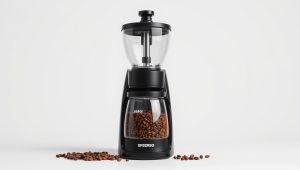
If you’re using a see burr coffee grinder best, you’re already solving the ground coffee problem. Store whole beans in your airtight canister and grind per session. This combination — quality storage plus fresh grinding — is the two-step upgrade that most impacts daily cup quality short of machine improvements.
Size Considerations: Match Container to Consumption
Counterintuitive rule: don’t buy a larger container than you fill. Headspace (air above the beans) accelerates staling even in an airtight container — the trapped air still contains oxygen. A container that’s half-full performs worse than a smaller container filled to the top.
Practical sizing guide:
- Solo drinker (1-2 cups/day): 250g canister (fills a standard 250g retail bag exactly)
- 2-person household: 500g canister
- Heavy household (6+ cups/day): Buy 2x smaller containers vs. 1x large — use one, keep other sealed
For anyone running an espresso setup at home, 250g canisters align with how specialty roasters sell beans and keep you cycling through fresh stock rather than storing a large batch that gradually stales.
Freezer Storage: When and How
The freezer debate is settled: freezing works well if done correctly. The mistake is repeated freeze-thaw cycles, which introduce moisture condensation on beans. Rules for freezer storage:
- Freeze only beans you won’t use in the next 3-4 weeks
- Portion into single-week amounts before freezing
- Use freezer-safe airtight containers or zip-lock bags with all air removed
- Thaw the full portion at room temp before opening — never open a frozen bag and put it back
- Once thawed and opened, use within 2 weeks
Properly frozen single origin beans maintain nearly full flavor for 2-3 months. This is particularly useful for seasonal offerings — buy during peak availability, freeze in portions, enjoy across the year.
Frequently Asked Questions
Does an airtight container really make a noticeable difference?
Yes, and it’s one of the easiest blind tests to run. Store the same beans in an open bag versus a properly sealed airtight container for 5 days, then brew both. The difference in aroma and flavor brightness is clear to most palates. The effect is most dramatic with light-roast single origin beans where aromatic complexity is the primary value proposition.
Should I buy opaque or glass for a coffee storage container?
Opaque for function, glass for display. If the container lives on a sunlit counter, opaque is meaningfully better — light degrades aromatics over days to weeks. If it’s inside a dark cabinet, the difference is minimal. Transparent glass near a window is the worst of both worlds: you can see the beans while light damages them daily.
How long do coffee beans stay fresh in an airtight container?
2-4 weeks at peak quality, up to 6 weeks acceptable for most palates. This assumes whole beans, room temperature storage, and the container is kept mostly full. Ground coffee in the same container degrades in 1-2 weeks. The roast date on the bag is your reference point — not the purchase date or “best by” date.
Is a vacuum-pump canister worth the extra cost?
For most home brewers: no. The performance difference over a quality airtight canister with a good gasket seal is marginal unless you’re storing beans for more than 3 weeks. Vacuum canisters earn their premium for coffee enthusiasts who buy large quantities of seasonal single origins, batch-purchase roasted beans, or want maximum shelf life. For weekly shoppers, a good airtight canister with a CO2 valve does the job at half the price.
Can I store coffee in the bag it came in?
Specialty coffee bags with one-way valves and zip seals are actually excellent short-term storage — roasters design them for exactly this purpose. Reseal tightly after each use and keep in a cool, dark location. Performance drops after 5-7 days of repeated opening as the seal compresses and becomes less effective. A dedicated canister outperforms the bag after the first week, especially for daily users who open and close multiple times per day. The grind-fresh workflow involves opening the container twice daily minimum — worth investing in a seal that holds up to that use pattern.
Bottom line: Buy opaque, airtight, with a CO2 valve. Size to match your weekly consumption. Keep it in a cabinet, not the counter. That’s the full spec — everything else is aesthetics.
Ready to decide? Our #1 pick for 2026 is the OXO Good Grips POP Container – Airtight 1.7 Qt for Coff….
Live price & availability on Amazon.